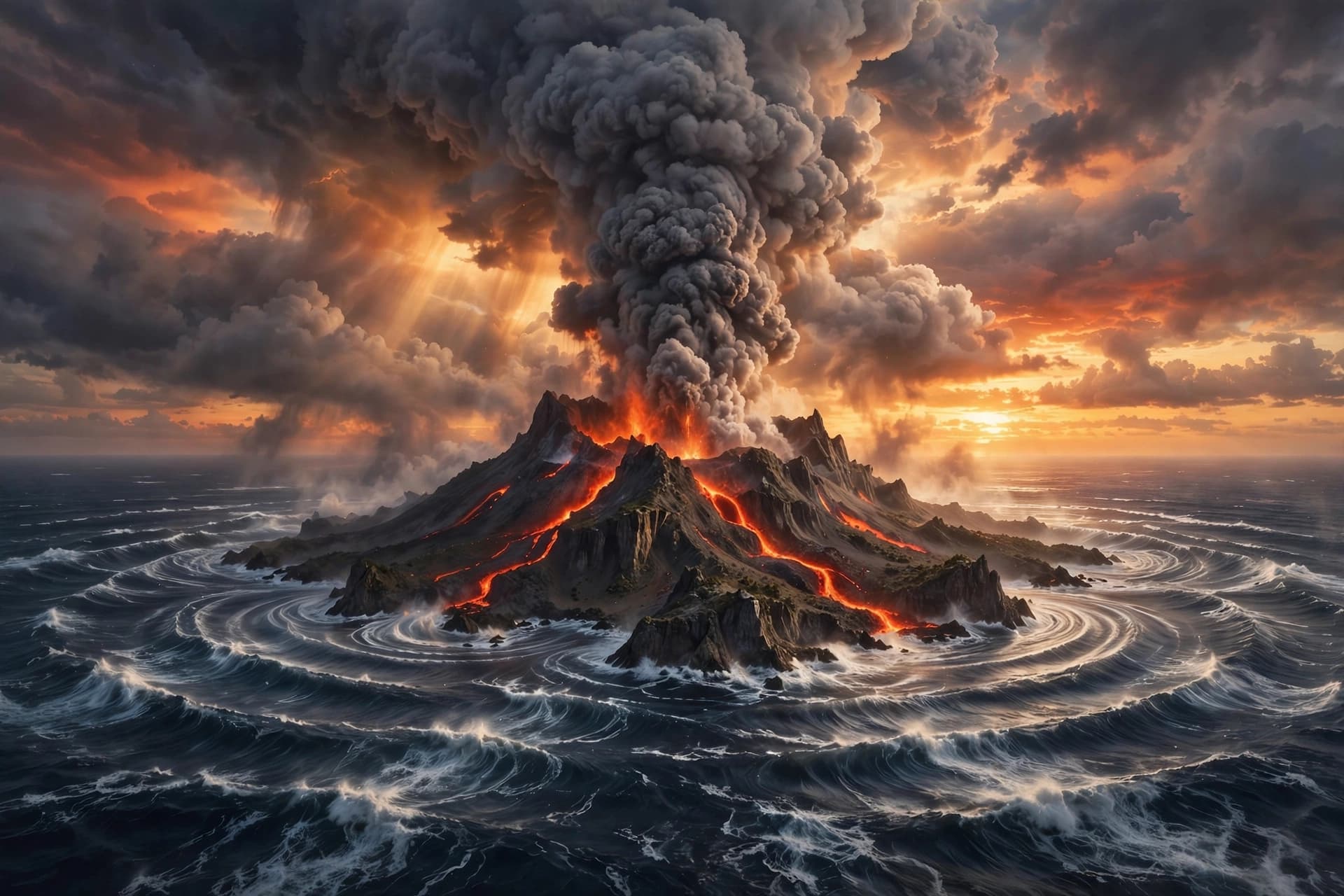
On a quiet January morning in 2022, the Pacific Ocean was shaken by a force that defied conventional understanding. The eruption of the Hunga Tonga-Hunga Ha'apai volcano did not just send ash into the sky; it generated tsunamis that traveled across the globe, challenging scientists to rethink how these waves are formed. In the years since, research has unveiled a complex interplay of atmospheric and oceanic forces, revealing why this event was so unique and what it means for future hazard prediction.
The eruption was one of the most powerful in recorded history, blasting steam and gas into the stratosphere and creating a shockwave that circled the Earth multiple times. Unlike typical volcanic tsunamis caused by underwater landslides or caldera collapse, the Tonga event produced waves driven by both water displacement and atmospheric pressure changes. This dual mechanism created a phenomenon known as a meteotsunami, which amplified the wave’s reach and intensity.
Scientists studying the event found that the rapid heating of the ocean surface by the eruption’s energy created a pulse in the atmosphere. This pulse traveled faster than the water waves themselves, pushing the ocean ahead of it and generating waves that arrived earlier than expected in distant locations. This discovery explains why tsunami warnings in some regions were issued after the waves had already made landfall, highlighting a gap in existing monitoring systems.
The scale of the destruction in Tonga was severe, with waves reaching up to 15 meters in some areas. Communities faced not only the immediate impact of the water but also the long-term challenges of rebuilding in a landscape altered by ash and sediment. The human cost of the eruption serves as a sobering reminder of the vulnerability of coastal populations to natural disasters.
Research teams from around the world have collaborated to analyze data from satellites, tide gauges, and seismic instruments. Their findings suggest that the coupling between the atmosphere and the ocean is more significant than previously thought. This insight is crucial for improving global tsunami models, which have traditionally focused on seismic activity alone.
The implications for early warning systems are profound. By incorporating atmospheric data into tsunami predictions, scientists can provide more accurate and timely alerts. This approach requires international cooperation and investment in new technologies, but it offers the potential to save lives and reduce economic losses in future events.
As climate change alters weather patterns and ocean temperatures, the frequency and intensity of such coupled events may increase. Understanding the mechanics of the Tonga eruption provides a framework for assessing risks in other volcanic regions. It underscores the need for a holistic approach to disaster preparedness that considers all possible triggers.
The legacy of the 2022 Tonga eruption is not just one of destruction but of scientific advancement. By rewriting the rules of tsunami formation, it has opened new avenues for research and improved our ability to protect communities from the unpredictable forces of nature.
AI Image Disclaimer: Images accompanying this text are AI-generated artistic interpretations of the volcanic eruption and tsunami dynamics, not actual photographs from the event.
Sources: Nature Scientific Reports NOAA NASA Earth Observatory The Guardian PBS NOVA
Published by Banx Network. This article is part of the Banx decentralized media programme, powered by the BXE token on the XRP Ledger.