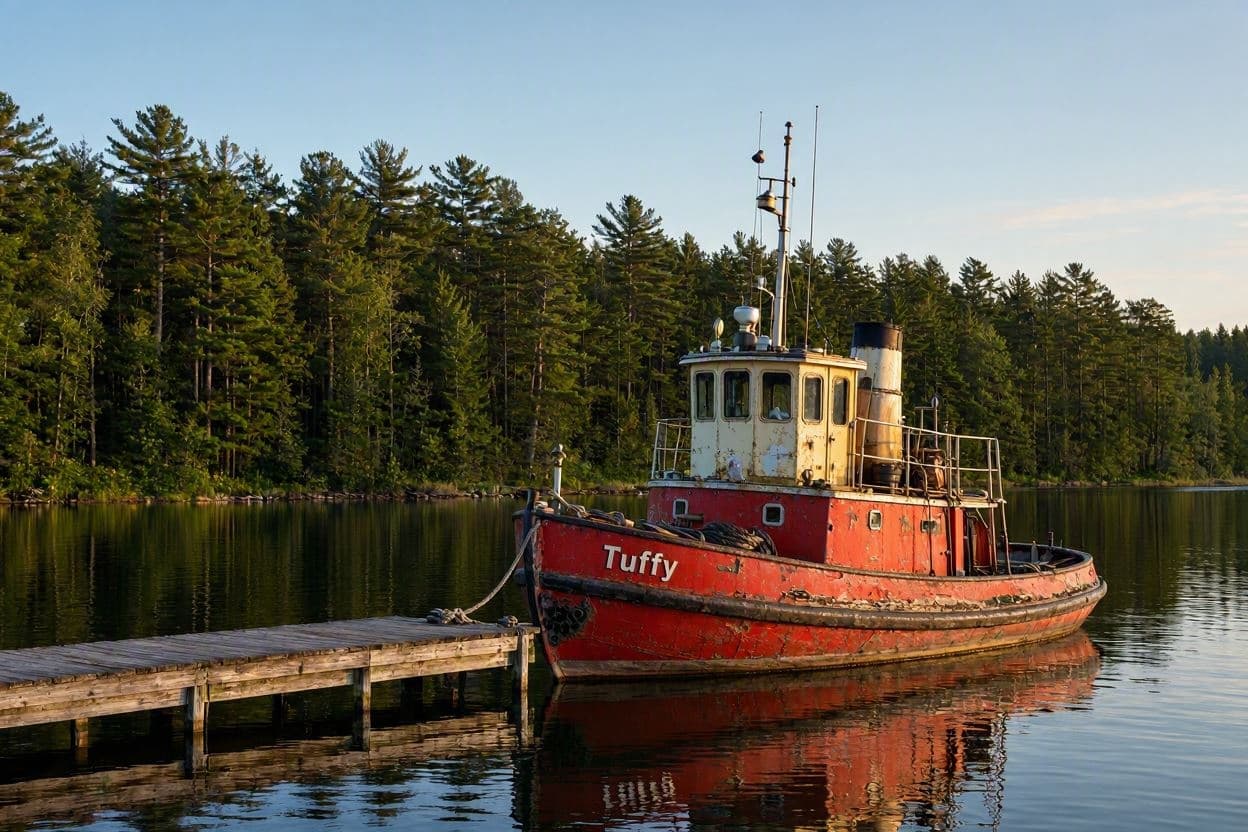
In the industrial heartland of Northern Ontario, where the landscape is shaped by rock and resilience, stories often cling to the objects that have served the community for generations. One such object is Tuffy, a tiny vintage tugboat whose modest size belies its significant role in local maritime history. For a Sudbury native, recounting Tuffy’s tale is not just an exercise in nostalgia but a tribute to the quiet dignity of workboats that have quietly supported the region’s economic and social fabric for decades.
Tuffy is not a grand vessel of war or a luxurious liner; it is a working boat, built for utility and endurance. Its story begins in an era when waterways were the primary arteries for transporting goods and people. In Sudbury, a city surrounded by lakes and rivers, tugboats like Tuffy played a crucial role in moving logs, minerals, and supplies, connecting remote communities to the broader world.
The charm of Tuffy lies in its simplicity. With a compact hull and a sturdy engine, it was designed to navigate the narrow channels and shallow waters of the region. Its small size allowed it to access areas that larger vessels could not reach, making it an indispensable tool for local industries. Over the years, it has become a familiar sight to those who live along the water’s edge, a symbol of continuity in a changing world.
For the Sudbury native who shares Tuffy’s story, the boat represents a connection to family and community. Perhaps it was owned by a relative, or perhaps it was a vessel they worked on during their youth. These personal anecdotes add depth to the historical record, transforming Tuffy from a mere machine into a character with a personality and a legacy.
The preservation of such stories is important in an age of rapid technological change. As modern shipping methods replace traditional water transport, the memory of boats like Tuffy serves as a reminder of the human effort that built the region. It honors the skilled workers who operated these vessels, braving the elements to keep the economy moving.
Moreover, Tuffy’s story highlights the aesthetic appeal of vintage industrial design. The riveted steel, the worn wood, and the simple mechanics evoke a sense of craftsmanship that is often missing in contemporary manufacturing. For enthusiasts and historians, Tuffy is a tangible link to a past era, offering insights into the engineering and lifestyle of the time.
Efforts to preserve or restore such vessels are often driven by local passion. Community groups and museums may step in to ensure that Tuffy’s legacy is not lost to decay. These initiatives foster a sense of pride and identity, reminding residents of their shared heritage and the importance of maintaining their local history.
As Tuffy rests, whether in a museum or on the water, it continues to tell its story. It invites listeners to slow down and appreciate the small, steady contributions that shape our communities. In a world that often values speed and scale, Tuffy stands as a testament to the power of persistence and modesty.
The story of Tuffy, the tiny vintage tugboat, is a cherished piece of Sudbury’s maritime heritage. It reflects the hard work and ingenuity of the region’s past while inspiring a continued appreciation for local history. By keeping such stories alive, we honor the vessels and the people that have helped shape our communities.
AI Image Disclaimer: The images associated with this article are AI-generated visualizations intended to evoke the rustic charm and historical context of a vintage tugboat in Northern Ontario.
Sources: Sudbury Star Ontario Maritime History Archives Local Heritage Societies
Published by Banx Network. This article is part of the Banx decentralized media programme, powered by the BXE token on the XRP Ledger.