
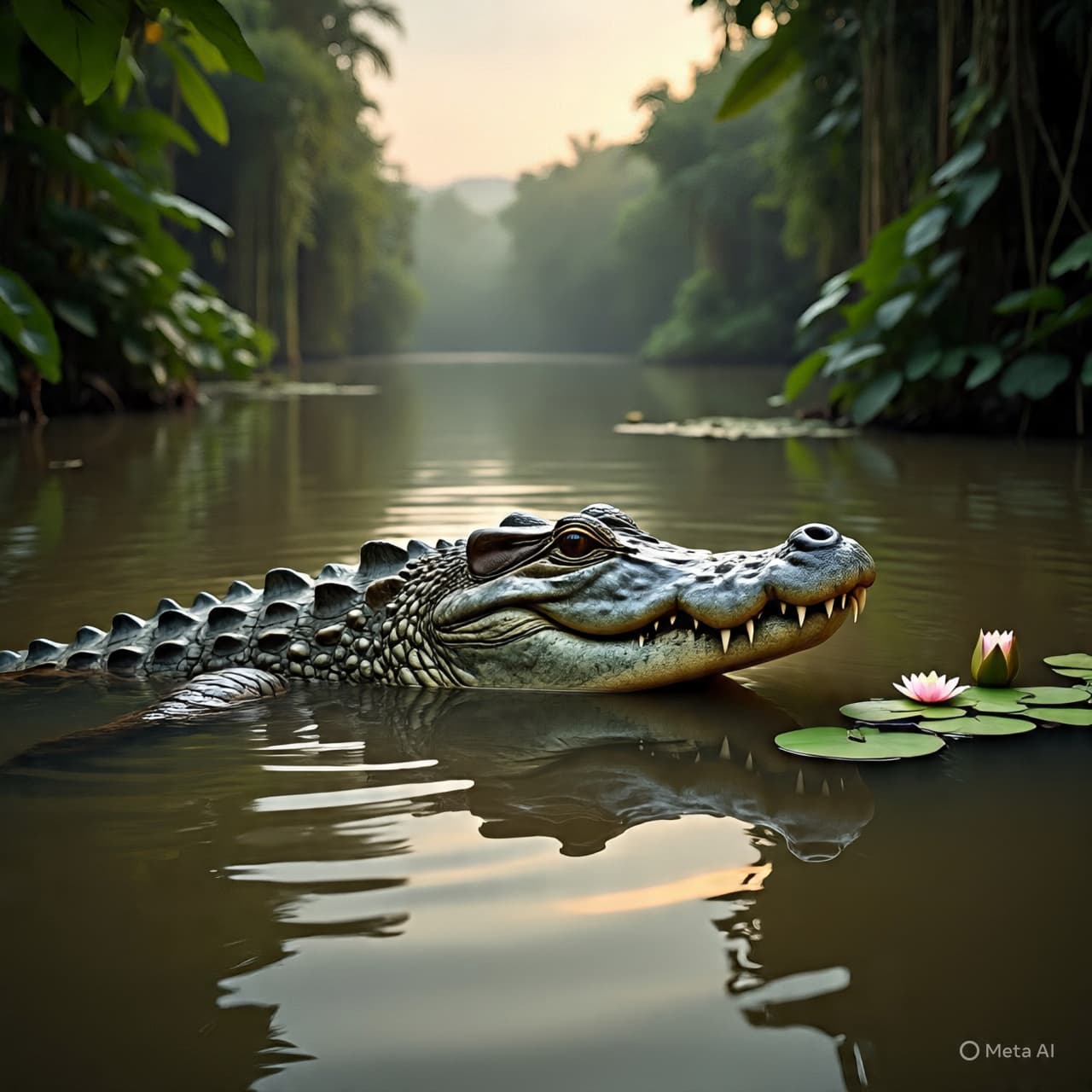
There are places where water weaves itself into the fabric of life so completely that the land and its inhabitants are bound together by seasons of rain and sun, ebb and flow, cups of freshwater and salt. In the far north of Western Australia’s Kimberley region, such landscapes have always stood at the edge of human experience and deep natural rhythms. Last month, that delicate balance was brought into sharp relief when a man’s routine day became a reminder of how closely humans and the wild can brush against one another.
According to local authorities, a three‑metre saltwater crocodile emerged near La Djardarr Bay, where a man was pursuing traditional hunting, and attacked him, leaving him with lacerations that eventually required more than two hours’ drive to reach medical help in Broome Hospital. That close encounter — survived but sobering — has prompted renewed calls from community members for greater crocodile surveillance and safety awareness across the remote region.
For many who live in these parts, waterways are life itself. Children grow up learning to swim in rivers, families gather food and wander along shores, and elders remind young ones of ancestral traditions that tie them intimately to the land and sea. Yet in this northern landscape, rivers and estuaries are also home to saltwater crocodiles — powerful predators whose numbers appear to be increasing and whose presence can be unpredictable.
Bardi Jawi Rangers coordinator Phillip “Bibido” McCarthy spoke of sightings stretching beyond familiar recreational waters to places once considered safer for family activities and fishing. “We get sightings every year,” he said, “you see them where our guys are swimming, where our children are swimming, where our family members are hunting and gathering.” To McCarthy, the recent incident underscores the need not only for more visible safety signs at entry points to communities and boat ramps, but also for expanded monitoring and surveys to better understand the crocodile population across the West Kimberley.
In some ways, the call for increased surveillance reflects a deeper conversation about coexistence — how communities honor centuries of connection to land and water, while also navigating the realities of contemporary wildlife patterns. Crocodiles, McCarthy noted, “can walk miles and find a place to wait for food; they’re an animal that stalks and plans.” This observation, spoken gently yet with earnest concern, paints a quiet image of an animal whose ancient instincts remain deeply rooted in the ecology of the region.
From government departments urging people to be “crocwise” around fresh and saltwater waterways to local rangers advocating for broader education and signs that catch the eye of travellers and residents alike, the message is consistent: respect the land, but be mindful of its conversations with the wild.
In the days since the attack, there have been no recent reports of further serious incidents, but the memory of that gentle tension between human routine and nature’s ancient presence lingers — a reminder that in these wild reaches, even the most ordinary moments can call for extraordinary care.
AI Image Disclaimer Illustrations were produced with AI and serve as conceptual depictions.
Sources Radio New Zealand, ABC Kimberley / ABC News Australia.
Published by Banx Network. This article is part of the Banx decentralized media programme, powered by the BXE token on the XRP Ledger.


