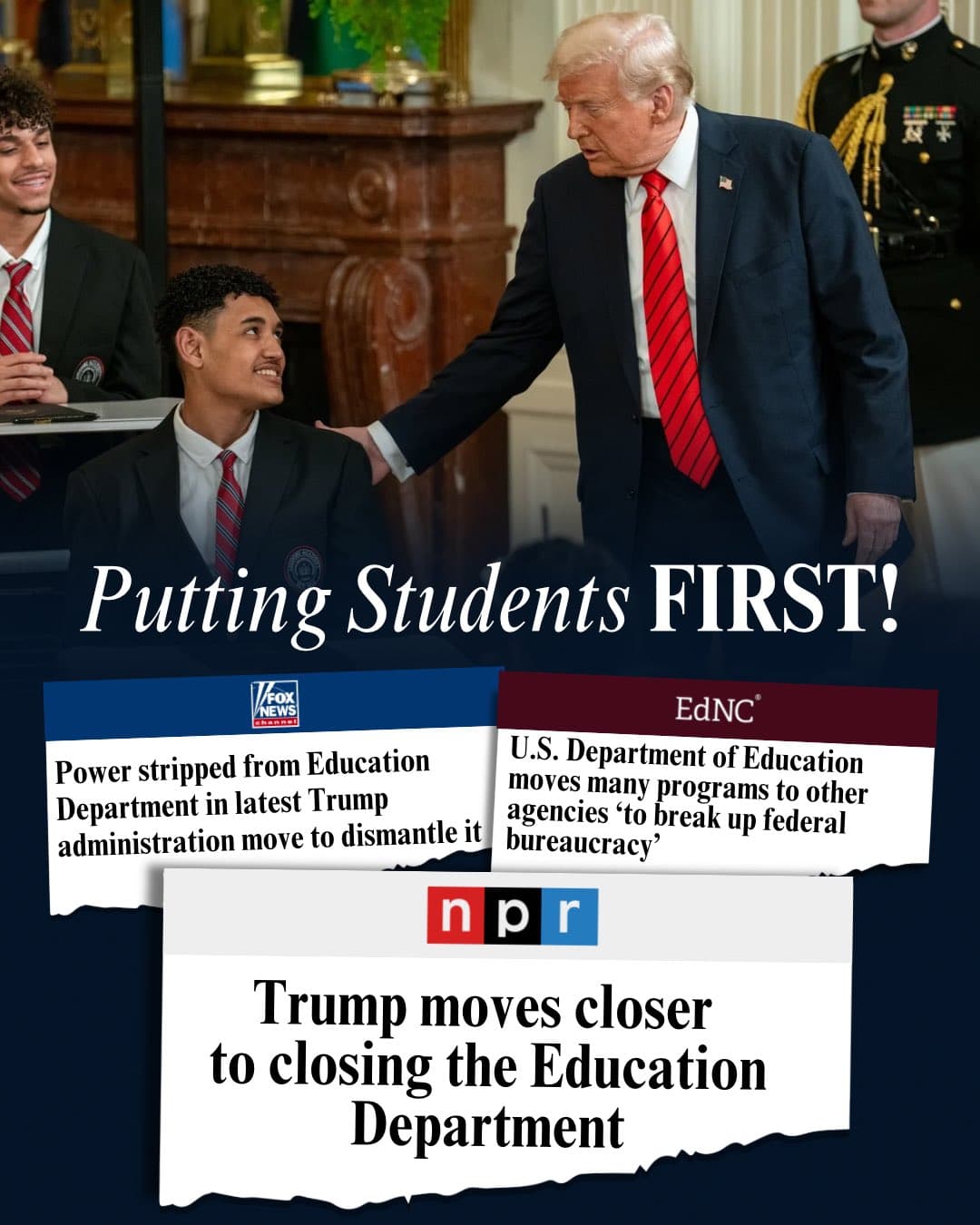
In recent weeks, a bold national conversation has exploded across the United States: Should the federal government continue to control education, or should power return directly to states, communities, and families? A viral post from the U.S. Department of Labor has intensified that debate, highlighting a major policy shift framed around “putting students FIRST.”
At the center of this movement is the idea that educational success is being held back by decades of growing federal bureaucracy. Supporters argue that countless layers of regulation—from funding approvals to curriculum restrictions—slow down innovation and limit how quickly schools can adapt to student needs.
This shift proposes something dramatic: reducing or even dismantling parts of the federal education structure so that decision-making happens closer to classrooms. Advocates believe students benefit most when local educators, parents, and communities are trusted to lead.
News headlines have echoed this, showcasing a surge of reforms aimed at moving programs, budgets, and administrative control away from Washington, D.C. The goal? Streamlined oversight, faster improvements, and more freedom for schools to experiment with modern learning models.
Critics warn that removing federal oversight may widen inequality between states. Supporters counter that the current system already produces uneven results—and that excessive bureaucracy only adds confusion, cost, and delay.
In the image shared widely online, the message is symbolic: a leader engaging directly with students, emphasizing human connection over institutional complexity. It’s a visual promise that the future of education should prioritize students over systems.
Whether these reforms become permanent or simply spark debate, one fact is clear: The conversation around American education has shifted from managing systems to delivering results. And at the center of that shift are the students who depend on a system strong enough to guide them—yet flexible enough to let them thrive.
Published by Banx Network. This article is part of the Banx decentralized media programme, powered by the BXE token on the XRP Ledger.