History is often imagined as something written in ink, preserved in texts and monuments. Yet beneath the surface of human memory lies another archive—one written in DNA, carried silently across generations. It is a record not of words, but of change, adaptation, and survival.
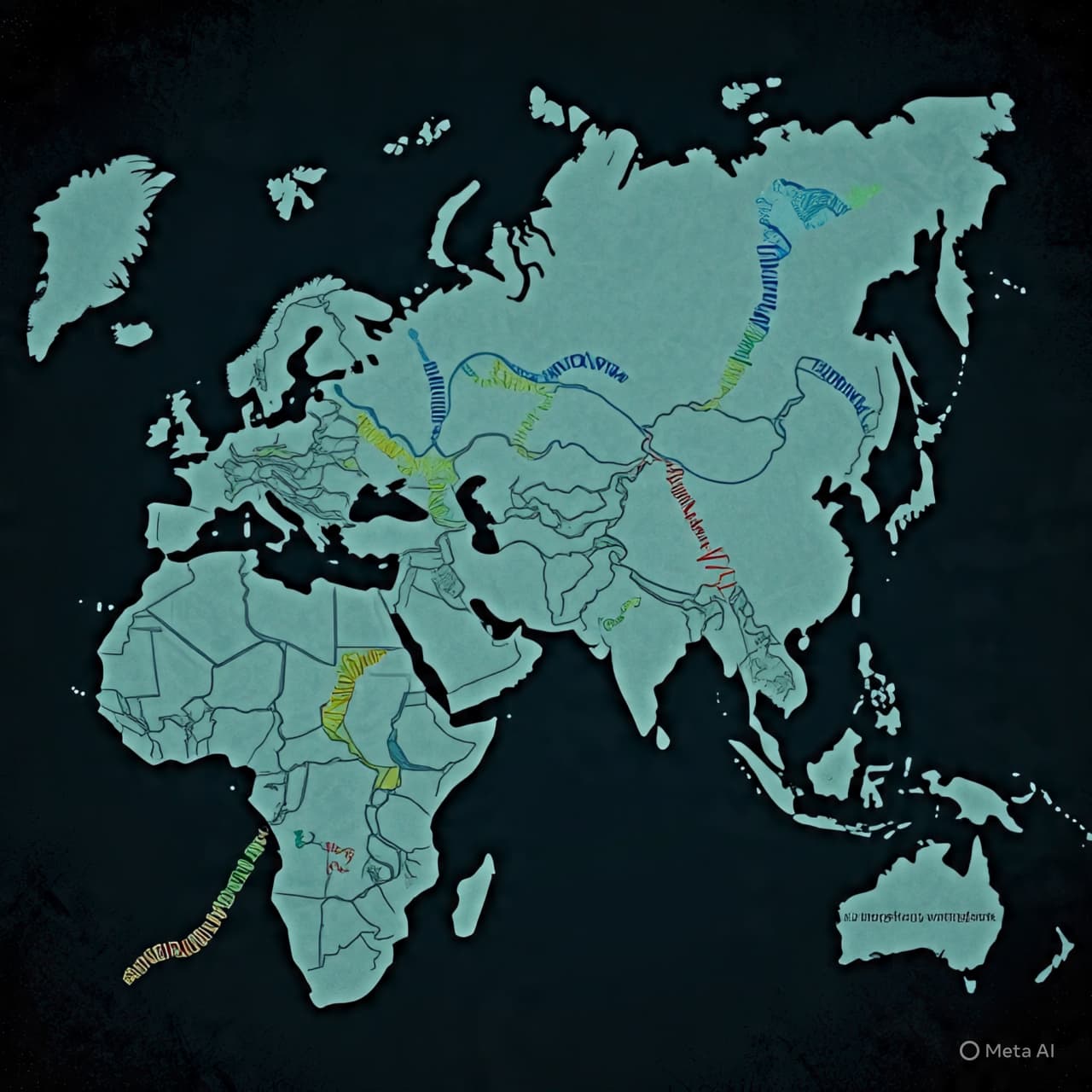
Recent studies analyzing ancient DNA from populations across West Eurasia have uncovered evidence of widespread directional selection. This process, in which certain genetic traits become more common over time, reflects how human populations adapted to shifting environments, diets, and diseases.
By examining genetic samples spanning thousands of years, researchers identified consistent patterns where specific traits increased in frequency. These changes were not random. They point to evolutionary pressures shaping populations in response to real-world challenges.
One key area of adaptation involves diet. As agriculture spread across Eurasia, human populations transitioned from hunter-gatherer lifestyles to farming. This shift influenced genes related to digestion, metabolism, and nutrient absorption, illustrating how culture and biology evolved together.
Another significant factor is disease resistance. Ancient DNA reveals how populations gradually developed genetic defenses against pathogens, particularly as settlements grew denser and exposure to disease increased. These adaptations were essential for survival in changing social environments.
Skin pigmentation and physical traits also show signs of directional selection. Variations in sunlight exposure across regions contributed to shifts in traits that regulate vitamin D production and protection from ultraviolet radiation.
What makes this research particularly compelling is its scale. Instead of isolated findings, scientists observe patterns repeated across vast regions, suggesting that similar forces shaped multiple populations simultaneously.
However, the story is not one of uniform progress. Evolution is complex, often involving trade-offs. Traits that offered advantages in one context may have posed challenges in another, reflecting the delicate balance of adaptation.
The use of ancient DNA has transformed the study of human history, allowing researchers to move beyond artifacts and into the biological fabric of past populations. It offers a more intimate understanding of how humans responded to their environments over millennia.
As more data becomes available, the picture continues to evolve. Each genetic sequence adds another layer to the narrative, revealing not just where humans came from, but how they changed along the way.
In the end, the findings do not rewrite history so much as deepen it. They remind us that the past is not distant—it is carried within us, encoded in patterns shaped long before we were aware of them.
AI Image Disclaimer Visuals are created with AI tools and are not real photographs.
Source Check: Nature Science Advances BBC The New York Times Scientific American
Published by Banx Network. This article is part of the Banx decentralized media programme, powered by the BXE token on the XRP Ledger.