We often imagine the universe as a vast, uniform expanse, stretching equally in all directions. But what if the fabric of space itself holds a subtle asymmetry, a twist that challenges our fundamental assumptions? Recent studies have revisited the cosmic microwave background (CMB), the afterglow of the Big Bang, to search for signs of such a rotation. While current evidence remains inconclusive, the question itself invites us to reconsider the symmetry of the cosmos and the limits of our understanding.
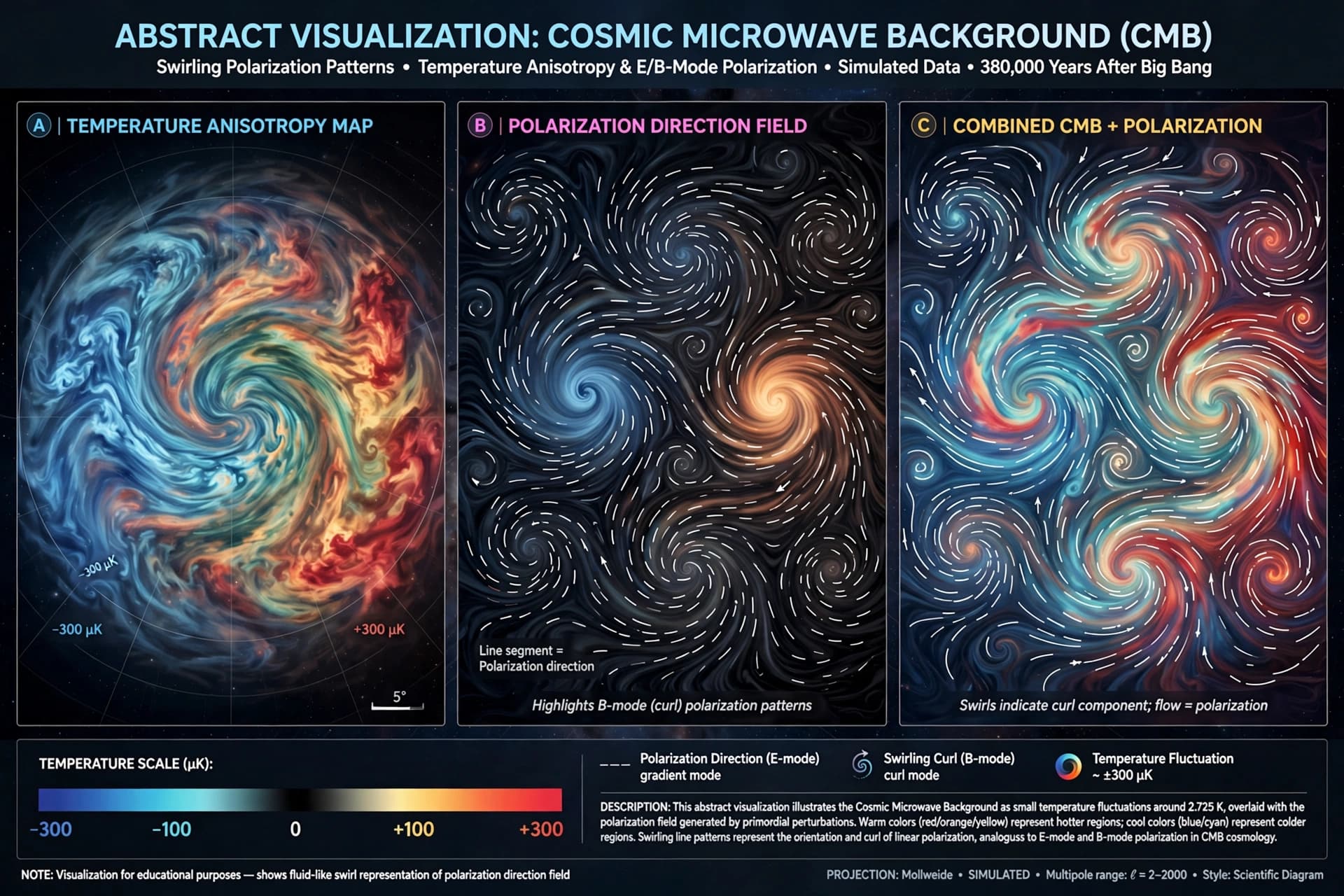
The cosmic microwave background is the oldest light in the universe, emitted just 380,000 years after the Big Bang. It serves as a snapshot of the infant universe, providing crucial data for cosmologists. Standard models assume that the universe is isotropic, meaning it looks the same in every direction. However, some theories suggest that the universe might have a preferred axis or a slight rotational component, which would leave a distinct imprint on the polarization of the CMB.
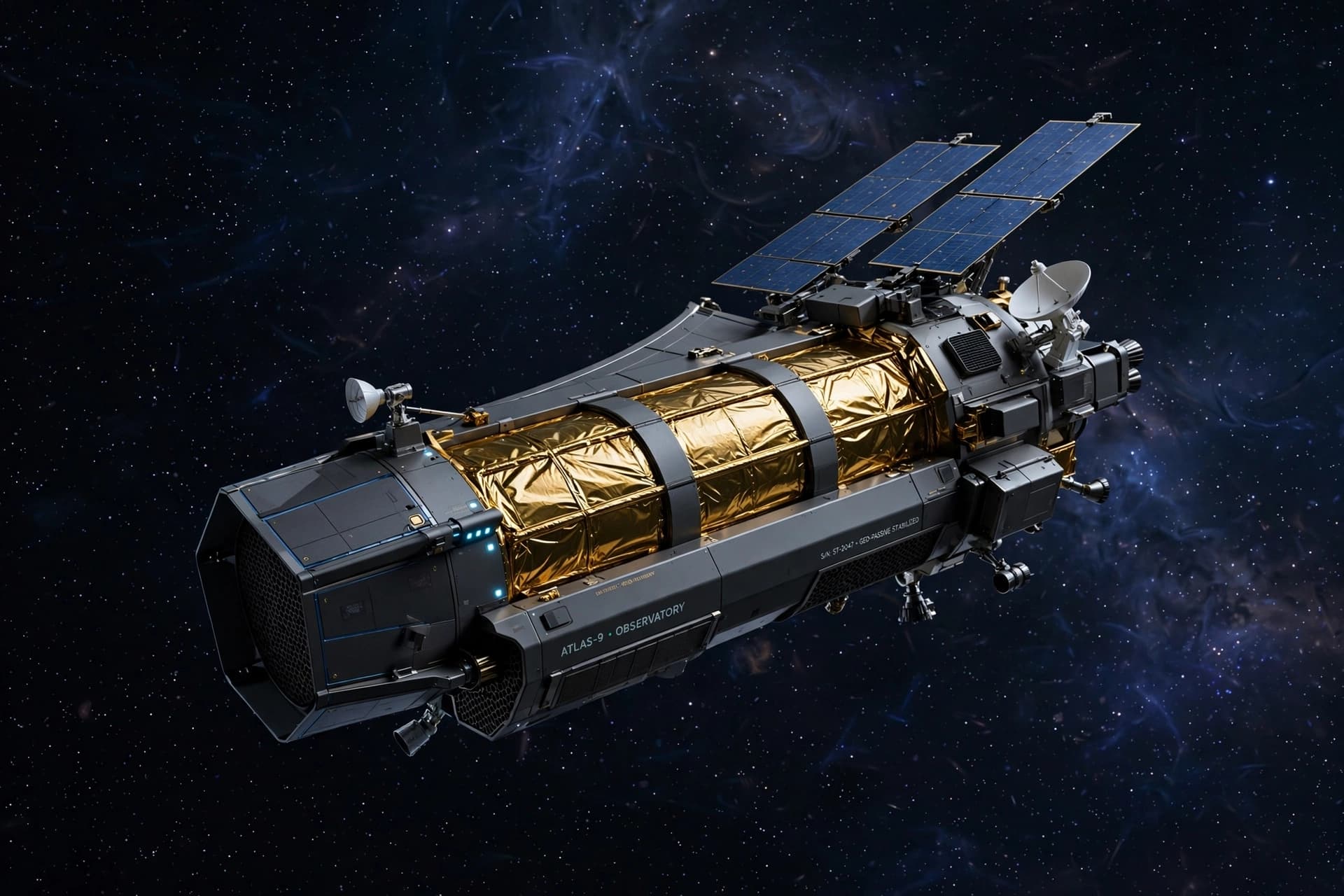
Researchers used data from advanced satellites and ground-based telescopes to analyze the polarization patterns of the CMB. They looked for specific signatures, known as B-modes, that could indicate a twisting of space-time. While previous studies had hinted at anomalies, this new check applied more rigorous statistical methods to rule out instrumental errors and foreground contamination. The goal was to determine if any observed asymmetry was real or merely a artifact of measurement.
The results, while not definitively proving a twist, have tightened the constraints on such models. They suggest that if the universe is rotating, the rate is incredibly slow, far below the threshold that would disrupt current cosmological theories. This negative result is still valuable, as it helps refine our models and eliminates certain speculative scenarios. It reinforces the robustness of the standard model of cosmology while keeping the door open for future discoveries.
The search for a twisted universe is part of a broader effort to test the foundations of physics. Concepts like parity symmetry, which states that physical laws are the same in a mirror image, are central to our understanding of particle physics and gravity. Finding a violation of this symmetry on a cosmic scale would revolutionize our understanding of fundamental forces. It would suggest that the universe has a handedness, a directionality that permeates everything.
For the public, the idea of a spinning or twisted universe is captivating. It challenges the intuitive notion of a static, balanced cosmos. Even if the universe proves to be symmetric, the act of questioning it drives scientific progress. It reminds us that knowledge is not static but evolves through constant testing and refinement.
As technology improves, future missions will provide even higher precision data. Instruments like the upcoming LiteBIRD satellite aim to measure CMB polarization with unprecedented accuracy. These efforts will continue to probe the deepest questions about the origin and structure of the universe, seeking answers in the faintest echoes of creation.
The latest check on a possible twist in the universe’s oldest light reinforces the current standard model while highlighting the importance of continuous verification. Whether the universe is perfectly symmetric or subtly twisted, the quest to know remains a driving force of human curiosity.
AI Image Disclaimer: The visuals in this article are AI-generated artistic interpretations of cosmic microwave background patterns and theoretical physics concepts, not actual data maps from satellites.
Sources: Physical Review Letters Space.com Scientific American
Published by Banx Network. This article is part of the Banx decentralized media programme, powered by the BXE token on the XRP Ledger.