Full Article When Oceans Fade, Continents Wake: How a Lost Sea Helped Build Asia
In the silent spaces beneath our feet, time writes its deepest stories not in words, but in stone. Imagine an ocean so vast that it once stretched like a pale blue ribbon across the heart of the ancient world, its tides brushing against landmasses that now stand as mountains. This is not fantasy, but a chapter out of Earth’s deep memory. It was a sea whose waters vanished over millions of years — yet its legacy lives on in the very bones of Asia.
Long before the Himalayas pierced the skies and deserts sprawled under an arid sun, the Tethys Ocean filled the spaces between continents. Geologists describe this ancient ocean as a vast body of water that separated Gondwana to the south from the northern landmasses of Eurasia. Over tens of millions of years, tectonic forces pushed continents together, squeezing and shrinking the sea until at last it disappeared into the mantle beneath.
New research suggests that the Tethys was much more than a vanished ocean; it was a hidden architect of the Asian continent’s intricate landscapes. According to a study published in Communications Earth & Environment, the closure of this ancient ocean — driven by the march of tectonic plates — initiated a chain reaction that rippled far inland.
As the oceanic crust was gradually subducted — swallowed by the rising masses of colliding plates — ancient fault lines awakened. These old sutures, once dormant scars in the Earth’s crust, became the fulcrum of uplift. In what is now Central Asia, this reactivation formed vast ridges and basins, engraved into the surface long before the mighty collision of India with Eurasia began crafting the Himalayan frontiers.
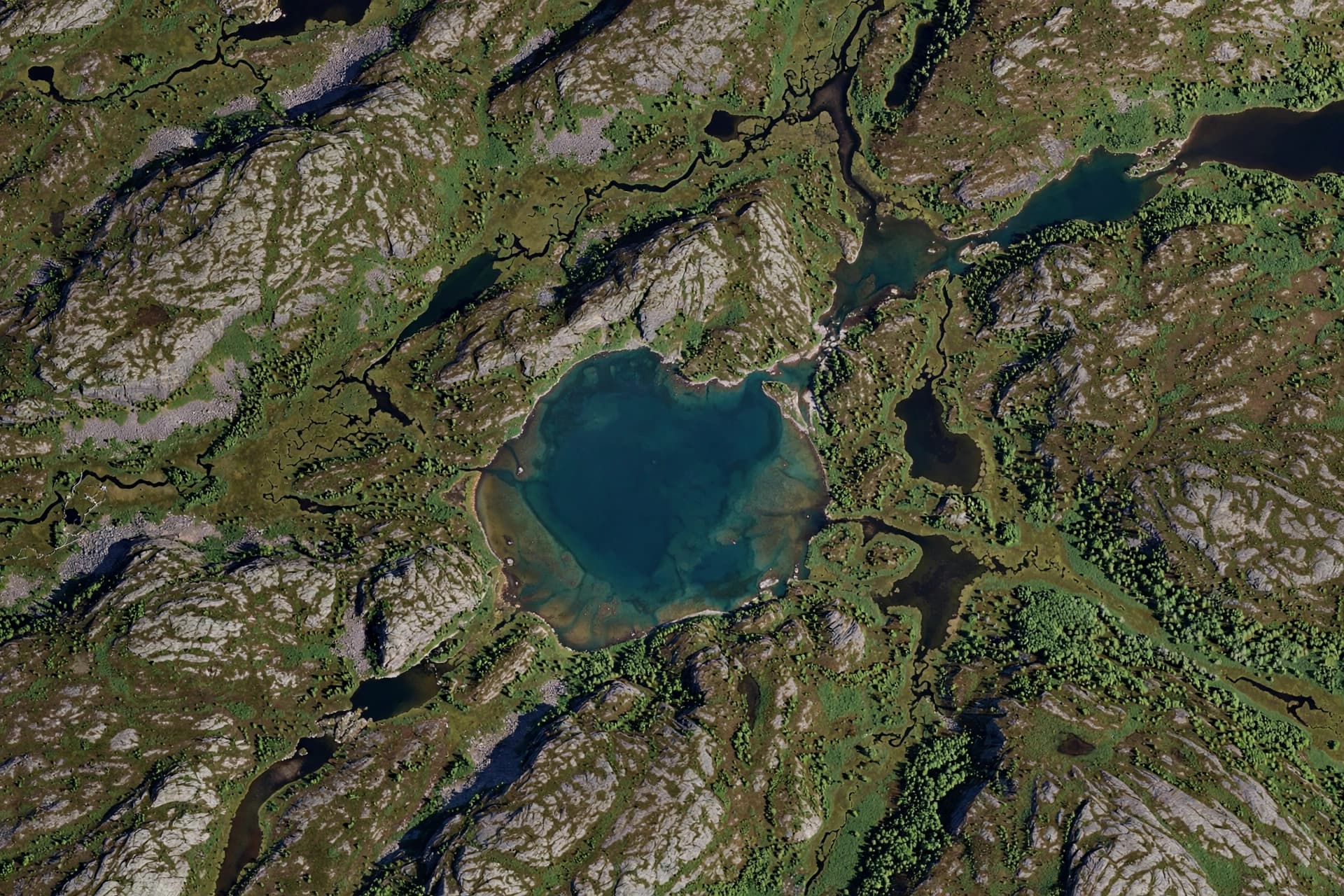
In places such as Turkmenistan, ancient sea floors now lie exposed, fossilized with the remains of once-vibrant marine life. Along cliffs and plateaus, imprints of sea urchins and shellfish tell a story of waters long gone but not forgotten. Today’s rugged relief — the ridges and rolling uplands that seem to echo the curves of waves — is a testimony to those vanished seas.
This tectonic choreography was neither uniform nor swift. Over the span of the Cretaceous and Cenozoic eras, the Tethys shrank, retreated, and ultimately disappeared beneath advancing continents. Yet its influence did not vanish with its waters. The ocean’s gradual closure played a significant role in shaping the orogenic belts — the mountain belts — that stretch across Eurasia, from the Tian Shan in the north to the high plateaus farther south.
Even today, the debris of that ancient ocean can be read by scientists like pages in an old manuscript. Rocks carry the thermal memory of depths and pressures long past, telling geologists where uplift once pressed them toward the surface. These thermal signatures help reconstruct a hidden Earth, where oceans and continents danced in a slow yet dramatic ballet.
In this grand sweep of geological time, the vanished Tethys Ocean was not simply water in a basin. It was a moving force — a dynamic boundary that helped shape the continents, nurture ancient marine life, and lay the foundations for mountains that would one day host human civilizations. What vanished from view still shapes the landscapes we call home.
And so, each ridge and valley is more than a feature of the present — it is a monument to the deep past, a reminder that even oceans, once lost, leave an enduring legacy in stone.
AI Image Disclaimer “Visuals are created with AI tools and are not real photographs.”
Sources Indian Defence Review Britannica Eos / Journal of Geophysical Research News Central Asia Wikipedia
Published by Banx Network. This article is part of the Banx decentralized media programme, powered by the BXE token on the XRP Ledger.