
Nature occasionally transforms the night sky into a canvas of moving light. These moments, rare for many observers, often inspire a sense of wonder that bridges science and imagination. Across the United States, astronomers are watching conditions that could make such a display visible far beyond its usual range.
Recent forecasts suggest that auroras, commonly known as the Northern Lights, may become visible across more than twenty U.S. states. The prediction follows increased solar activity that has sent charged particles toward Earth.
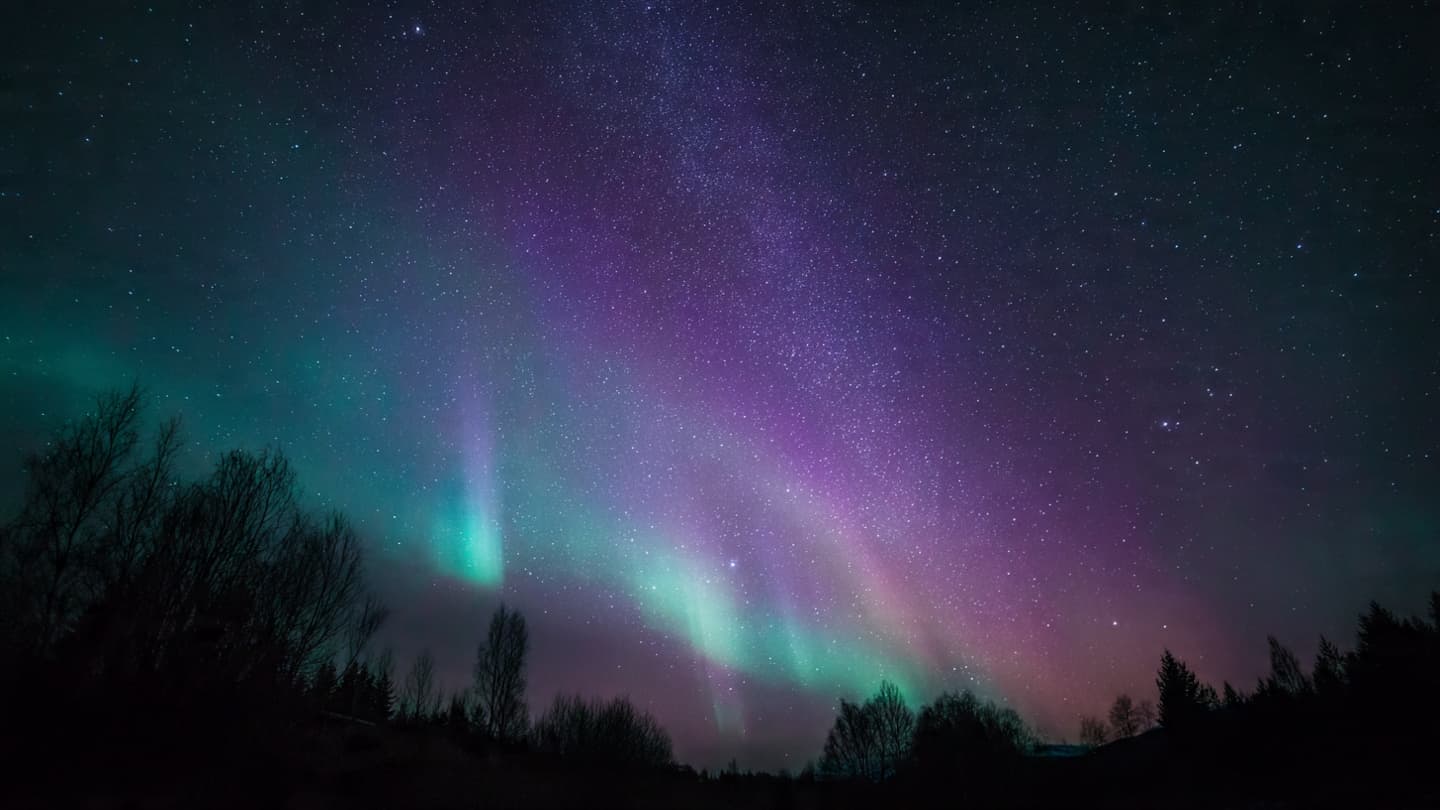
Auroras occur when energetic particles from the Sun interact with Earth's magnetic field and upper atmosphere. These collisions produce colorful displays that can appear as shimmering curtains, arcs, or waves of light.
Typically, auroras are most commonly observed in regions closer to the Arctic. During periods of stronger geomagnetic activity, however, the phenomenon can extend much farther south than usual.
Astronomers and space weather experts have encouraged skywatchers to monitor forecasts and seek locations with dark skies and minimal light pollution. Weather conditions will also play an important role in visibility.
The event highlights the close relationship between solar activity and Earth's environment. While auroras are visually striking, they also serve as indicators of interactions occurring far beyond the atmosphere.
Photographers and amateur astronomers are expected to take advantage of the opportunity. Advances in camera technology have made it easier to capture detailed images of auroral displays.
Scientists continue monitoring geomagnetic conditions as new data becomes available. Forecasts may be adjusted depending on the strength and timing of incoming solar material.
For many observers, the possibility of witnessing the Northern Lights from unexpected locations adds a sense of excitement to the night sky. It is a reminder that even familiar horizons can occasionally reveal extraordinary scenes.
AI Image Disclaimer: Images included with this article are AI-generated visual interpretations intended for editorial and educational purposes.
Sources (Verification Check): Live Science, NOAA Space Weather Prediction Center, CBS News, Space.com, NASA
Published by Banx Network. This article is part of the Banx decentralized media programme, powered by the BXE token on the XRP Ledger.



