The night sky has long been a quiet companion to humanity, offering moments of reflection that stretch far beyond the horizon. While cities glow with artificial light and daily routines move at an unrelenting pace, the stars continue their timeless rhythm above. This July, NASA has invited skywatchers to pause and look upward, where Saturn, a returning comet, and the bright band of the Milky Way are expected to provide memorable celestial sights.
As part of its monthly skywatching guidance, NASA outlined several astronomical events that can be observed during July with little more than clear weather and patience. The agency encourages both experienced astronomers and casual stargazers to spend time outdoors, noting that many of the month's highlights are visible without specialized equipment, although binoculars or a small telescope can enhance the experience.
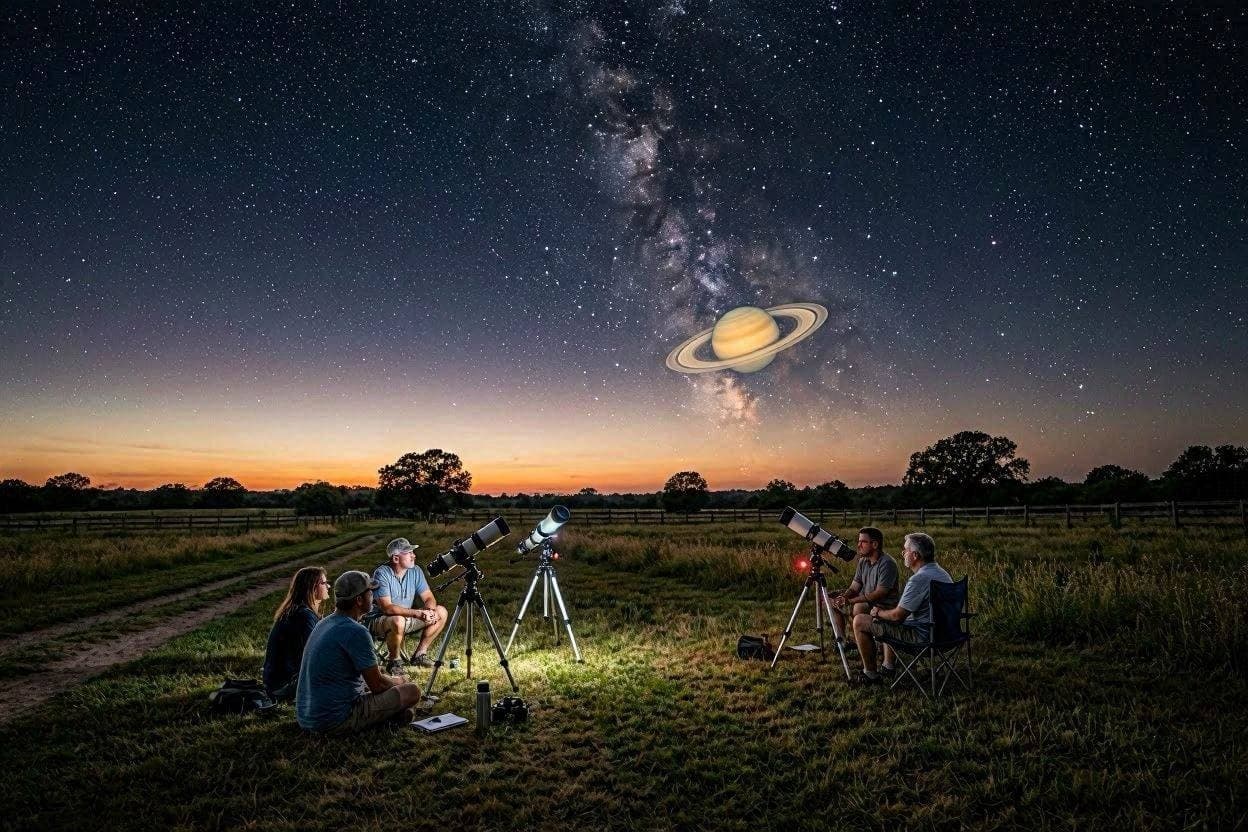
One of the most anticipated sights is Saturn, which rises late in the evening and gradually becomes more prominent before dawn. The ringed planet appears brighter as Earth and Saturn continue moving into a more favorable viewing alignment. Through a telescope, observers may also distinguish its iconic rings and some of its larger moons under suitable viewing conditions.
NASA also pointed to the return of periodic Comet 21P/Giacobini-Zinner, a celestial visitor known for making repeated journeys through the inner solar system. Although the comet may appear relatively faint for many observers, those with darker skies and optical assistance could have opportunities to locate it. Astronomers note that visibility depends on local observing conditions and the comet's changing brightness throughout its orbit.
Another seasonal highlight is the Milky Way, whose dense central band becomes increasingly visible across the night sky during the Northern Hemisphere summer. Away from urban light pollution, observers can witness countless stars blending into a luminous arc that reflects the immense scale of our home galaxy. For many, it remains one of the most inspiring natural spectacles visible from Earth.
NASA also recommends planning observations around moon phases, since darker skies make faint celestial objects easier to detect. Checking local weather forecasts and choosing locations with minimal artificial lighting can significantly improve viewing conditions. These practical steps allow both amateur photographers and casual observers to appreciate the richness of the night sky.
The agency regularly publishes monthly skywatching updates as part of its public outreach efforts, helping people better understand astronomical events and encouraging broader interest in space science. Such guides often include observing tips, planetary movements, meteor activity, and notable constellations visible throughout the month.
July's collection of celestial events serves as a reminder that remarkable discoveries are often found simply by looking upward. With Saturn rising before dawn, a returning comet passing through familiar skies, and the Milky Way arching across dark horizons, NASA's latest skywatching guide offers another opportunity for people around the world to reconnect with the universe beyond Earth's atmosphere.
AI Image Disclaimer: The illustrations accompanying this article are AI-generated visual interpretations created for editorial purposes and do not depict actual photographs of the reported events.
Source Verification Check: Strong credible sources found.
Sources:
NASA Space.com Sky & Telescope EarthSky Live Science
Published by Banx Network. This article is part of the Banx decentralized media programme, powered by the BXE token on the XRP Ledger.