The main highway that runs parallel to the Rhine serves as the primary artery of Liechtenstein, connecting the industrial hubs of the valley floor with the broader transit networks of Switzerland and Austria. Every morning, this route is alive with the focused energy of a regional economy—commuters driving toward Vaduz or Schaan, and heavy commercial rigs carrying goods across the borders. It is a space where efficiency is paramount.
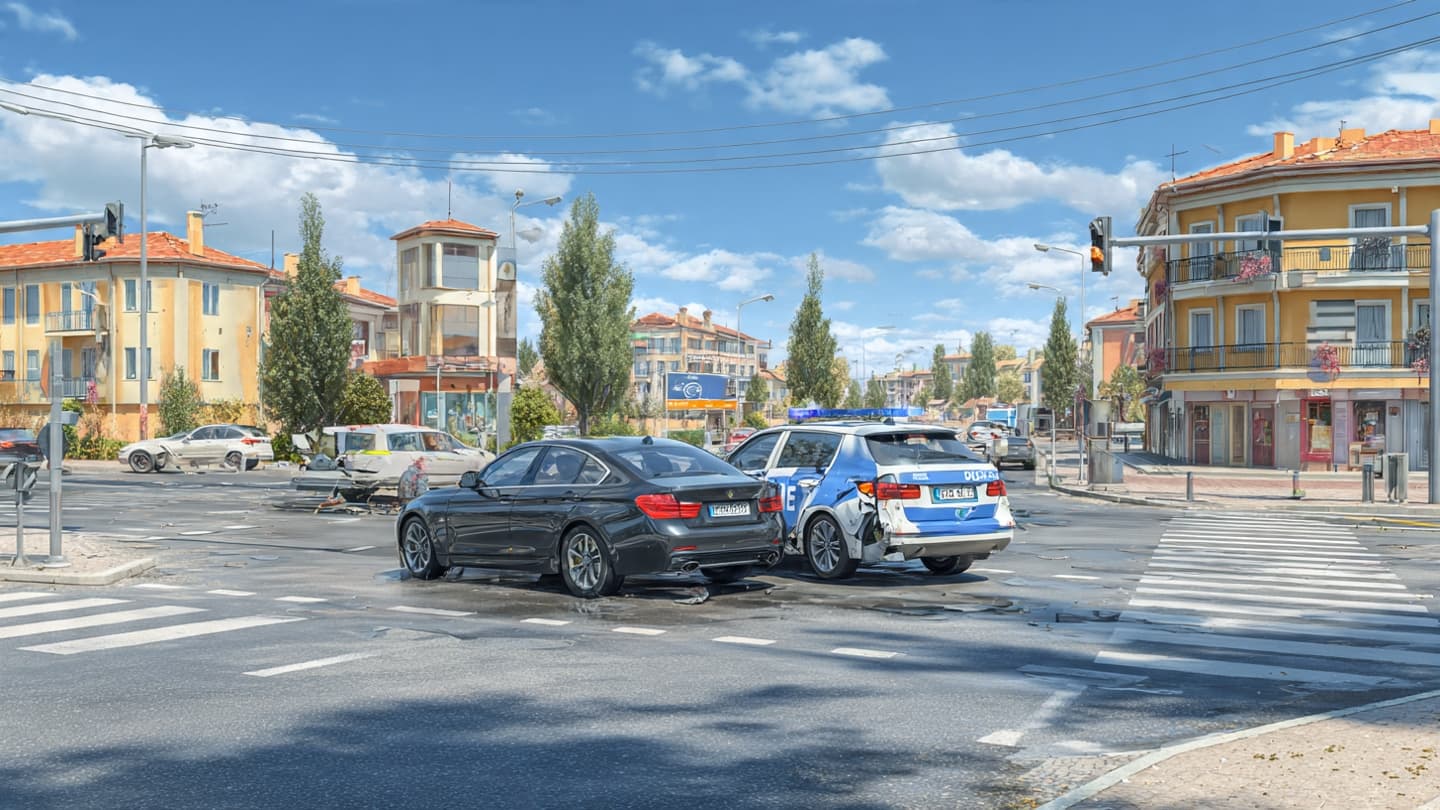
This vital momentum was severely disrupted during the peak morning hours when two heavy commercial vehicles collided on a narrow stretch of the highway. The impact, which caused substantial damage to the cabs of both trucks, left the large trailers jackknifed across the primary lanes, completely blocking the forward movement of all trailing traffic. In an instant, the country’s main economic artery was effectively severed.
The resulting gridlock formed with astonishing speed, backing up for kilometers into the access roads and neighboring villages. Drivers, suddenly trapped in an unmoving sea of steel, turned off their ignitions and stepped out into the cool morning air to assess the situation. The quiet valley landscape was filled with the distant, echoing wail of approaching emergency sirens navigating the perimeter.
National police and emergency response teams arrived at the scene, immediately recognizing the complexity of the recovery operation required. The sheer mass of the entangled trucks meant that standard towing equipment would be insufficient; specialized heavy-lift cranes had to be summoned from regional depots. The responders focused first on ensuring the safety of the drivers involved, who fortunately suffered no life-threatening injuries.
To look down upon the Rhine valley during such a stoppage is to see the delicate balance of modern infrastructure. The long lines of cars and delivery vans, parked bumper-to-bumper against the backdrop of the historic castles and green vineyards, appeared as a frozen monument to human vulnerability. The local police worked to manually divert what vehicles they could onto the smaller secondary routes through the fields.
The clearing operation was a slow, methodical process that required the careful separation of the damaged chassis and the cleanup of a significant fuel spill that threatened the roadside soil. Environmental safety teams worked alongside the mechanical crews, spreading absorbent materials over the asphalt to contain the fluids before they could reach the nearby drainage systems. Every step was taken with an emphasis on precision.
As the morning progressed into afternoon, the heavy cranes finally succeeded in lifting the disabled trailers onto flatbed transports, allowing the road crews to begin repairing the gouged surface of the highway. The patience of the delayed commuters was tested, yet the prevailing mood remained one of calm cooperation, an understanding that such disruptions are the price of a highly connected life.
By midday, the highway was officially reopened to traffic, allowing the massive accumulation of vehicles to slowly dissolve into the wider European network. The heavy diesel engines rumbled back to life, and the normal pulse of the valley was restored, the incident leaving behind only the memory of a morning spent standing still by the banks of the Rhine.
Published by Banx Network. This article is part of the Banx decentralized media programme, powered by the BXE token on the XRP Ledger.