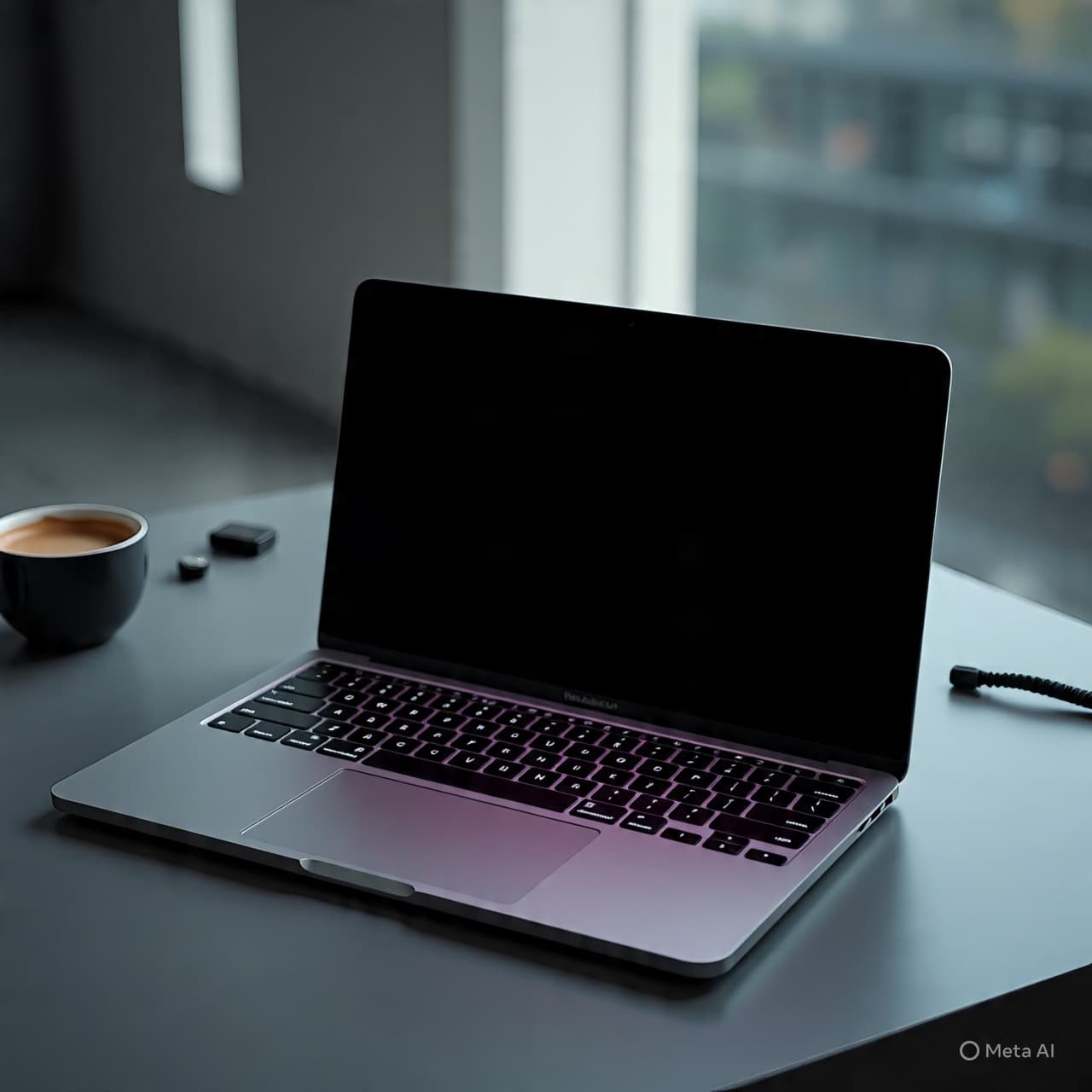
There are moments in technology when a familiar object begins to feel quietly unfinished—as if it has been waiting, patiently, for its next form. The laptop, long defined by the separation of screen and touch, has remained one of those objects. For years, has treated that boundary as intentional, even essential. And yet, recent reports suggest that this philosophy may be softening, opening the door to a different kind of interaction.
According to converging reports, Apple is preparing a redesigned MacBook Pro expected to arrive in 2026—one that introduces an OLED display, touchscreen capabilities, and a rethinking of how macOS responds to direct input. If realized, this would mark a notable shift for a company that has historically drawn a clear line between its Mac and iPad experiences.
The move toward OLED is, in some ways, the more predictable part of the transition. Known for deeper blacks, improved contrast, and energy efficiency, OLED displays have already become a standard in many high-end devices. Bringing that technology to the MacBook Pro would not only enhance visual fidelity but also align the product with broader display trends across Apple’s ecosystem.
The introduction of touch, however, carries a different weight. For years, Apple has suggested that traditional laptops are best navigated with a keyboard and trackpad, leaving touch interactions to devices like the iPad. A touchscreen MacBook would not simply add a feature—it would invite a reconsideration of how macOS itself behaves.
Reports also point to a potential adaptation of interface elements, including something reminiscent of the “Dynamic Island” concept seen on iPhones. While details remain limited, the idea suggests a more fluid, responsive interface—one that could bridge the gap between pointer-based and touch-based interaction without fully abandoning either.
Still, this transition appears measured rather than radical. Apple is unlikely to merge its platforms outright; instead, it may be seeking a middle ground where each retains its identity while borrowing selectively from the other. The redesign of macOS controls would likely reflect this balance, ensuring that touch enhances rather than replaces existing workflows.
As with all forward-looking reports, there is a space between expectation and confirmation. Timelines may shift, features may evolve, and the final product may differ in subtle or significant ways. Yet, the consistency of these reports suggests a direction that is becoming increasingly difficult to ignore.
If a touchscreen OLED MacBook Pro does arrive in 2026, it may not feel like a sudden leap, but rather a gradual unfolding of an idea long held at a distance. A device that once resisted touch may begin to accept it—not as a contradiction, but as an extension.
And in that quiet shift, the laptop may become something slightly different from what it has always been.
AI Image Disclaimer Images in this article are AI-generated illustrations, meant for concept only.
Source Check Bloomberg MacRumors The Verge 9to5Mac Display Supply Chain Consultants
Published by Banx Network. This article is part of the Banx decentralized media programme, powered by the BXE token on the XRP Ledger.