There is a certain stillness in the way NASA approaches its biggest ambitions — an understanding that journeys to the Moon are built not from spectacle, but from careful, deliberate progress. Artemis II, the agency’s first planned crewed mission beyond low-Earth orbit in more than half a century, is entering a phase where preparation becomes momentum. Each subsystem test, each review, each validated component adds another quiet brick to a road humanity has not walked in decades.
Recent updates from aerospace reporting outline a steady advance in mission-readiness. The Orion spacecraft’s environmental control system has completed key evaluations. The heat shield — redesigned after lessons learned from Artemis I — has undergone structural verification. Engineers have also finalized integration milestones for the crew module and service module, ensuring the spacecraft can support astronauts through high-radiation zones as it loops past the Moon and returns home on a blistering re-entry.
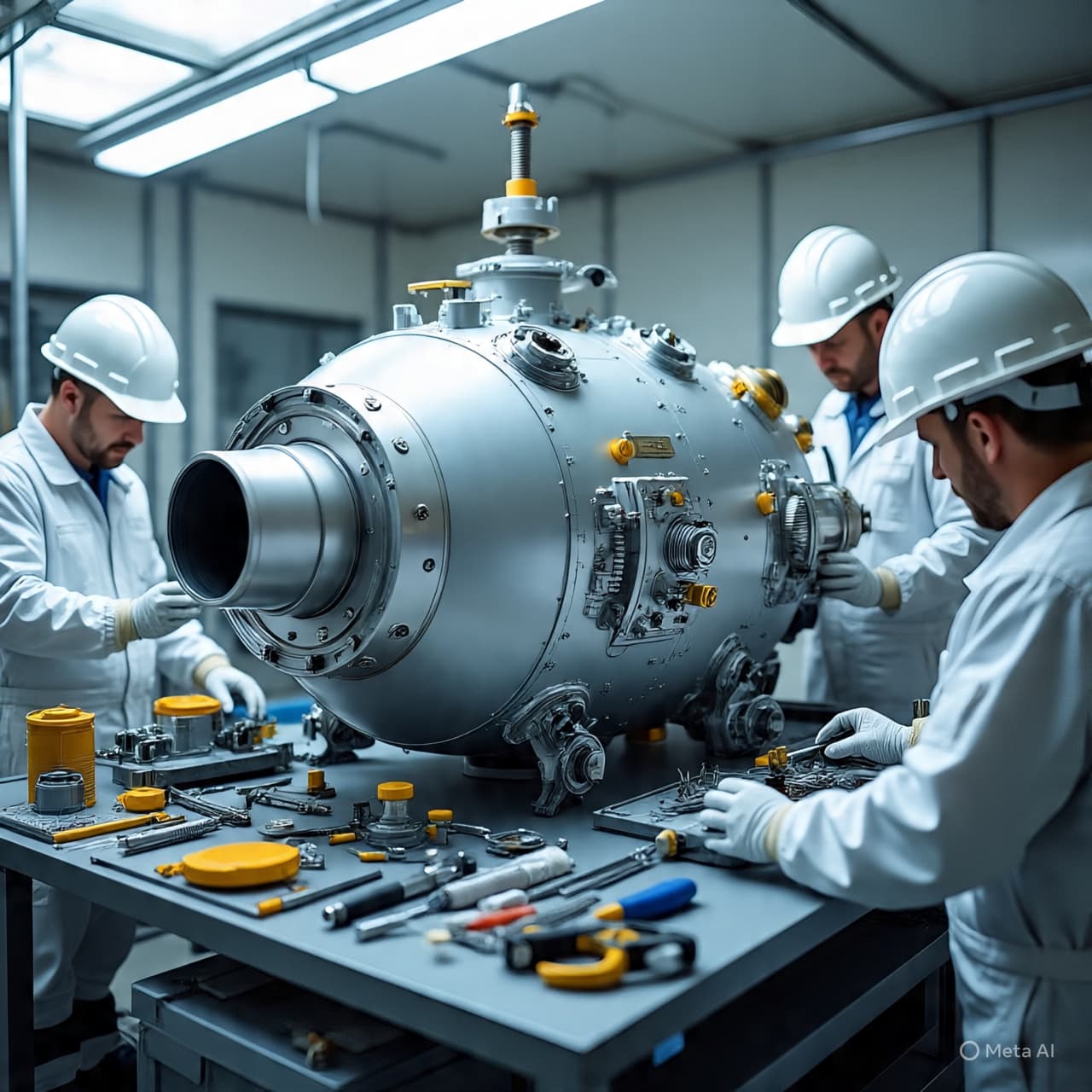
The Space Launch System (SLS), NASA’s towering deep-space rocket, continues its own sequence of refinements. Propulsion teams have been analyzing engine performance from prior test campaigns while reinforcing software systems that orchestrate the rocket’s tightly choreographed ascent. Inside various clean rooms and cavernous testing halls, the mission is taking shape piece by piece — not yet a spacecraft, not yet a flight, but unmistakably becoming both.
Artemis II will not land on the lunar surface; its purpose is more foundational. It will test every life-support system, every communications pathway, every navigation protocol that future crews will rely on when missions extend into longer lunar stays. In a sense, it is the breath before the leap — the human shakedown flight proving that the new deep-space architecture is ready to carry explorers farther.
The schedule remains fluid, shaped by technical realities rather than symbolic dates. NASA’s tone has been measured, emphasizing safety over speed. This kind of restraint may feel unfashionable in a world obsessed with rapid iteration, but spaceflight demands a different rhythm — one that values reliability over headline cadence.
Even so, the direction is unmistakable. Hardware is moving from test stands to integration bays. Flight procedures are evolving from drafts to rehearsals. Crew training is entering phases that mirror mission timelines more closely. And with each update, the story grows clearer: humanity is edging closer to deep space again.
When Artemis II eventually launches, it will carry more than four astronauts. It will carry the weight of memory — of Apollo’s legacy, of decades of waiting, of a renewed promise to return not as visitors but as students of a world that has always been just beyond reach.
Published by Banx Network. This article is part of the Banx decentralized media programme, powered by the BXE token on the XRP Ledger.