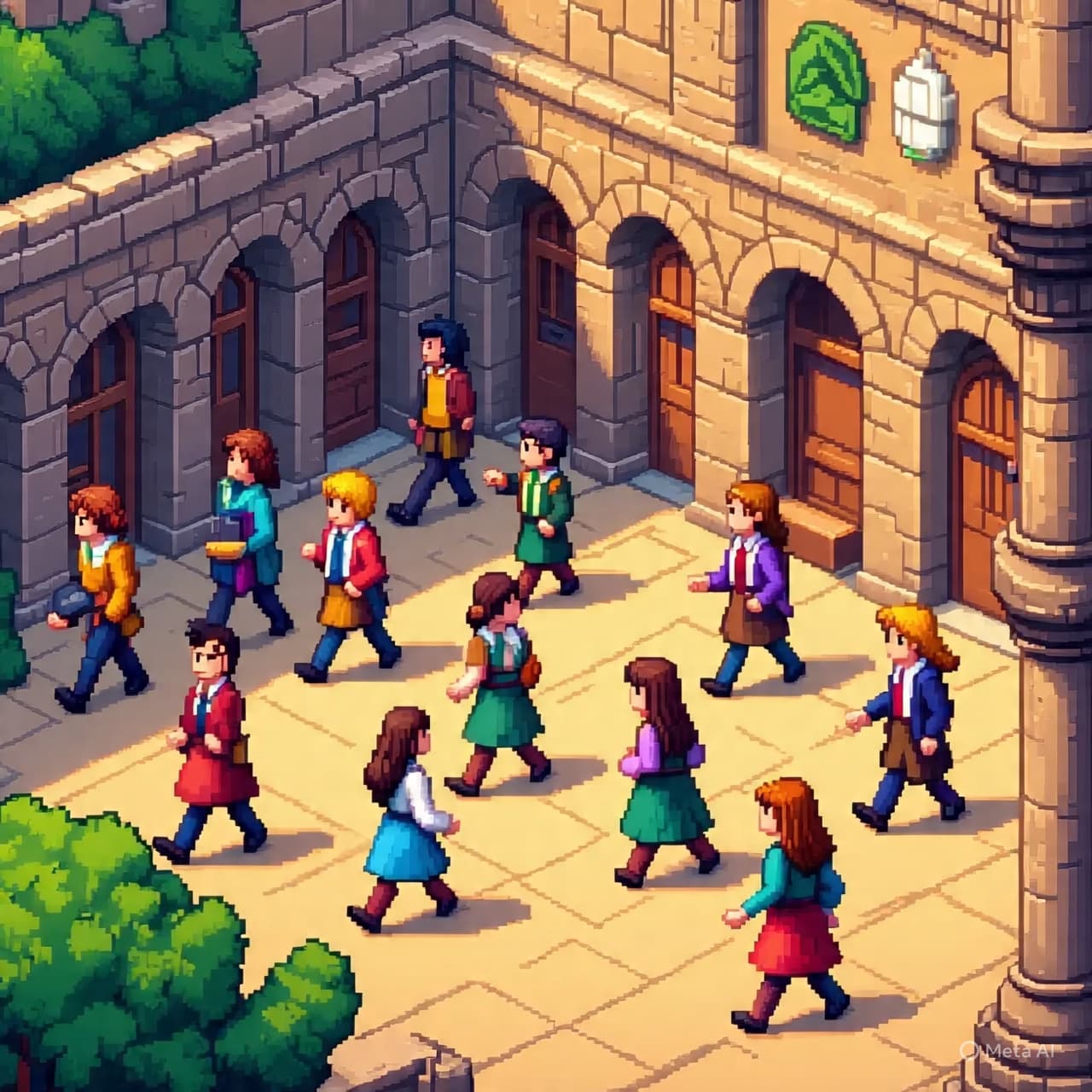
Some games arrive like seasons—announced with promise, anticipated with patience, and expected to bloom in their time. Others linger longer, stretching across years until they begin to feel less like a release and more like a quiet, ongoing story.
Witchbrook belongs to the latter.
First teased nearly a decade ago, the life-simulation RPG from Chucklefish has traveled a long and winding path toward release. In an industry often driven by rapid cycles and constant updates, its prolonged development has raised a simple but persistent question: why has it taken so long?
The answer, it seems, is less about delay—and more about intention.
According to studio leadership, the project underwent a significant shift in direction during its development. Early on, Witchbrook was frequently described as a blend of familiar influences, often compared to magical school fantasies and cozy farming simulators. But rather than lean into those comparisons, the team chose to move away from them, reshaping the game into something more distinct.
This decision, while creative in nature, came with time as its quiet cost.
The studio refocused its efforts on building a deeper simulation experience—one that emphasizes immersion, player freedom, and a world designed to feel alive. The goal, as described by its developers, is to create a space where players would not simply visit, but remain—drawn in by systems that feel layered, responsive, and enduring.
In this light, the passing years begin to resemble something closer to refinement than delay.
The game’s scope has also contributed to its extended timeline. Developers have described Witchbrook as a large and evolving project, one that requires careful integration of its many elements—social systems, world-building, customization, and exploration. Ensuring that these components align into a cohesive experience has required patience, particularly as expectations around simulation games continue to grow.
There is also a quieter philosophy at work beneath the surface.
The studio has emphasized a development approach that avoids “crunch,” prioritizing sustainable working conditions over speed. In an industry where accelerated timelines can often lead to burnout, this choice reflects a different rhythm—one that favors steadiness over urgency, even if it extends the journey.
Over time, the game itself has evolved alongside that philosophy.
Technical changes, including shifts in development tools and engine decisions, have reshaped how the project is built. Meanwhile, additional ambitions—such as broader platform support and expanded features—have gradually expanded its scope.
For players watching from a distance, the experience has been one of anticipation stretched thin.
Updates have been sparse, details carefully revealed, and timelines adjusted. Yet, within that uncertainty lies a consistent message from the developers: the game is progressing, and the extended timeline reflects a desire to meet not only internal expectations, but those of an audience that has waited patiently.
In the end, Witchbrook is expected to arrive in 2026, closing a chapter that began nearly ten years earlier. The long development cycle, shaped by creative shifts, expanded ambitions, and deliberate pacing, reflects a studio choosing to build carefully rather than quickly. Whether that patience will translate into the experience it promises remains to be seen—but the journey itself has already become part of its story.
AI Image Disclaimer Images in this article are AI-generated illustrations, meant for concept only.
Source Check Credible coverage exists from:
Nintendo Everything PC Gamer GamesRadar Game Informer RPGFan
Published by Banx Network. This article is part of the Banx decentralized media programme, powered by the BXE token on the XRP Ledger.