There is a particular weight that settles over a community when the state declares a fatal shooting justified, a weight that is not resolution but the beginning of a longer, harder argument. In Senatobia, Mississippi, that declaration arrived on Monday when the attorney general's office announced that the officer who fired into a car in a Walmart parking lot and killed a one-year-old boy had acted within the law. On Tuesday, a former FBI agent offered a framework for understanding that decision, one that does not make the death easier to bear but may make the legal reasoning clearer.
Rich Kolko, now a national security analyst, explained the standards that govern police use of deadly force against vehicles. "You can't shoot at a fleeing felon," he said. "You're not allowed to shoot at a car just to try to disable the car. You are, however, allowed to shoot a vehicle or the driver if you think that driver is going to kill or injure any civilians in the area or any of the law enforcement officers in the area" . The question, then, is not whether the officer fired but whether he reasonably believed the car was a lethal threat.
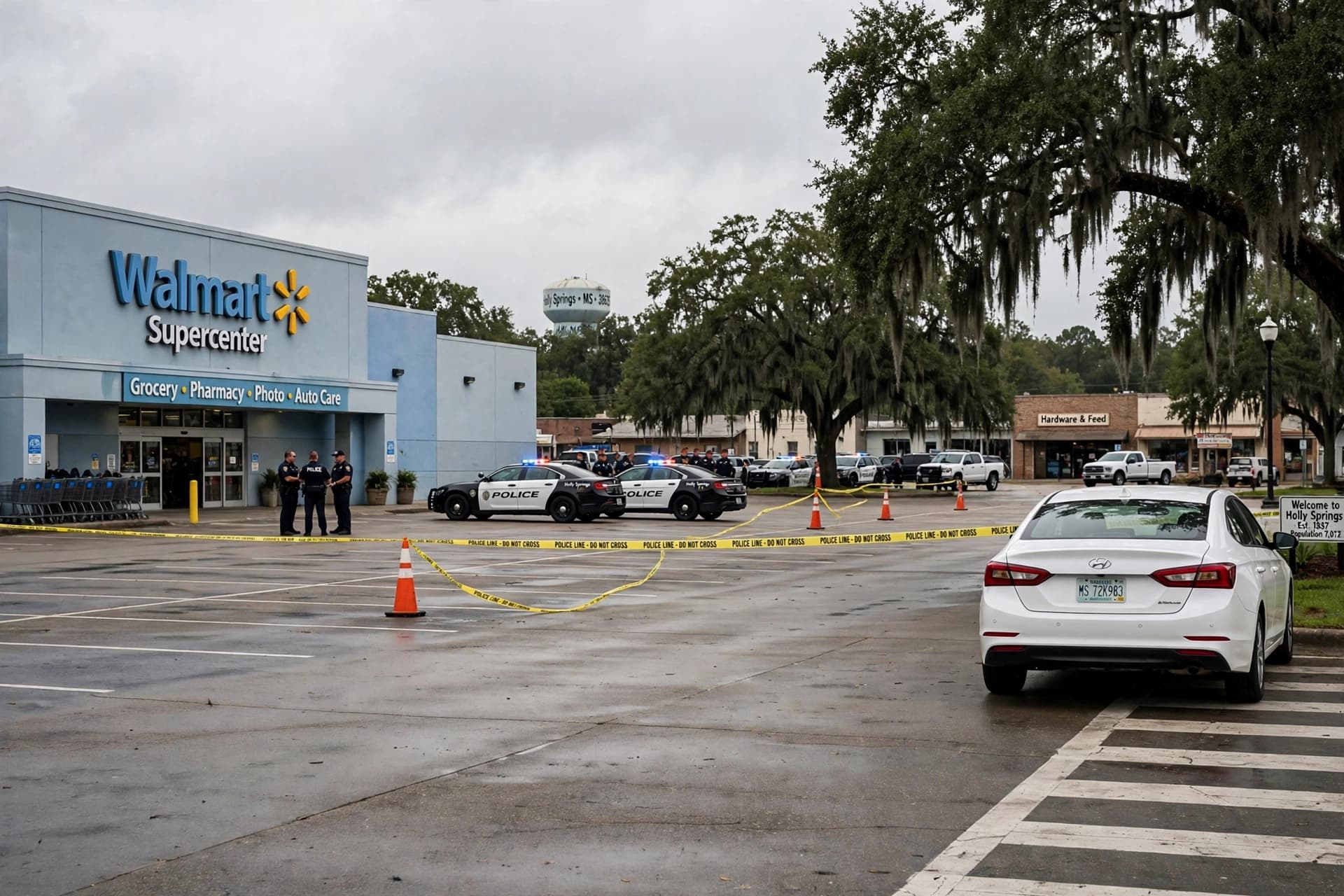
The body camera footage released this week does not include the perspective of the officer who fired. It shows two women leaving a Walmart, one carrying Kohen Wiley, speaking with two men, and then running toward a car. Officers approach the vehicle and tell the driver to stop. The car backs up, hitting another vehicle, then accelerates. An officer is near the front of the car when three shots are heard . The vehicle hits another car and drives away. Kohen, sitting on his mother's lap in the passenger seat, is struck and killed. The driver, his mother's friend, is badly wounded.
The state's investigation concluded that the car was driving toward officers and nearly struck one. Kohen's mother has disputed that account from the beginning, and her attorney, Ben Crump, has cited an independent autopsy indicating Kohen was shot from the side of the car, not the front . A firearms expert quoted by the Associated Press said the shattered passenger window and a bullet hole in the windshield on the passenger side suggest the officer fired from the side, not from the path of the vehicle . These are the contradictions that the missing body camera footage might resolve.
Kolko's analysis does not defend the outcome. It describes the split-second judgment that the law allows officers to make. "The officer made a decision in a moment, thought that his life or the lives of his fellow officers were in danger, and decided to make those shots," he said . Whether that perception was reasonable is the question that the attorney general answered in the affirmative and that Kohen's family and their attorneys are now challenging in the public square and, potentially, in federal court.
There is a context to this shooting that extends beyond a single afternoon. The Senatobia Police Department has faced a series of incidents that have eroded trust with the city's Black residents, including a former chief fired over racist text messages and an officer who arrested a ten-year-old boy for urinating in public . The officer who fired the fatal shot, according to Crump, faced a complaint alleging a racially offensive remark two days before the shooting . These details do not determine whether the use of force was justified. But they shape the climate in which the question is being asked and the confidence with which the answer is received.
For now, the attorney general's finding stands, and the officer will not face criminal charges. The family's legal options remain, and the call for the release of all body camera footage continues. Kohen Wiley would have turned two this year. He was shot on Juneteenth. What remains is a family waiting for transparency they believe will tell a different story, and a state that has said the story is already complete. The former FBI agent's explanation offers a legal map of the decision. It does not offer the closure that the map cannot provide.
---
AI Image Disclaimer: The images in this article are generated by artificial intelligence and are intended for illustrative purposes only.
Sources: WAPT, PBS NewsHour, The Mirror US, NewsNation
Published by Banx Network. This article is part of the Banx decentralized media programme, powered by the BXE token on the XRP Ledger.