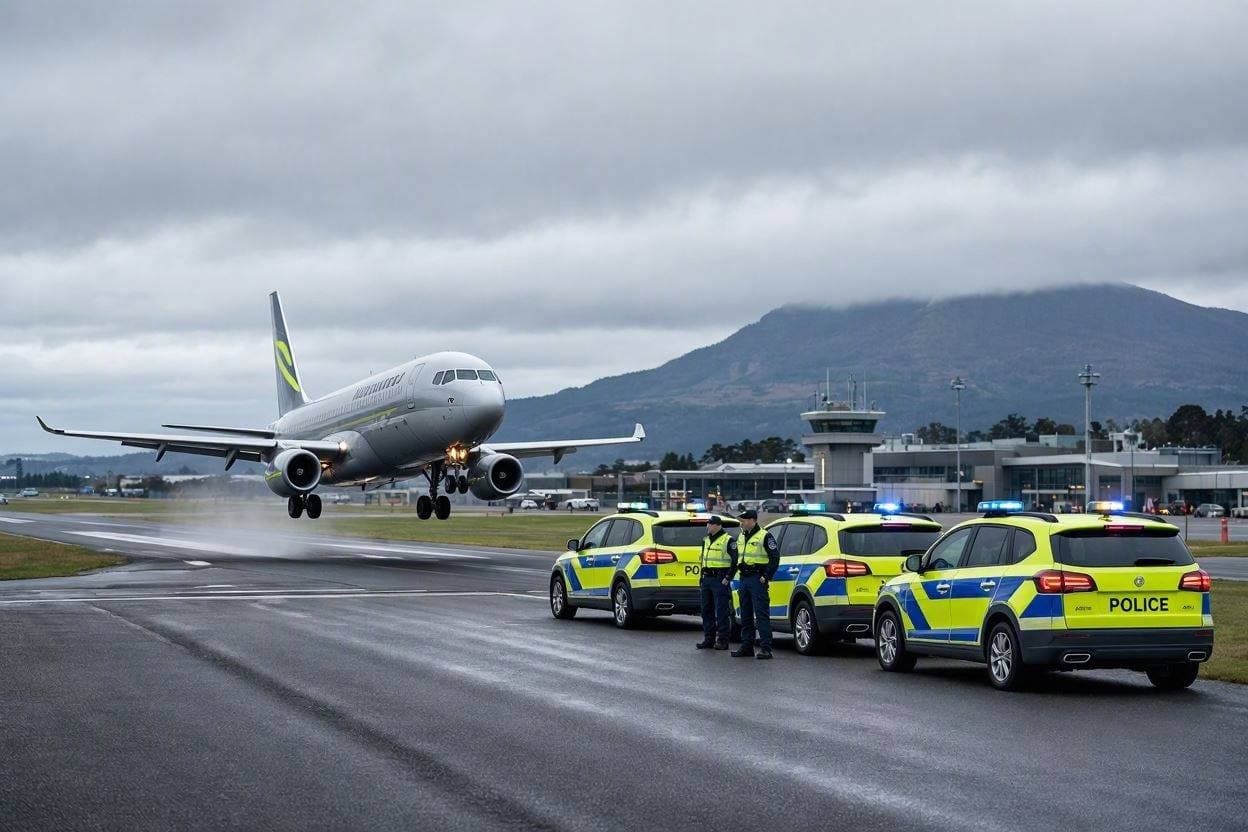
Justice, in its pursuit of accountability, often spans great distances, crossing oceans and borders to ensure that the rule of law is upheld. Recently, a thirty-one-year-old man was compelled to return to Tasmania to face serious legal charges, marking the end of an attempt to evade judicial process. This extradition highlights the intricate web of international cooperation that binds nations together in matters of crime and punishment. It is a reminder that while geography may offer temporary distance, it cannot provide permanent immunity from the consequences of one’s actions. The journey back to Hobart is not just a physical relocation but a step toward resolution and legal clarity.
The individual had been located overseas, where authorities worked diligently with Australian federal police to facilitate his return. Extradition processes are complex, involving diplomatic negotiations, legal reviews, and logistical coordination. They require a shared commitment to justice between countries, ensuring that individuals accused of serious offenses do not find safe haven abroad. In this case, the cooperation was swift and effective, reflecting the strong ties between Australia and its international partners.
Upon arrival in Tasmania, the man was taken into custody and presented before the courts. The charges against him are described as serious, though specific details remain subject to legal proceedings and privacy protections. The judicial system in Tasmania, known for its thoroughness and fairness, will now take over the process. Evidence will be reviewed, arguments presented, and a verdict reached through due process. This stage is crucial for maintaining public trust in the legal system.
For the community in Tasmania, the news brings a sense of closure. Crimes that disrupt social harmony leave scars, and the arrest of a suspect is often seen as a first step toward healing. Victims and their families await the outcome with anticipation, hoping for a resolution that acknowledges their suffering. The return of the accused allows the legal machinery to move forward, addressing the allegations with the seriousness they deserve.
Legal experts note that such cases underscore the importance of global policing networks. In an increasingly connected world, criminals may attempt to exploit jurisdictional gaps, but international agreements like Interpol notices and bilateral treaties help close these loopholes. The success of this operation serves as a deterrent to others who might consider fleeing to avoid prosecution. It reinforces the message that justice has a long reach.
The personal toll on the accused and his family is significant. Facing serious charges is a life-altering event, bringing uncertainty and stress. Legal representation will play a key role in ensuring his rights are protected throughout the trial. The presumption of innocence remains a fundamental principle, guiding the proceedings until a final judgment is made.
The return of the thirty-one-year-old man to Tasmania to face charges is a significant development in the local legal landscape. As the court process begins, the focus shifts to ensuring a fair and transparent trial. The outcome will depend on the evidence presented and the application of the law, serving as a testament to the enduring power of justice.
AI Image Disclaimer: The visual elements accompanying this report are AI-generated interpretations designed to reflect the legal and procedural context of the story.
Sources: ABC News Tasmania The Mercury Tasmania Police
Published by Banx Network. This article is part of the Banx decentralized media programme, powered by the BXE token on the XRP Ledger.