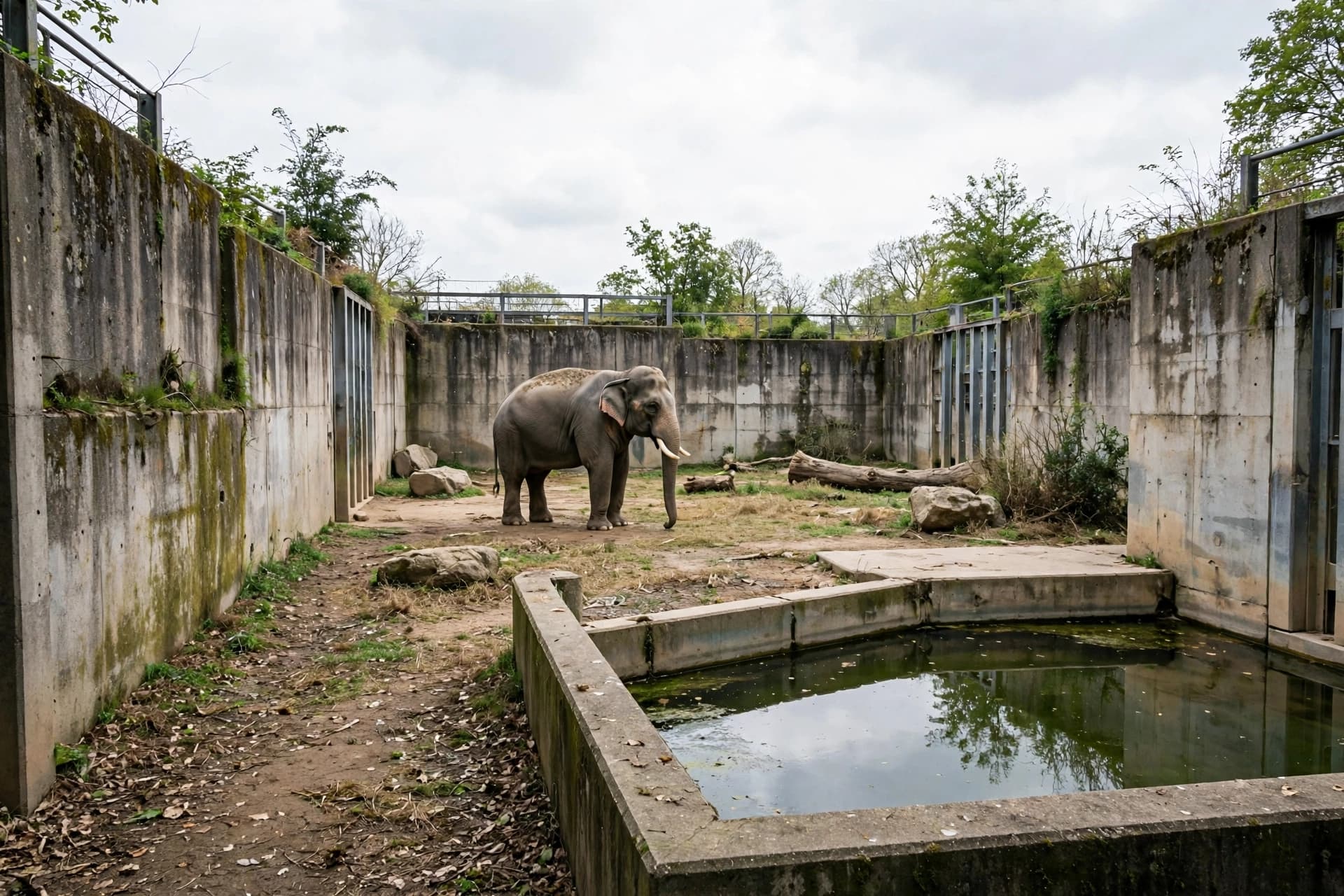
There are promises that arrive with conviction and then quietly slip away, not with a dramatic announcement but with the absence of one. In Canada, a bill that would have made the country the first in the world to legislate an end to elephant captivity has been set aside. The Jane Goodall Act, formally known as Bill S-15, passed its third reading in the Senate in December 2024. It died when Parliament was prorogued in January 2025. Nearly two years later, the government has indicated no plan to revive it, and the silence around its fate has grown heavier than any explanation offered .
The bill's journey was long and its ambitions were careful. First introduced in 2020 by the late Manitoba Senator Murray Sinclair and later carried forward by Senator Marty Klyne, it sought to phase out new captivity of elephants and great apes, ban their import and export for entertainment or commercial trade, and prohibit practices such as elephant rides. Exceptions were carved out for conservation, welfare, and scientific research. It was not a radical document. It was, in the words of its supporters, a necessary one .
Support for the bill was broad and unusual in its coalition. The Toronto Zoo and Calgary Zoo signed a letter to Environment Minister Julie Dabrusin in March, urging the government to reintroduce the legislation. Animal Justice, the animal law advocacy organization, campaigned for it. Jane Goodall herself, who died last year, had lent her name and her voice to the cause. The bill had passed the Senate. It had momentum. What it did not have, in the end, was a government willing to make it a priority .
The minister's response to the zoos and advocates did not directly address their request. It noted that Bill S-15 had died on the Order Paper and that the government's broader legislative agenda is influenced by a range of factors. It pointed to provincial jurisdiction over animal welfare and to other conservation initiatives. A spokesperson for the minister later said that any future consideration of similar legislation would require reintroduction, and that no further decision has been made .
Animal advocates suspect the government's attention has been consumed by the tariff war and other economic pressures. Camille Labchuk, executive director of Animal Justice, said there has been no movement since the election. "It's incumbent on them to explain more to Canadians if they're backing away from this and why," she said. Angela Fernandez, director of the animal law program at the University of Toronto, called the lack of action a "real lost opportunity," noting that so much work had already been done that reviving the bill would be "low hanging fruit" .
There are believed to be 23 elephants currently living in Canada. Three are at the Granby Zoo in Quebec. One, Lucy, resides alone at the Edmonton Valley Zoo. About 19 are at African Lion Safari near Hamilton. Environment and Climate Change Canada confirmed that two elephants were exported to the United States this year, though privacy laws prevented disclosure of the exporter . These are not abstractions. They are animals whose lives are shaped by the decision not to act.
The bill's failure is not a dramatic defeat. It is a quiet one, measured in the absence of a vote, the silence of a minister's response, the slow drift of an issue off the agenda. The animals themselves do not know that a bill was drafted, that it passed the Senate, that it came close. They know only their enclosures, their routines, the humans who care for them. The legislation was meant to change that. For now, it has not.
Image Disclaimer: The visual accompanying this article was generated by artificial intelligence and does not depict the actual animals or facilities mentioned.
Sources: CBC News, Yahoo News Canada, Senate of Canada
Published by Banx Network. This article is part of the Banx decentralized media programme, powered by the BXE token on the XRP Ledger.