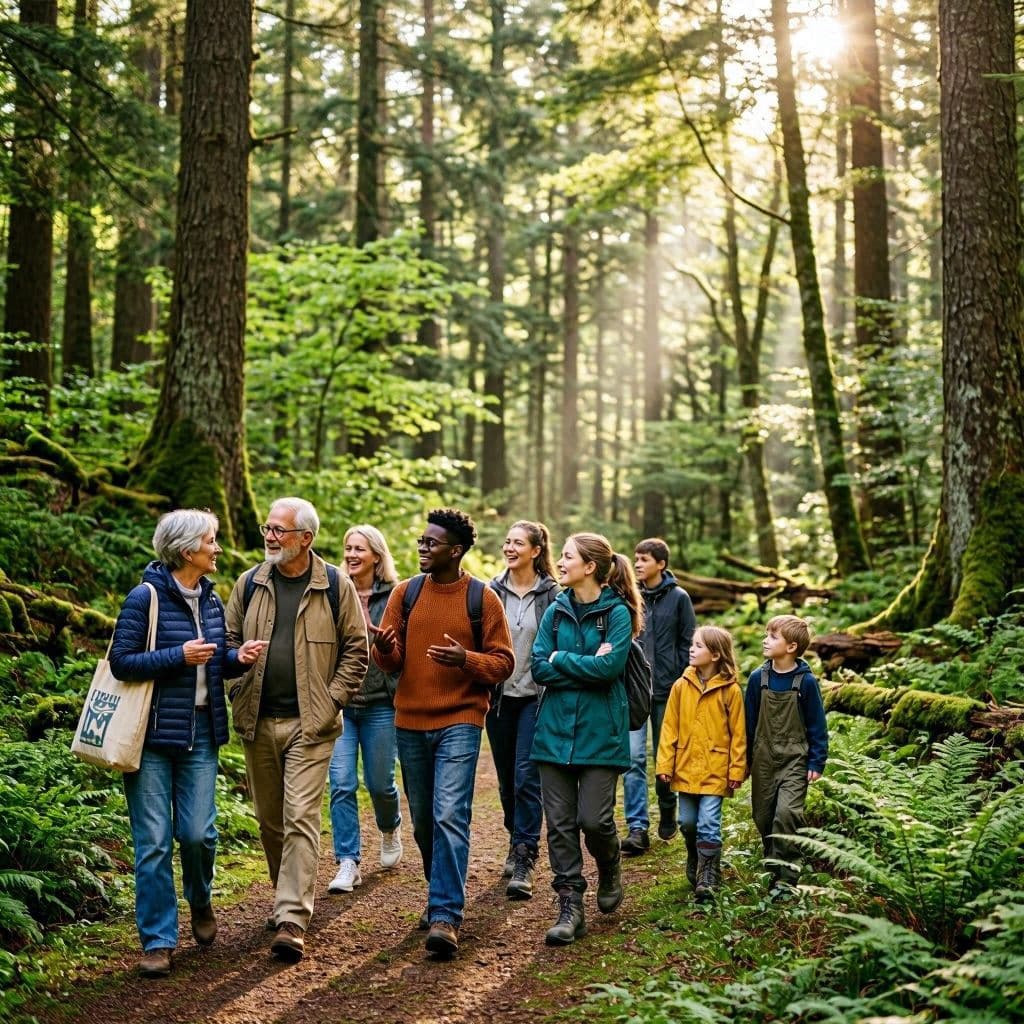
Forests are often viewed through the lens of policy and regulation, as resources to be managed by laws and enforcement agencies. Yet, in many communities around the world, the health of the woods is maintained not by government decree, but by shared values and tradition. Recent studies suggest that social norms play a more significant role in sustaining forest lands than formal oversight. This insight invites us to reconsider how we approach conservation, recognizing the power of community cohesion and cultural practice in protecting the natural world.
Body: In many rural and indigenous communities, forests are integral to daily life, providing fuel, food, and spiritual connection. The rules governing their use are often unwritten, passed down through generations. These social norms create a system of mutual accountability, where individuals self-regulate their behavior to ensure the resource remains available for all. Violating these norms can lead to social sanctions, which are often more effective deterrents than legal fines.
Research indicates that communities with strong social capital tend to have better forest outcomes. Trust among neighbors facilitates cooperation in monitoring and managing shared resources. When people feel a sense of ownership and responsibility, they are more likely to engage in sustainable practices. This bottom-up approach complements top-down regulations, filling gaps where enforcement is weak or absent.
The effectiveness of social norms varies depending on context. In areas with high population pressure or external market demands, informal systems may struggle to cope. However, even in these cases, integrating local customs into formal management plans can improve compliance. Recognizing the legitimacy of traditional knowledge fosters collaboration between authorities and communities.
Global conservation efforts have historically focused on creating protected areas and enforcing strict laws. While necessary, this approach can sometimes alienate local populations, leading to conflict and resentment. By shifting focus to support social norms, policymakers can empower communities to become stewards of their own environments. This participatory model promotes long-term sustainability.
Technology can also support these social systems. Mobile apps and community mapping tools help locals monitor forest health and report illegal activities. These tools enhance transparency and strengthen collective action. However, technology serves best when it reinforces existing social structures rather than replacing them.
The lesson extends beyond forests. Social norms influence behavior in many areas, from water usage to waste management. Understanding the psychological and sociological drivers of conservation can inform broader environmental strategies. It reminds us that changing hearts and minds is as important as changing laws.
Closing: The sustainability of forest lands relies heavily on the invisible threads of social connection. By valuing and supporting these norms, we can foster a culture of care and responsibility. Conservation is not just about protecting trees, but about nurturing the communities that depend on them.
AI Image Disclaimer: Images included here are AI-generated conceptual illustrations of community forestry and natural landscapes, designed to visualize the themes of social cooperation and environmental stewardship.
Sources: Proceedings of the National Academy of Sciences (PNAS) World Resources Institute Forest Trends Ecology and Society Journal
Published by Banx Network. This article is part of the Banx decentralized media programme, powered by the BXE token on the XRP Ledger.