There are nutrients that enjoy celebrity status — protein with its muscle-bound reputation, vitamin C with its immune-season glow. And then there are those that work quietly, almost anonymously, woven into the background of our daily meals. They do not trend. They do not promise dramatic transformation. Yet without them, the body notices.
Fiber is one of those quiet essentials.
It does not sparkle on supplement labels, nor does it inspire flashy marketing campaigns. And yet, it threads through nearly every system of the body with a kind of steady devotion. In kitchens across America, many plates are abundant in calories but curiously light in this humble compound. The result is not immediate catastrophe, but a gradual erosion — digestion that feels sluggish, blood sugar that rises and falls too sharply, cholesterol that inches upward over time.
Fiber is not digested the way other carbohydrates are. It travels. It absorbs. It nourishes the trillions of microbes that reside in the gut, organisms now recognized as influential partners in metabolism, immunity, and even mood. Soluble fiber dissolves into a gel-like consistency, helping regulate blood sugar and cholesterol. Insoluble fiber adds bulk, supporting regularity and digestive health. Together, they act less like a single nutrient and more like a quiet infrastructure system.
And yet, most Americans consume far less than recommended. While general guidelines suggest roughly 25 to 38 grams per day depending on age and sex, average intake hovers well below that mark. It is not a dramatic deficiency, but it is a consistent one — a subtle gap between what the body needs and what modern diets provide.
The reasons are not mysterious. Processed foods dominate grocery aisles. Refined grains replace whole ones. Fruits and vegetables compete with convenience. Fiber, which thrives in whole plant foods, rarely survives heavy refinement.
The good news is that increasing intake does not require radical reinvention. It asks instead for small substitutions — habits that accumulate.
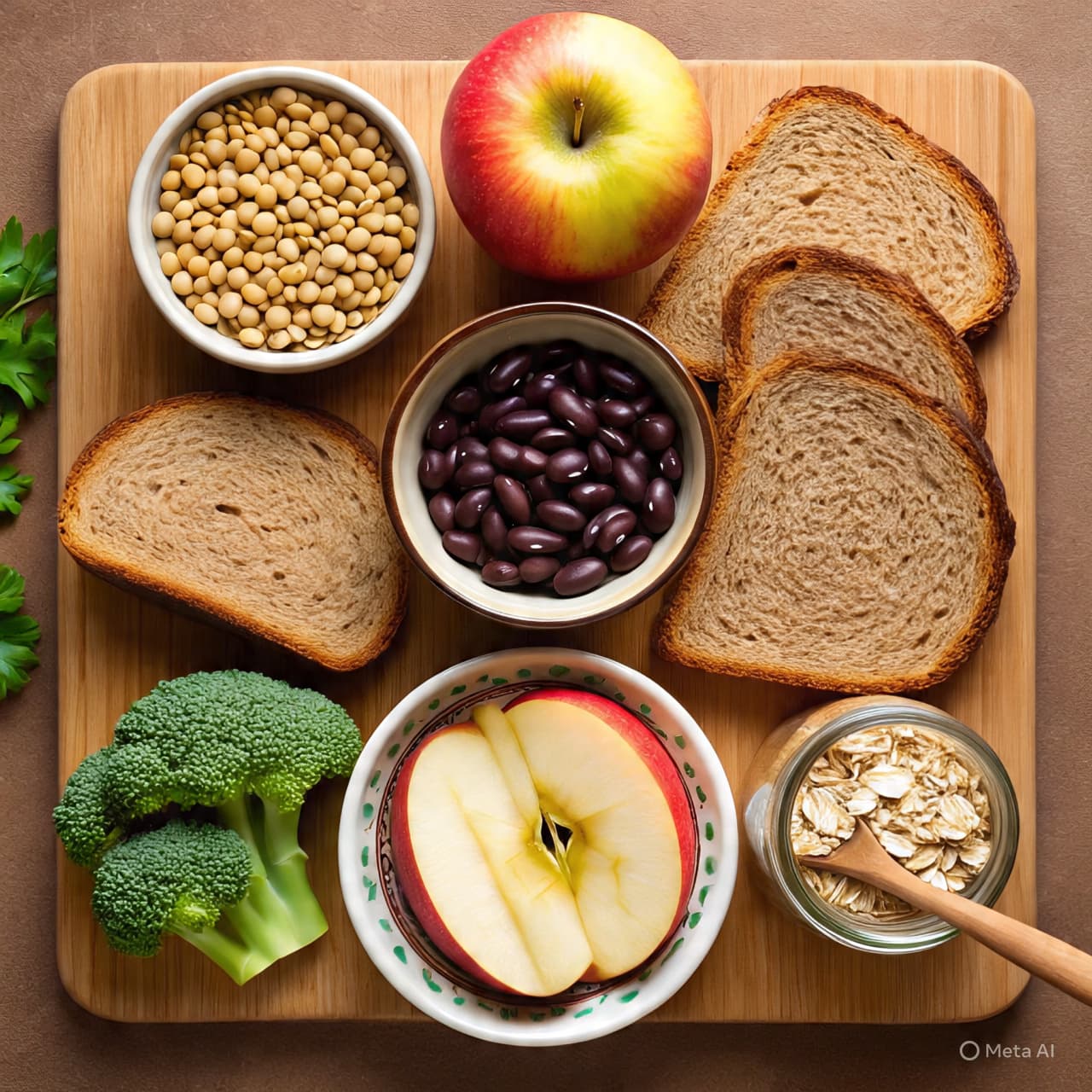
Oats at breakfast instead of sugary cereal. Lentils folded into soups. Beans added to salads. Whole-grain bread in place of white. A handful of raspberries, their tiny seeds carrying more fiber than their delicate appearance suggests. Chia seeds stirred into yogurt. An apple eaten with its skin intact.
These are not dramatic gestures. They are gentle recalibrations.
It is worth noting that increasing fiber should be gradual. The digestive system appreciates adjustment. Water intake matters. The goal is not sudden overload but steady integration.
Beyond digestion, research continues to associate higher fiber intake with lower risk of heart disease, type 2 diabetes, and certain cancers. It supports satiety, helping regulate appetite naturally. It stabilizes energy. In an era often focused on restriction — cutting carbs, cutting fats, cutting calories — fiber represents addition. A nutrient gained rather than something taken away.
Perhaps its modesty is why it is overlooked. Fiber does not announce itself. It does not promise transformation in weeks. Instead, it works in the background, supporting the systems that allow transformation to occur at all.
Nutrition trends will continue to cycle. Superfoods will rise and recede. But fiber has remained, patiently essential.
And as dietary guidance evolves, one recommendation remains steady: eat more plants, less refinement, more whole foods. In that pattern, fiber naturally finds its place.
There is no drama in its presence, only balance. And sometimes, balance is the quiet hero of health.
AI Image Disclaimer Images in this article are AI-generated illustrations, meant for concept only.
Sources (Media Names Only)
Harvard Health Publishing The New York Times Mayo Clinic Cleveland Clinic The American Journal of Clinical Nutrition
Published by Banx Network. This article is part of the Banx decentralized media programme, powered by the BXE token on the XRP Ledger.