There is a particular kind of honesty that emerges when people believe they are being seen. A camera, after all, is not just a machine for recording light. It is a mirror, an audience, a promise that someone, somewhere, will pay attention. For years, Jordan Klepper has understood this better than most, and his interviews with Trump supporters have become a study not of politics but of human nature.
Klepper's new half-hour special, "The Daily Show Presents: Jordan Klepper Fingers the Pulse: Red Flags," airs Monday on Comedy Central. It follows the campaign trail ahead of November's midterm elections, asking whether President Donald Trump can hold his coalition together and whether the red flags—sagging poll numbers, the unpopularity of the war with Iran—signal trouble for the MAGA movement . But the deeper question Klepper explores is why Trump supporters keep talking to him, knowing full well what he does with their words.
His answer is disarmingly simple. "I think the desire to be on camera and receive attention oftentimes outweighs any fear or trepidation about taking that step in front of that camera," he told Newsweek's Parting Shot podcast . It is not that his subjects are unaware of his reputation. It is that the pull of being seen, even in a mocking light, is stronger than the caution that might otherwise keep them silent.
Klepper also points to the fragmented nature of modern media. "People have very different algorithms and bubbles," he said. "There is a world that sees videos and things that I'm a part of a lot in their feeds, and there is another world who has no idea what's going on" . Some people, he suggests, simply do not know who he is or what he does. They step in front of his camera as they would any other, unaware that the encounter will become comedy.
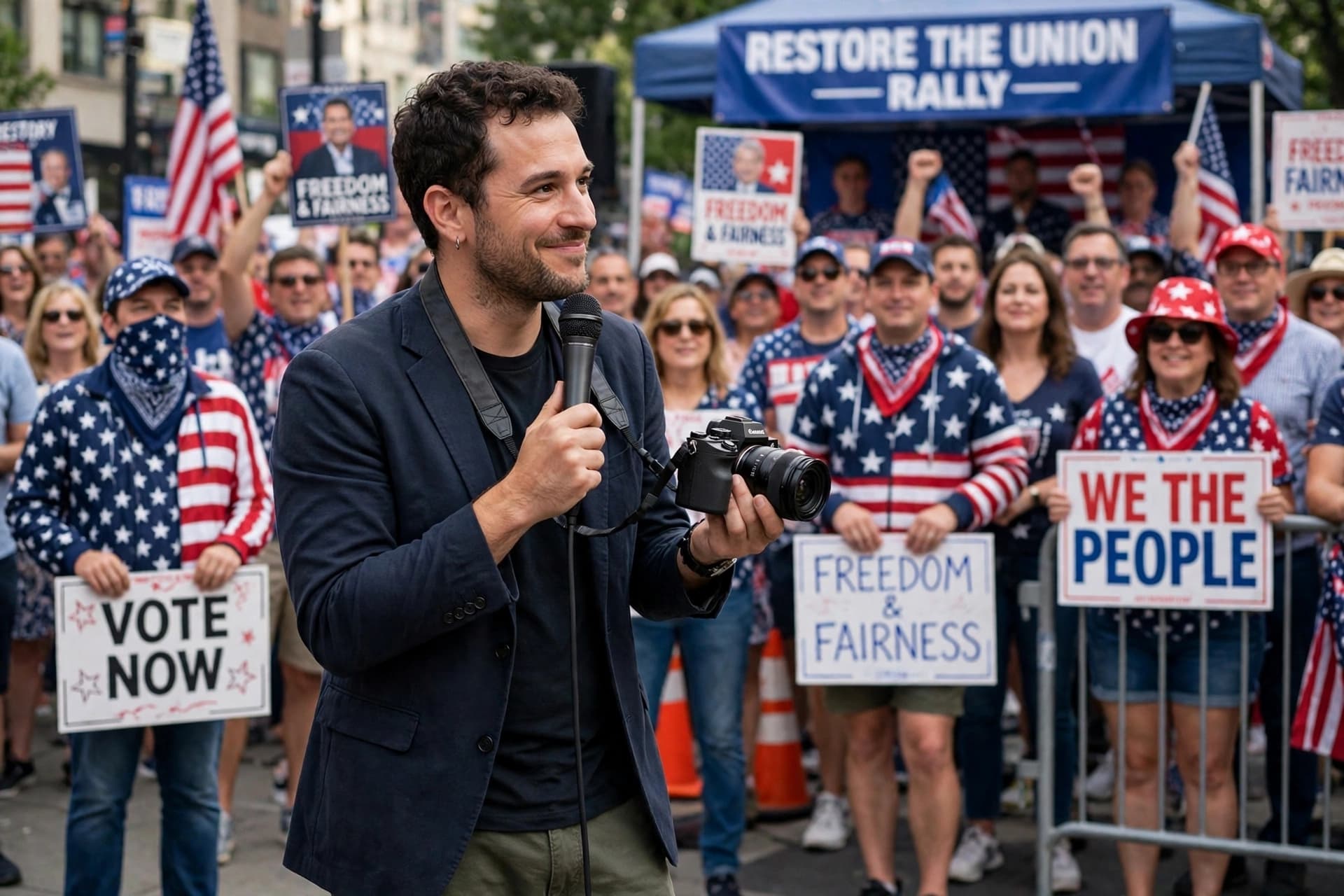
But the most revealing observation is about the nature of Trump rallies themselves. "Originally political events were for the people to celebrate a candidate, but there's also space at those events to discover a candidate," Klepper said. "Now, the act of going to a Trump rally is an act of fidelity. It is a performance unto itself" . People dress the part, he notes, because they are part of the show. A cape or a star-spangled outfit is not an accident. It is an invitation.
There is a sadness beneath the comedy, though Klepper does not dwell on it. He describes a desire to unplug that he has seen among progressive voters, and more recently among some in the MAGA movement as well—a fatigue with the endless performance, a wish to step back . The attention that draws people to his camera is the same attention that, in excess, wears them down.
What Klepper has found is not a political weakness in the traditional sense. It is something more human: the longing to be part of something, to be recognized, to matter. Politics offers a stage for that longing, and the camera offers proof that the stage is real. Klepper does not create the desire. He simply holds up a mirror to it, and people step forward to see themselves reflected.
The special airs Monday, after which it will be available on YouTube and Paramount+. It will likely be funny, as Klepper's work always is. But it will also be a document of a moment, a record of people who wanted to be seen and a comedian who understood that wanting better than they did. The weakness he exploits is not a flaw in one movement or another. It is a feature of being human, and it is always on display.
Image note: The visual accompanying this article is an AI-generated illustration and does not depict actual individuals or events.
Sources: Newsweek via Yahoo, The Daily Beast via NewsBreak, Merkur, Flipboard
Published by Banx Network. This article is part of the Banx decentralized media programme, powered by the BXE token on the XRP Ledger.