In the verdant hush of a primate sanctuary, a quiet exchange occurs: two macaques lock eyes, lips part in a subtle smacking gesture, and in an instant, a message is sent without a single word spoken. Facial expressions like this have long stirred our curiosity, inviting us to wonder whether they are mere reflexes whispering of internal emotion, or something richer — intentional, nuanced signals woven into the fabric of social life. Recent research suggests that these expressions are more than automatic muscle twitches; they are part of an intricate neural symphony that hints at deeper layers of meaning and purpose.
For decades, scientists tended to treat facial gestures as reflexive echoes of inner states, dictated by discrete neural circuits that serve fixed roles. But a new study using macaque monkeys — animals whose facial musculature and social communication closely mirror our own — gently upends that assumption. As researchers captured high‑resolution recordings of signaled faces and peered into the brain with advanced imaging and electrophysiological tools, they discovered an unexpected truth: multiple regions of the cortex contribute together to every facial action, whether it’s a lipsmack greeting a groupmate or a threatening display warning a rival.
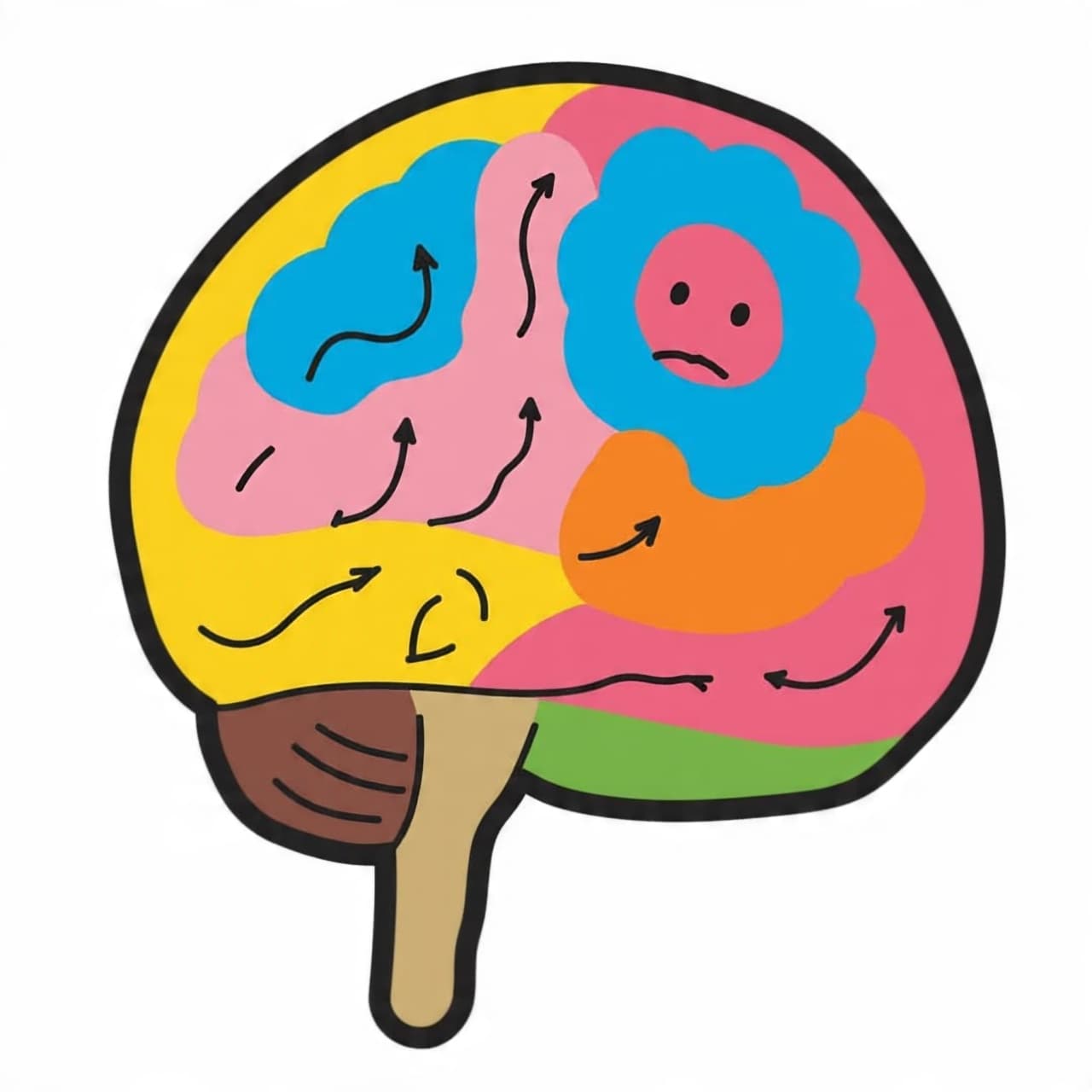
This discovery emerged from carefully designed experiments in which macaques were exposed to real and virtual social stimuli while scientists monitored both their facial movements and the neural activity that preceded them. The patterns that emerged revealed that the brain does not parcel out gestures into simple reflexive circuits. Instead, overlapping networks — spanning areas associated with motor function, sensation, and social context — fire in concert, knitting together intention, perception, and expression.
Such orchestration suggests that these gestures are not mere muscle spasms triggered in isolation. Their production involves a choreography that blends anticipation, context, and subtle timing — a blend that resembles intentional communication more than rigid reflex. Across moments where a macaque might share a friendly greeting or confront a rival, the neural dynamics reveal an interplay between brain regions that weave meaning into muscle movements.
As science continues to peek behind the curtain of non‑verbal communication, this study offers a humble reminder: in the pantheon of primate expression, faces are not just animated masks. They are living canvases of social life, shaped by complex neural conversations that hint at choice, context, and perhaps a primitive sense of shared intention. And in listening more closely to these silent conversations among macaques, we may find echoes of our own earliest communicative roots.
AI Image Disclaimer Visuals are created with AI tools and are not real photographs; they are intended to conceptually illustrate the described behavior.
🔎 Source Check Credible mainstream sources exist reporting on the new macaque facial gesture study:
Ars Technica Scientific American Additional reports summarizing the Science journal publication.
Published by Banx Network. This article is part of the Banx decentralized media programme, powered by the BXE token on the XRP Ledger.