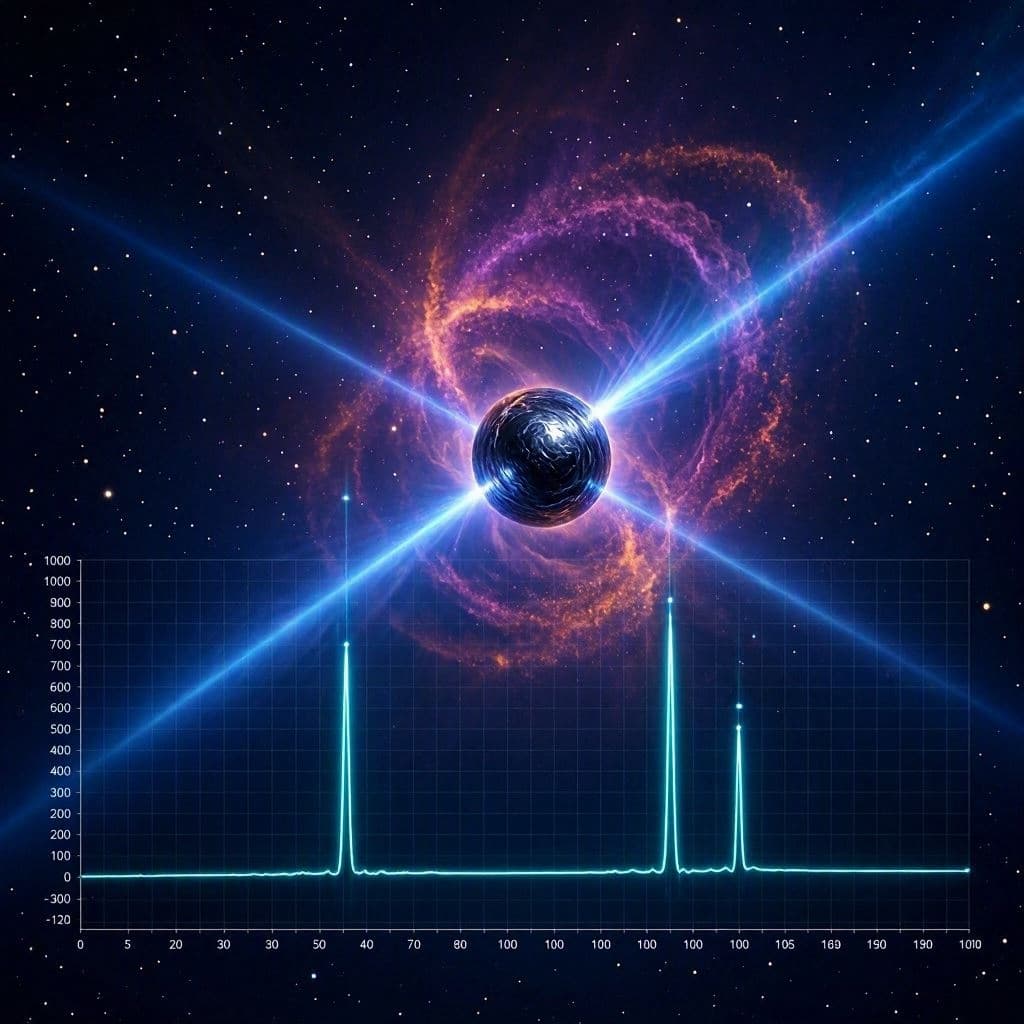
In the vast, silent theater of the cosmos, pulsars are often regarded as the universe’s most reliable timekeepers. These dense, rotating neutron stars emit beams of radiation with a precision that rivals atomic clocks, earning them a reputation for steadfast regularity. However, a recent analysis of a particularly "quiet" pulsar has revealed a subtle but significant disruption in this cosmic rhythm. Over the course of fifteen years of observation, astronomers have detected three sudden "glitches"—unexpected jumps in the star's rotation speed—challenging our understanding of stellar stability.
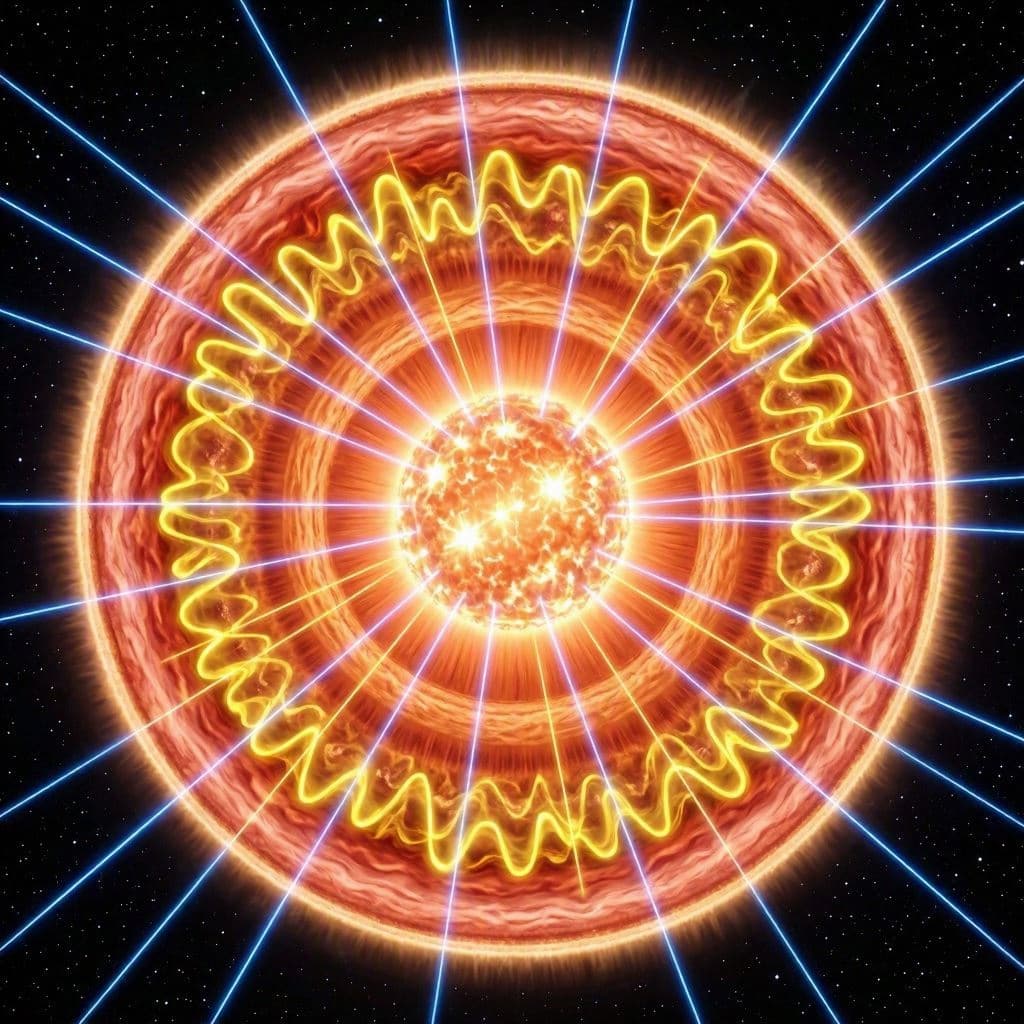
The pulsar in question had long been considered stable, showing little variation in its spin rate. This consistency made it an ideal candidate for studies requiring precise timing, such as tests of gravitational theories. Yet, beneath this calm exterior, internal dynamics were at work. The glitches, though small, represent sudden transfers of angular momentum from the star’s superfluid interior to its solid crust. These events are akin to a figure skater pulling in their arms to spin faster, but on a scale and complexity that defies simple explanation.
For fifteen years, radio telescopes monitored the pulsar, collecting data that seemed to confirm its unchanging nature. It was only through meticulous long-term analysis that these three distinct anomalies emerged from the noise. The rarity of such events in this specific pulsar makes them particularly valuable. Each glitch offers a window into the extreme physics governing neutron stars, where matter is compressed to densities unimaginable on Earth.
Scientists believe that these glitches are caused by the interaction between the neutron star’s rigid outer crust and its fluid-like interior. As the star slows down due to energy loss, the superfluid inside continues to rotate at a higher speed. Eventually, the friction between the two layers becomes too great, causing a sudden transfer of momentum that speeds up the crust. This process, known as vortex pinning and unpinning, is a key area of study in high-energy astrophysics.
The discovery underscores the importance of patience and persistence in astronomical research. Short-term observations might have missed these rare events entirely, labeling the pulsar as simply stable. It is the dedication to long-term monitoring that allows researchers to capture the full lifecycle of celestial phenomena, revealing hidden behaviors that unfold over decades.
These findings also have implications for the use of pulsars in navigation and fundamental physics. If even "quiet" pulsars can exhibit unexpected behavior, models must account for potential irregularities. Understanding the frequency and magnitude of glitches helps refine predictions, ensuring that these cosmic beacons remain useful tools for science.
As technology improves, astronomers hope to detect more such events in other pulsars. Each new observation adds to the growing database of stellar behavior, helping to build a more comprehensive model of neutron star interiors. The universe, it seems, still holds many secrets, even in its most predictable corners.
The detection of three glitches in a previously stable pulsar highlights the dynamic nature of neutron stars. Through long-term observation, scientists continue to uncover the complex internal mechanisms of these dense objects, refining our knowledge of the extreme states of matter in the universe.
AI Image Disclaimer: The visual representations accompanying this article are generated by artificial intelligence to illustrate the concept of pulsar emissions.
Sources: Nature Astronomy CSIRO University of Manchester
Published by Banx Network. This article is part of the Banx decentralized media programme, powered by the BXE token on the XRP Ledger.