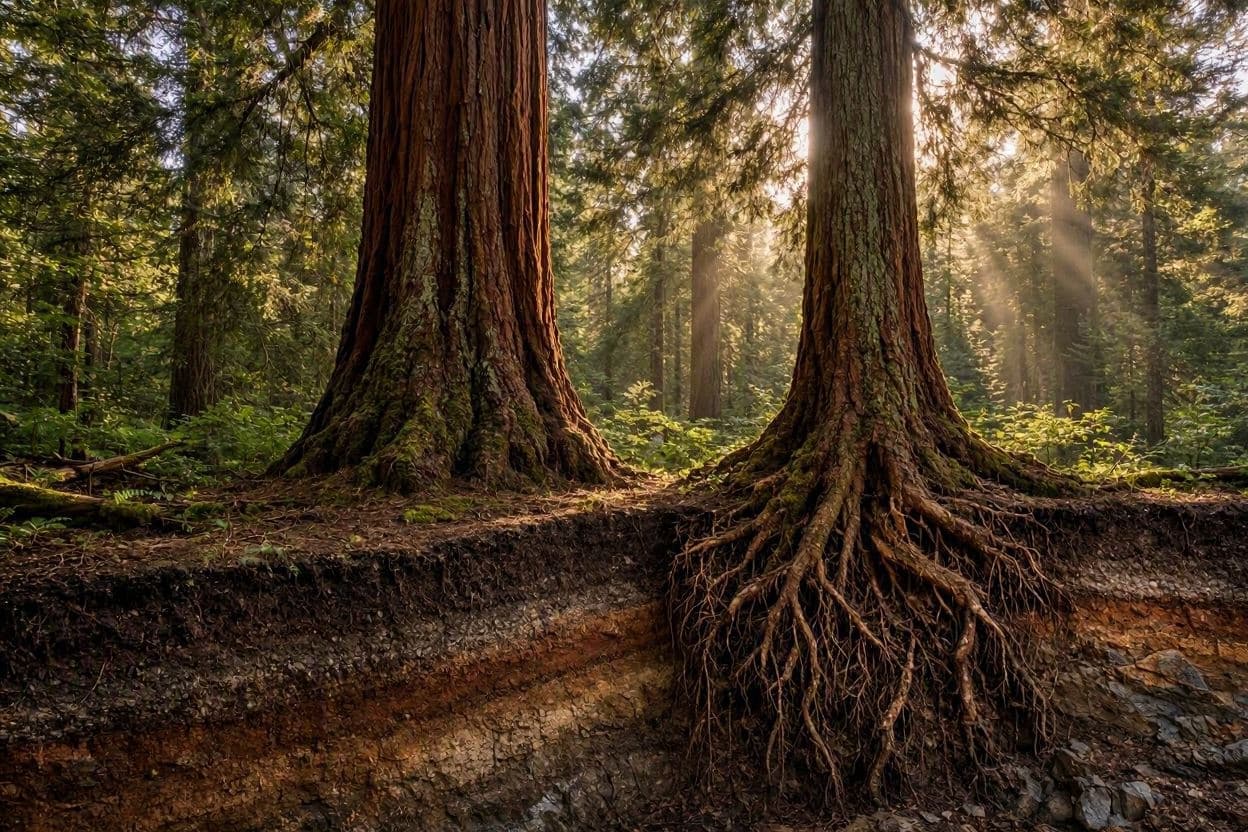
The giant sequoias of California stand as timeless sentinels, their massive trunks reaching toward the sky in a display of enduring strength. For years, it was believed that these titans relied primarily on seasonal snowmelt and rainfall to quench their thirst. However, new research suggests that their resilience is anchored in a deeper, more constant source: water drawn from the subsurface depths of the earth.
This discovery reshapes our understanding of how these ancient trees survive droughts and climate variability. While surface water fluctuates with the seasons, deep subsurface water remains relatively stable, providing a reliable lifeline during dry periods. The roots of the giant sequoia, though not the deepest in the plant kingdom, are adept at accessing these hidden reservoirs, tapping into moisture that lies far below the reach of most other vegetation.
The study utilized isotopic analysis to trace the source of water found in the trees’ tissues. By comparing the chemical signatures of rain, snow, and groundwater, researchers determined that a significant portion of the water consumed by giant sequoias comes from deep underground. This finding explains why these trees can maintain their green canopy even when surface soils are parched.
This access to deep water is not just a biological curiosity; it is a crucial survival strategy. As climate change leads to more frequent and severe droughts, the ability to tap into subsurface reserves may be what allows giant sequoias to persist while other species struggle. It highlights the importance of protecting not just the trees, but the hydrological systems that support them.
The implications for forest management are profound. Conservation efforts must consider the entire watershed, including the underground aquifers that feed these giants. Protecting the land from development and pollution ensures that these deep water sources remain clean and accessible. It is a reminder that what happens beneath the surface is just as vital as what happens above.
Moreover, this research underscores the interconnectedness of ecosystems. The giant sequoia is not an isolated entity but part of a complex web that includes soil, rock, and water. Its health reflects the health of the underlying geology and hydrology. Preserving these trees requires a holistic approach that respects these deep connections.
As we face an uncertain climatic future, the giant sequoia offers a lesson in resilience. By looking deeper, literally and metaphorically, we find resources that sustain life through hardship. This perspective encourages us to value the hidden strengths of nature, those quiet supports that hold up the visible world.
The revelation that giant sequoias drink from deep subsurface waters adds a new layer of appreciation for these majestic beings. It reminds us that their strength is rooted in the unseen, urging us to protect the hidden foundations that allow life to thrive in even the driest of times.
AI Image Disclaimer: Visual representations in this article are created using AI technology to evoke the grandeur of the subject.
Sources: Ecological Applications US Geological Survey National Park Service
Published by Banx Network. This article is part of the Banx decentralized media programme, powered by the BXE token on the XRP Ledger.