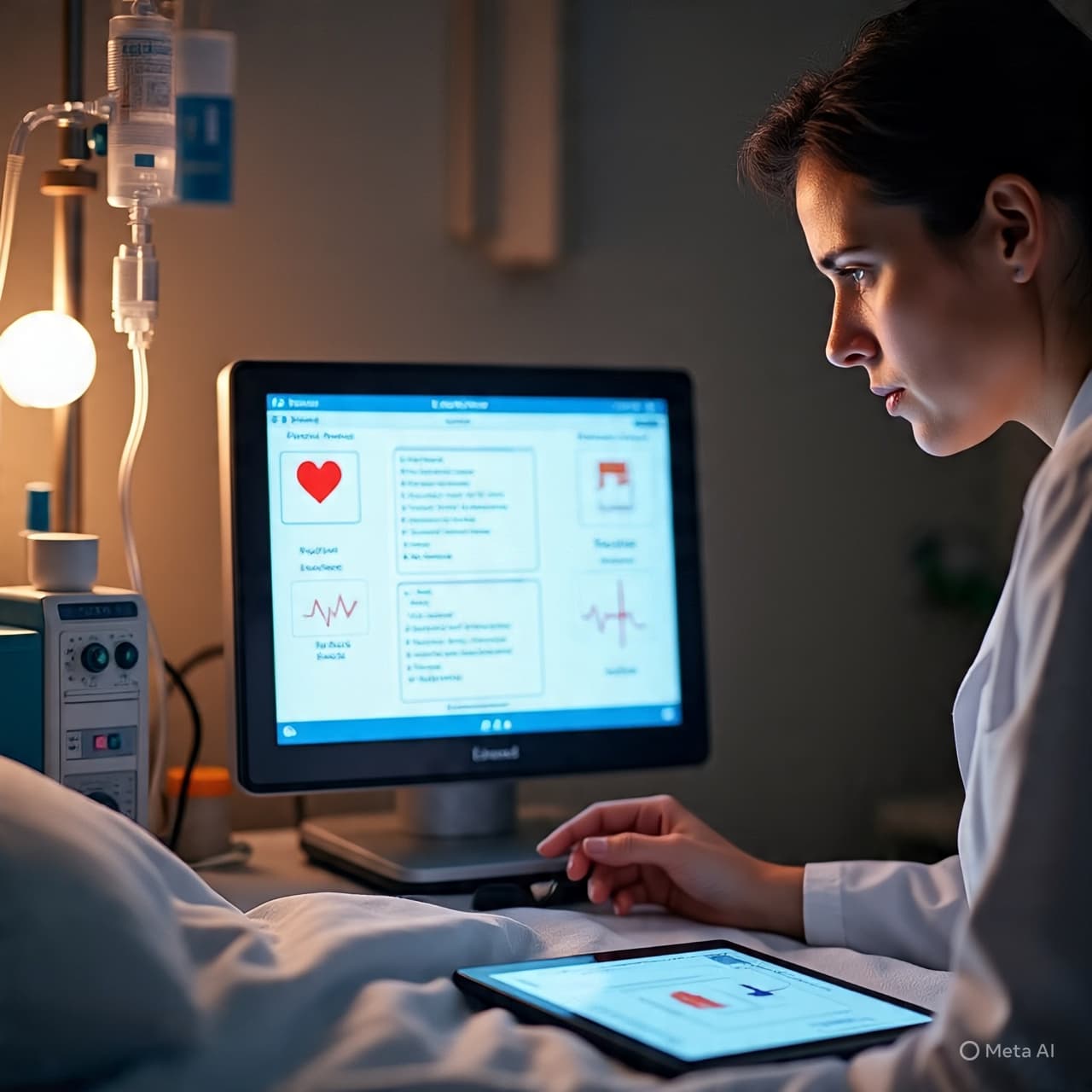
There are moments in clinical care when the invisible becomes vividly urgent, when a drop of blood tells a story that words cannot easily articulate. In the silent hum of an intensive care unit, countless monitors blink and beep like constellations mapping the fragility of human life. Within this galaxy of vital signs, two tiny proteins—high-sensitivity cardiac troponin T and NT-proBNP—act as quiet beacons, hinting at what may lie ahead for a patient’s journey. These biomarkers, traces of heart stress and injury, move through the bloodstream like whispered verses, inviting clinicians to listen closely for meaning in their patterns.
In recent explorations of critically ill patients who do not have primary cardiac disease, researchers have begun to see these biomarkers not as mere markers of the heart alone, but as sensitive messengers of systemic distress. Elevated levels of both hs-cTnT and NT-proBNP on admission to the ICU have been linked to higher 30-day mortality, offering a frame through which the subtle interplay of physiology and prognosis can be contemplated. Those individuals whose blood carried both markers above typical median levels faced notably higher rates of death within a month, a pattern that seemed to hold even when other clinical variables were taken into account.
This is not a narrative of sharp contrasts and dramatic turns, but rather one of gradual shading and quiet signals. Troponin, long understood as a sentinel of myocardial injury, tells us when the heart’s muscle cells are strained. NT-proBNP, rising in response to hemodynamic stress and fluid shifts, speaks of the burdens carried by the heart’s chambers. When both are elevated, the dialogue between them may reflect a deeper vulnerability—a conversation between muscle strain and biomechanical stress that resonates with the broader context of critical illness.
For clinicians seeking to understand which patients may fare better or struggle more in the days after ICU admission, these biomarkers offer more than cold numbers; they offer a poetic measure of bodily strain, echoing the complex interplay of systems under duress. The combined prognostic value of hs-cTnT and NT-proBNP seems to exceed that of either marker alone, suggesting that when both signals rise together, they illuminate a more complete picture of risk.
Yet, like any good story, it is not told in isolation. A patient’s age, underlying diagnoses, and the tapestry of clinical events still compose essential verses in this unfolding narrative. Biomarkers are companions in decision-making—not absolutes, but gentle guides that help clinicians and families navigate uncertainty with a bit more clarity.
In the quiet corridors where care teams convene, these insights into hs-cTnT and NT-proBNP may help shape conversations about prognosis, treatment choices, and expectations. They remind us that medicine, at its heart, is a blend of measurable science and empathetic art, where each piece of data carries human meaning.
As research continues to refine how these biomarkers are interpreted, what emerges is a story of tempered hope—where understanding risk does not diminish compassion, but rather deepens our collective capacity to respond thoughtfully and intentionally to the challenges of critical illness
AI Image Disclaimer “Visuals are created with AI tools and are not real photographs.”
Sources European Heart Journal: Acute Cardiovascular Care PubMed indexed ICU biomarker studies News Minimalist Cardiovascular biomarker prognostic research Acute care clinical outcome studies
Published by Banx Network. This article is part of the Banx decentralized media programme, powered by the BXE token on the XRP Ledger.