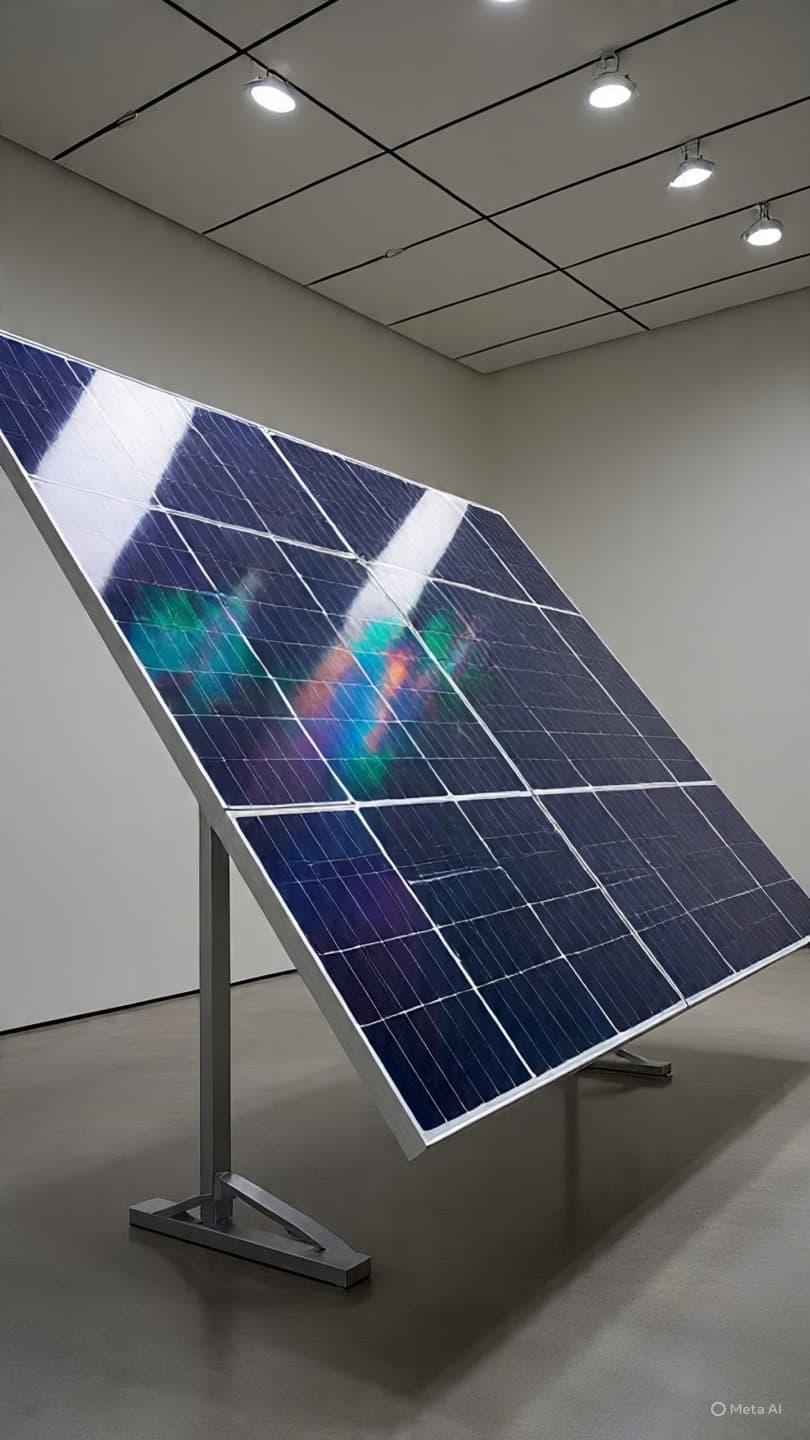
In the heart of Mexico City, where the urban sprawl meets the sky in a haze of history and ambition, the National Energy Museum stands as a temple to the sun. Here, the heavy stone of the past is juxtaposed with the translucent promise of the future. The air within the galleries is quiet, save for the soft hum of cooling systems, as light—the primary fuel of our world—is analyzed, captured, and celebrated. To walk through these halls is to witness the human effort to harness the silent, golden power that has bathed the Mexican plateau for millennia.
The latest exhibition showcases a series of breakthroughs in solar efficiency, a narrative of light transformed into a more potent form of energy. Researchers from across the republic have gathered to present cells that drink in the sun with unprecedented thirst, capturing wavelengths once thought lost to the heat. It is a story of optimization, where the crystalline structures of the panels have been refined to a point of near-translucency, blurring the line between a window and a generator.
There is a particular beauty in the geometry of these new solar arrays—a repetitive, shimmering pattern that mirrors the scales of a serpent or the rows of an agave field. The exhibition suggests a future where the energy of the nation is as decentralized as the sunlight itself, falling upon every roof and facade with equal abundance. This is the democratization of power, a movement away from the singular chimney toward a million shimmering surfaces, each a quiet participant in the national grid.
One observes the fascination of the visitors, their faces illuminated by the glow of interactive displays that demonstrate the journey of a photon from the sun to the socket. The breakthroughs presented here are not merely technical; they are emotional, offering a vision of a cleaner, more resonant relationship with the environment. The high efficiency of these new materials means that even the hazy days of the capital can yield a harvest of electricity, grounding the abstract concept of sustainability in a tangible, shimmering reality.
The atmosphere of the museum is one of measured optimism, a place where the challenges of the climate are met with the precision of the laboratory. The researchers speak of "perovskites" and "tandem cells" with a reverence usually reserved for poetry, recognizing that these materials are the keys to a new era of Mexican industry. By showcasing these advancements in the capital, the museum acts as a bridge, carrying the sophisticated work of the university into the public consciousness.
The light of the afternoon sun filters through the museum’s atrium, striking the very prototypes that seek to capture it. It is a moment of perfect alignment, a reflection on the circularity of our energy needs. The breakthroughs on display offer a path forward that honors the ancient sun-worshipping traditions of the land while embracing the most advanced reaches of modern physics. It is a narrative of continuity, where the power of the heavens continues to shape the destiny of the people below.
As the exhibition travels to other cities across the country, the message of solar resilience ripples outward. This is a story of progress that is written in the language of silicon and light, a testament to the belief that the solutions to our greatest challenges are often shining right above us. The National Energy Museum has provided a stage for this transformation, ensuring that the light of Mexican science is seen as clearly as the sun itself.
The National Energy Museum (MUNET) in Mexico City opened its "Sol Nueva" wing this week, featuring record-breaking 29% efficiency solar cells developed by the National Autonomous University of Mexico (UNAM). The exhibit includes full-scale models of solar-integrated building materials designed for urban environments. Officials stated that these technologies are slated for pilot programs in federal buildings starting in late 2026 to reduce the carbon footprint of the capital’s infrastructure.
Published by Banx Network. This article is part of the Banx decentralized media programme, powered by the BXE token on the XRP Ledger.