1. The World Is Running Into a Water Problem
Water is so fundamental to modern life that its economic importance is often overlooked. It grows the food people eat, cools industrial equipment, supports electricity generation and keeps cities functioning. Without reliable access to freshwater, entire industries can struggle to operate.
However, the world's freshwater resources are facing increasing pressure.
According to the World Bank's Global Water Monitoring Report, published in November 2025, the world loses approximately 324 billion cubic metres of freshwater stored in land systems every year. The report estimates that this volume would be sufficient to meet the annual water needs of 280 million people.[1]
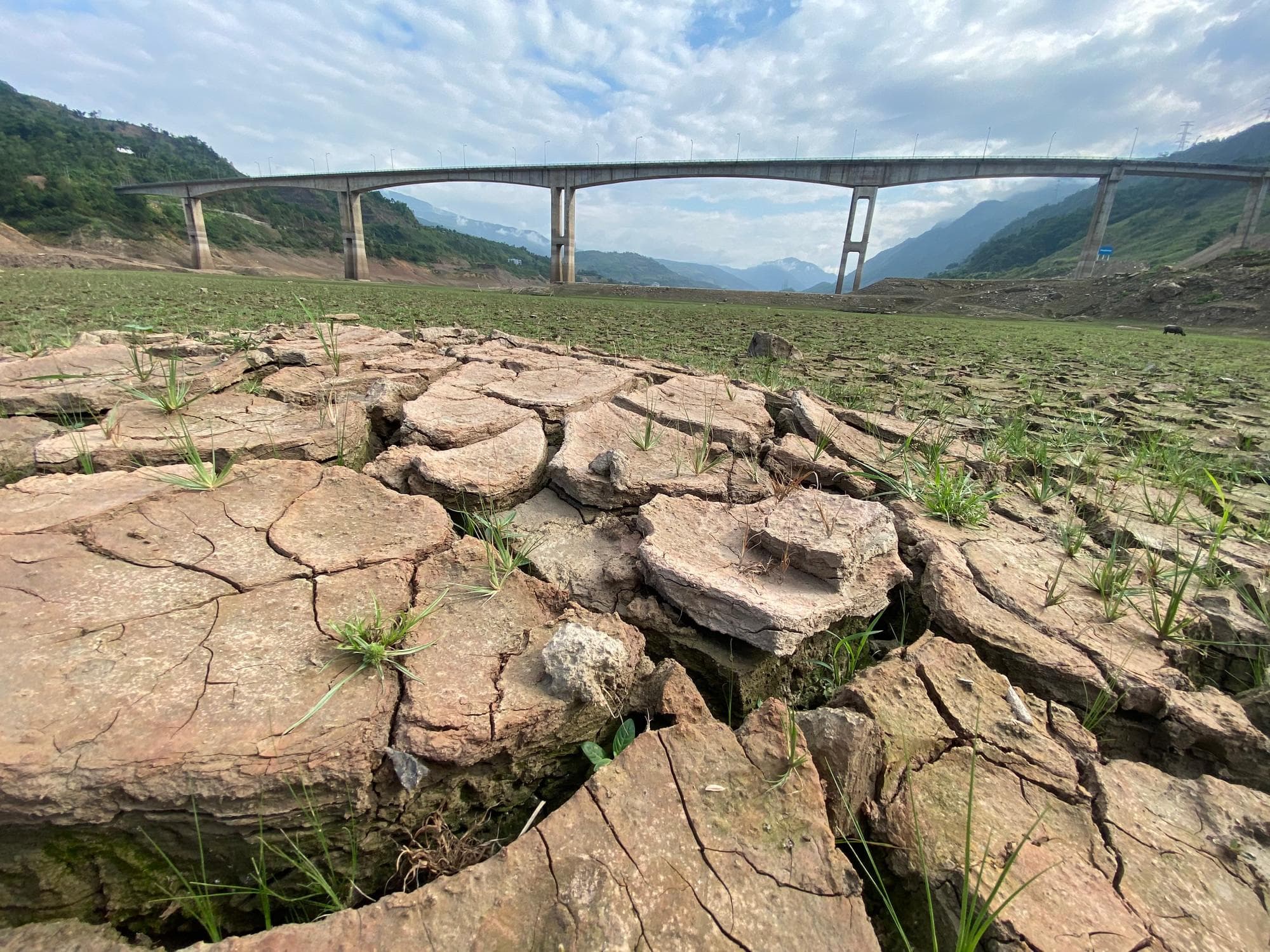
The decline reflects a combination of drought, unsustainable water extraction, land degradation and poor water management. Climate change is adding further pressure by making rainfall patterns less predictable and intensifying certain droughts and other water-related extremes.
The consequences extend far beyond communities without reliable drinking water. Water shortages can reduce agricultural output, disrupt factories, increase electricity costs and undermine economic growth.
The problem is not that Earth is about to run out of water altogether. Most of the planet's water is saltwater, while much of its freshwater is locked in glaciers, ice sheets or underground reserves that are difficult to access sustainably.
The real challenge is ensuring that sufficient clean water is available in the right place, at the right time, and at a price that households and businesses can afford.
2. Billions of People Still Lack Safe Drinking Water
The global water crisis is already affecting billions of people.
The United Nations' 2026 Sustainable Development Goals report found that, by 2024, approximately 74% of the world's population had access to safely managed drinking water. That still left billions without this essential service.[2]
The World Bank's September 2026 water security overview estimates that 2.1 billion people lack safe drinking water, while 3.4 billion lack safely managed sanitation. It also estimates that around four billion people experience severe water stress for at least one month each year.[3]
These figures describe different but related problems. A community may have water nearby but lack the infrastructure to deliver it safely. Another may have functioning pipes but depend on a reservoir that becomes dangerously depleted during a prolonged drought.
The burden is particularly severe in parts of sub-Saharan Africa and South Asia, where poverty, rapid population growth, weak infrastructure and climate pressures can make reliable water access difficult to achieve.
The effects reach into education, employment and public health. Where households lack piped water, family members may spend hours collecting supplies. The UN's 2026 World Water Development Report estimates that women and girls spend approximately 250 million hours each day collecting water worldwide.[4]
This is not simply a humanitarian issue. It represents lost productive time, higher healthcare costs and barriers to economic development.
A country cannot fully realise its economic potential when millions of its citizens struggle to obtain a resource required for survival.
3. Why Freshwater Supplies Are Declining
The world's water systems are under pressure from several interconnected forces.
Over-extraction: In some regions, groundwater is pumped out faster than rainfall can replenish it. This allows agriculture and cities to continue operating in the short term, but it gradually weakens the resource on which they depend.
Climate change: Higher temperatures increase evaporation and alter rainfall patterns. Some regions experience more intense droughts, while others face heavier rainfall and flooding. A warmer atmosphere does not distribute water evenly or guarantee that it will arrive when needed.
Land degradation: Deforestation, wetland destruction and poor agricultural practices can damage natural systems that store, filter and regulate freshwater.
Population growth and urbanisation: Growing cities require more water for households, sanitation, construction, industry and energy production.
The World Bank's 2025 freshwater assessment found that global water use increased by approximately 25% between 2000 and 2019, with around one-third of that increase occurring in areas already experiencing drying conditions.[1]
These pressures reinforce one another. When rainfall declines, farmers may pump more groundwater. When groundwater levels fall, pumping becomes more expensive. When agricultural production suffers, food prices may rise, placing additional pressure on household budgets.
Water scarcity is therefore not caused by one factor alone. It is the result of demand, environmental change and management decisions interacting over time.
4. Agriculture: The Biggest Consumer of Freshwater
Agriculture is at the centre of the global water challenge.
According to UN-Water, agriculture accounts for approximately 72% of global freshwater withdrawals. Municipal uses account for around 16%, while industry accounts for approximately 12%.[5]
These figures refer to water withdrawn from rivers, lakes and groundwater, not necessarily the amount permanently consumed. Some water returns to the environment, although it may be polluted or unavailable in the same location or season.
The scale of agricultural demand means that improving irrigation and farming practices could make a significant difference to water security.
Traditional irrigation methods can lose substantial amounts of water through evaporation, leakage and runoff. Drip irrigation, soil-moisture monitoring, improved irrigation scheduling and better-maintained distribution systems can help reduce waste in suitable settings.
Farmers can also reconsider which crops they grow and where they grow them. Producing water-intensive crops in extremely dry regions may become increasingly difficult to justify when local communities, ecosystems and other industries face competing demands.
However, these decisions are not simple. Farmers depend on established markets, local growing conditions and the financial support available to change their practices. More efficient irrigation equipment can also be expensive, while some efficiency improvements may encourage farmers to expand production and offset the water saved.
Governments therefore need to combine technology with better water allocation, agricultural advice and incentives that reward sustainable use.
Without reforming how water is used to produce food, attempts to solve the wider crisis will remain limited.
5. The Hidden Economic Cost of Drought
Drought is often treated as a natural disaster, but its economic consequences can spread through the entire supply chain.
When water becomes scarce, farmers may harvest less food, livestock producers may face higher feed costs, and food processors may struggle to maintain production. Consumers can then face higher prices, particularly when shortages coincide with rising energy, fertiliser and transport costs.
The impact is not limited to agriculture.
Manufacturing facilities need water for cleaning, cooling and processing. Electricity generation can depend on water availability, whether for hydropower or for cooling certain thermal and nuclear power plants. Mining operations and construction projects may also require large quantities of water.
Drought can therefore create a chain reaction:
Lower agricultural production reduces food supplies.
Reduced river flows and reservoir levels can constrain energy generation.
Industrial facilities face higher costs or restrictions.
Businesses pass some costs on to consumers or delay investment.
Governments may need to spend more on emergency support and infrastructure.
The severity depends on the location, the industries involved and the duration of the drought. Not every drought creates an economic crisis, and some businesses can adapt through storage, alternative sources or lower water consumption.
Nevertheless, water shortages can become a macroeconomic problem when they affect several important sectors simultaneously.
For countries already struggling with high food prices, public debt or weak growth, a major drought can make existing economic pressures considerably worse.
6. Could Water Scarcity Trigger Another Inflation Shock?
Water scarcity could become an increasingly important source of inflation risk.
When drought reduces crop yields, food prices may rise. If manufacturers face water restrictions, their operating costs can increase. Businesses may also need to invest in storage, recycling systems or alternative supplies, adding to production expenses.
The effect can spread internationally because modern supply chains cross borders. A shortage in one major agricultural exporting region can affect food markets elsewhere, particularly if alternative suppliers cannot quickly increase production.
Water-related disruption can also interact with energy markets. Hydropower shortages may increase reliance on other sources of electricity, depending on the country's energy system. That can raise costs and increase exposure to fuel-price volatility.
However, water scarcity does not automatically lead to broad inflation. The outcome depends on how severe the shortage is, how long it lasts, whether inventories are available and how quickly producers can adapt.
Central banks generally cannot manufacture additional water or restore depleted aquifers. Their role is to manage the wider inflation and economic effects, while governments and water authorities must address the underlying supply problem.
This creates a difficult policy challenge. Monetary policy may help limit secondary inflation, but it cannot resolve a physical shortage of essential resources.
As climate-related and water-management risks grow, investors and policymakers may need to pay closer attention to drought exposure alongside familiar indicators such as energy prices, wages and supply-chain disruptions.
7. The Groundwater Crisis Beneath Our Feet
One of the most serious water risks is largely invisible.
Groundwater is freshwater stored beneath the Earth's surface in soil and geological formations known as aquifers. It supplies drinking water to communities, supports agriculture and provides an important reserve during dry periods.
The problem arises when extraction exceeds the rate at which groundwater can be replenished.
In heavily irrigated regions, farmers may pump groundwater to protect crops during droughts. Cities may rely on underground reserves as surface water becomes unreliable. Over time, excessive extraction can cause water tables to fall, increasing pumping costs and potentially making wells unusable.
In some locations, groundwater depletion can also contribute to land subsidence, in which the ground sinks as underground water is removed. Coastal aquifers may face saltwater intrusion, making previously usable supplies unsuitable for drinking or irrigation.
Groundwater depletion is especially difficult to reverse because aquifers can take many years, decades or longer to recover, depending on their geology and recharge conditions.
The World Bank has identified groundwater management as an important part of building water security under climate change.[3]
Solutions include monitoring extraction, improving irrigation efficiency, protecting recharge areas and establishing enforceable limits where pumping is unsustainable.
The danger is that groundwater can create an illusion of security. A region may appear capable of supporting intensive agriculture for years, only to discover that its underground reserves are being consumed faster than nature can replace them.
8. The Water Problem Facing Major Cities
Cities depend on reliable water supplies for households, hospitals, businesses, sanitation and firefighting. As urban populations grow, existing reservoirs, pipelines and treatment plants may struggle to keep up.
Urban water crises can emerge when drought coincides with weak infrastructure, poor planning and insufficient investment.
Cape Town's 2018 drought brought the possibility of "Day Zero" — the point at which normal municipal water supplies would have to be severely restricted — into international headlines. The city avoided that outcome through emergency measures and reduced demand.
Other cities have also faced serious water shortages, demonstrating that urban water insecurity is not confined to one continent or income group.
Rapidly growing cities may expand faster than their water infrastructure. Older networks can lose substantial quantities through leaks, while pollution can make existing sources more expensive to treat.
Climate change adds another layer of uncertainty. A city that historically relied on predictable rainfall may find that its reservoirs no longer refill as reliably as they once did.
The solution is not simply to build larger reservoirs. Cities may need a combination of leakage reduction, wastewater reuse, rainwater capture, diversified supplies, better demand management and long-term planning.
Water infrastructure is expensive and often takes years to build. Delaying investment until shortages become an emergency can leave governments with fewer options and higher costs.
For city authorities, water security should be treated as essential economic infrastructure rather than a service that can be expanded only after demand rises.
9. Technology Companies Are Also Exposed
The global technology industry is often associated with software, artificial intelligence and digital services. Yet the physical infrastructure behind these technologies depends on water.
Semiconductor manufacturing requires highly purified water for cleaning and processing silicon wafers. Data centres may use water for cooling, depending on their design and local climate. Electricity generation, equipment manufacturing and construction can create additional water demand.
As investment in AI infrastructure expands, water management is becoming a more important consideration for technology companies and the communities hosting their facilities.
A data centre's direct water consumption varies considerably according to cooling technology, climate, workload and operating practices. Some systems rely more heavily on evaporative cooling, while others use alternative cooling arrangements that can reduce direct water use but may increase electricity demand.
That means there is no single water footprint applicable to every data centre.
The wider issue is local concentration. A large facility may operate in a region with abundant water, or it may compete with households, farmers and other businesses in a water-stressed area.
Technology companies can reduce risk by publishing meaningful water-use data, choosing locations carefully, using reclaimed water where appropriate and improving cooling efficiency.
Governments and local authorities also need to assess water availability before approving major industrial projects.
The AI boom may be digital, but the infrastructure supporting it remains physical. Water scarcity could become one of the constraints affecting where future technology investments are built.
10. Could Water Scarcity Create Geopolitical Conflict?
Water does not respect national borders.
Rivers, lakes and underground aquifers frequently cross political boundaries, creating situations in which multiple countries depend on the same resource.
When supplies are abundant, cooperation may be relatively straightforward. When drought reduces available water, disagreements can emerge over dams, irrigation, electricity generation and the timing or volume of water releases.
Such disputes can become politically sensitive because governments must balance domestic needs with commitments to neighbouring countries.
Climate change and rising demand may increase pressure in some shared river basins, although the risk varies widely. Water scarcity does not automatically lead to war. Shared resources can also encourage cooperation, joint monitoring and agreements that help countries manage shortages.
The UN reports that cooperation over transboundary water resources is an important part of sustainable water management.[2]
Effective agreements need reliable data, transparent communication and mechanisms for resolving disputes. Countries also need to consider how new infrastructure in one location affects downstream communities.
Water diplomacy is likely to become more important as governments seek to protect agriculture, energy supplies and population centres.
The geopolitical question is not simply who owns a river. It is how countries share a resource that fluctuates with weather, demand and long-term environmental change.
11. Can Desalination Solve the Crisis?
Desalination converts seawater or brackish water into freshwater. It is already an important source of supply in some water-stressed regions, particularly where coastal cities have limited access to reliable rivers or aquifers.
The technology offers a significant advantage: seawater is abundant in many places, and desalination can provide a supply that is less dependent on rainfall.
However, it has limitations.
Desalination requires energy, specialised equipment and substantial investment in plants and pipelines. It also produces concentrated brine that must be managed carefully to limit environmental damage.
Transporting desalinated water inland or to higher elevations can add further costs. For poorer countries and communities, the price of building and operating the infrastructure may be prohibitive without public investment or financial support.
New technologies can improve efficiency, and renewable electricity can help reduce emissions associated with desalination. But neither development makes the process cost-free or universally suitable.
Desalination is most useful when it forms part of a broader water strategy. Coastal cities may combine it with wastewater recycling, leakage reduction and conservation rather than relying on a single source.
The important question is not whether desalination can produce freshwater. It can. The question is where it is economically, environmentally and technically appropriate — and whether the resulting water can reach the people and industries that need it.
12. Wastewater Recycling: Turning a Problem Into a Resource
A significant amount of water is used once and then discarded, even though it may be possible to treat and reuse it.
Wastewater recycling can provide water for industrial cooling, irrigation, landscaping and, where advanced treatment and strict safeguards are used, drinking-water supplies.
Reusing water can reduce pressure on rivers and aquifers while making cities and industrial facilities less dependent on rainfall.
It can also help businesses manage disruption. A factory that recycles process water may be better positioned to operate during restrictions than a facility that relies entirely on fresh supplies.
However, recycling requires investment in treatment facilities, monitoring and distribution networks. Public confidence also matters, especially when recycled water is intended for drinking.
Standards must be stringent enough to protect health, and systems must be operated and maintained properly.
The greatest opportunities may come from combining wastewater reuse with better measurement of industrial water consumption, leakage prevention and incentives for efficient use.
Recycling cannot solve every shortage, and it cannot replace all freshwater withdrawals. Nevertheless, it can reduce demand for new supplies and help communities make better use of water that would otherwise be discarded.
In a world facing growing pressure on freshwater resources, treating wastewater as a potential resource rather than simply a waste product could become an increasingly valuable economic strategy.
13. The Investment Opportunity in Water Security
Water scarcity creates serious risks, but it also creates demand for solutions.
Potential areas for investment include water-treatment technology, desalination, wastewater recycling, leak detection, smart meters, irrigation equipment and infrastructure maintenance.
Utilities may need to replace ageing pipes and treatment facilities. Industrial companies may invest in systems that reduce their dependence on freshwater. Agricultural businesses may adopt precision irrigation and technologies that help them use water more efficiently.
Investors should nevertheless distinguish between genuine commercial opportunities and companies benefiting from a compelling narrative.
Water-related businesses face different risks depending on their activities. Infrastructure projects may require large amounts of capital and lengthy approval processes. Technology companies must prove that their products work at commercial scale. Utilities can be affected by regulation, public affordability concerns and the political sensitivity of water prices.
There are also environmental and social considerations. Projects that improve efficiency in one area may create problems elsewhere if they encourage unsustainable expansion or reduce water availability for local communities.
Water is an essential resource, but that does not mean every water-related investment will generate attractive returns.
Investors should examine a company's financial position, customer contracts, technology, regulatory environment and measurable contribution to water security.
The most durable opportunities may come from businesses that help customers reduce waste, improve reliability and manage scarce resources more effectively.
14. Why Water Privatisation and Pricing Remain Controversial
Water infrastructure requires investment, but deciding who should pay for it is politically sensitive.
Some systems are operated by public authorities, while others involve private companies or public-private partnerships. Each model raises questions about accountability, investment, efficiency and affordability.
If water prices are kept too low to fund maintenance, utilities may struggle to repair leaks, upgrade treatment facilities or prepare for drought. Underinvestment can gradually weaken service quality and increase the risk of disruption.
On the other hand, steep price increases can place significant pressure on low-income households. Because water is essential for life, access cannot be treated in the same way as demand for an optional consumer product.
A sustainable approach must balance several objectives: keeping water affordable, funding reliable infrastructure, encouraging responsible consumption and protecting the resource for future generations.
Governments can use targeted assistance to protect vulnerable households while ensuring that water providers have sufficient resources to maintain essential systems.
Regulation and transparency are also crucial. Customers need confidence that money collected through bills is supporting reliable services and that companies are held accountable for failures.
The debate is ultimately about how society distributes the cost of securing an essential resource — and how to ensure that financial pressures do not undermine universal access.
15. What Governments and Businesses Must Do Now
Preventing a deeper water crisis requires action before shortages become emergencies.
Governments need better information about how much water is available, how quickly it is being consumed and which communities or industries are most exposed. Without reliable data, it is difficult to allocate water fairly or plan infrastructure effectively.
Agricultural policy should encourage sustainable irrigation, soil management and crop choices suited to local conditions. Water authorities should prioritise repairs, reduce leakage and develop contingency plans for droughts and other disruptions.
Businesses can assess their exposure by mapping water use across their operations and supply chains. A company may rely on water indirectly through the production of ingredients, metals, chemicals or electronic components, even if its own facilities consume relatively little.
Useful measures include setting measurable water-efficiency targets, reusing process water, protecting local watersheds and preparing alternative operating plans for periods of scarcity.
Governments can also improve cooperation between agriculture, energy, industry and environmental agencies. Water decisions made by one sector often affect the others.
The UN's 2026 Sustainable Development Goals report stresses the importance of investment, better monitoring, stronger institutions and community participation in improving water security.[2]
No single technology or policy can solve the entire crisis. Progress will depend on combining infrastructure investment with effective management and environmental protection.
16. Three Possible Futures for the World's Water Supply
The future of water security will depend on the choices made by governments, businesses and communities over the coming years.
Scenario One: A Managed Transition
Governments invest in infrastructure, improve agricultural efficiency and expand wastewater reuse. Businesses adopt better water-management systems, while international cooperation helps protect shared resources.
Water shortages still occur, but stronger planning reduces their economic impact. Investment costs remain significant, yet the risk of severe disruption becomes more manageable.
Scenario Two: A Growing Water Divide
Wealthier countries and businesses invest in desalination, storage, recycling and advanced treatment, while poorer communities struggle to finance basic infrastructure.
Access to reliable water increasingly depends on income, location and political influence. Food prices become more volatile in vulnerable regions, and competition between households, farmers and industry intensifies.
Scenario Three: A Global Water Shock
Severe droughts coincide with depleted groundwater, infrastructure failures or political disputes. Agricultural production falls in important regions, industrial facilities face restrictions and governments introduce emergency measures.
Food and energy prices rise in affected markets, while businesses confront higher operating costs and supply-chain disruption.
This scenario would not require the entire world to run out of water. It could emerge from several regional crises occurring simultaneously and affecting interconnected global markets.
These futures are not mutually exclusive. Different countries may experience different outcomes, and a country that manages its water well can still be affected by shortages elsewhere through trade and supply chains.
The central lesson is that water security depends not only on natural resources but also on investment, planning and the ability to adapt.
17. The Global Economy Cannot Ignore Water Any Longer
Water scarcity is often treated as an environmental problem, but its implications reach into nearly every part of the economy.
Agriculture needs water to produce food. Energy systems need reliable supplies to operate. Manufacturers depend on it for industrial processes. Cities need it to support households, hospitals and businesses.
When water becomes unreliable, these systems become more expensive and vulnerable to disruption.
The latest evidence from the World Bank, the United Nations and the World Meteorological Organization points to growing pressure on freshwater resources, alongside persistent inequalities in access to safe drinking water and sanitation.[1][2][4]
There is no single solution. Desalination can help in suitable coastal regions, recycling can reduce demand for fresh supplies, and better irrigation can improve agricultural efficiency. Infrastructure investment, pollution control and sustainable groundwater management are equally important.
The challenge is to move from reacting to shortages towards managing water as a strategic resource.
For governments, this means treating water security as part of economic planning. For businesses, it means understanding where their supplies come from and preparing for disruption. For investors, it means assessing water exposure alongside other long-term financial risks.
The world does not need to run out of water for water scarcity to become an economic emergency. It only needs reliable supplies to become unavailable where and when they are needed most.
The countries that invest early in resilient water systems may gain an important economic advantage. Those that delay could face higher costs, weaker food security and increasingly difficult choices over who receives the water that remains.
Sources
[1] World Bank — World Annual Fresh Water Losses Could Supply 280 Million People (4 November 2025) https://www.worldbank.org/en/news/press-release/2025/11/04/world-annual-fresh-water-losses-could-supply-280-million-people
[2] United Nations Statistics Division — Sustainable Development Goals Report 2026: Goal 6, Clean Water and Sanitation https://unstats.un.org/sdgs/report/2026/Goal-06/
[3] World Bank — Water Forward FAQ: Water Security and the Global Water Crisis (updated September 2026) https://www.worldbank.org/ext/en/water/faq
[4] UN-Water — UN World Water Development Report 2026: Water for All People – Equal Rights and Opportunities https://www.unwater.org/publications/un-world-water-development-report-2026
[5] UN-Water — Water Scarcity: Facts and Figures https://www.unwater.org/water-facts/water-scarcity
[6] World Meteorological Organization — State of Global Water Resources 2025 (published September 2026) https://public.wmo.int/resources/publication-series/state-of-global-water-resources/2025
[7] World Resources Institute — New Global Freshwater Assessment Finds Action Is Failing to Keep Pace With Mounting Pressures (11 August 2026) https://www.wri.org/update/global-freshwater-assessment-finds-action-failing
Published by Banx Network. This article is part of the Banx decentralized media programme, powered by the BXE token on the XRP Ledger.