1. The Tiny Technology Behind the Global Economy
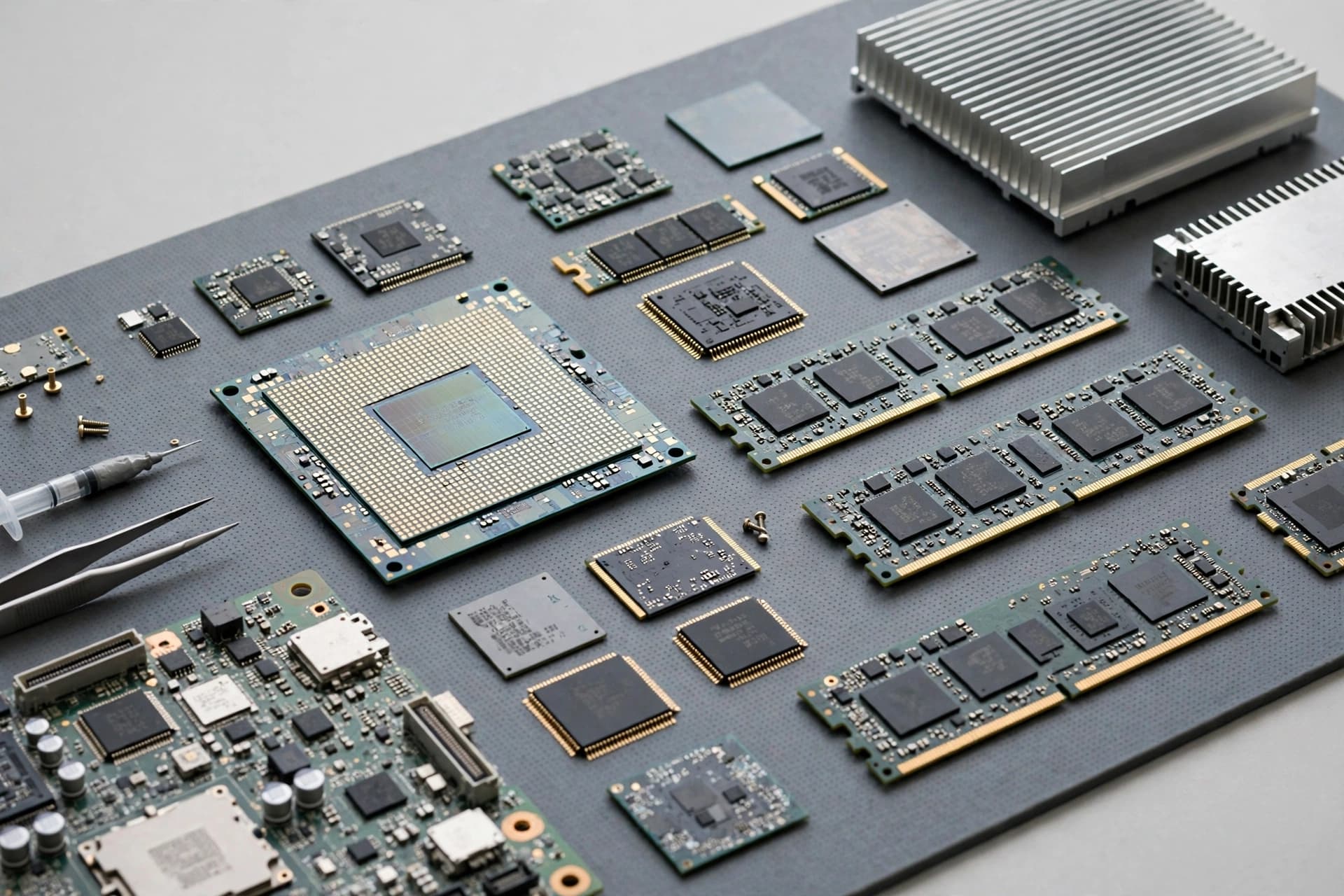
Modern life depends on a technology most people rarely think about: the semiconductor chip.
These small electronic components process information, store data and control the devices used across nearly every major industry. Smartphones, cars, medical equipment, telecommunications networks, industrial machinery and data centres all depend on them.
Their importance has increased dramatically with the growth of artificial intelligence. Advanced AI systems require powerful processors, while the data centres running them depend on memory chips, networking components and specialised equipment.
This demand has helped transform semiconductors into a strategic economic resource.
On 15 October 2026, Taiwan Semiconductor Manufacturing Company (TSMC), the world's leading contract chipmaker, reported another exceptionally strong quarter, supported by demand for AI infrastructure. Its third-quarter net profit rose 69% year on year in local currency, according to the Financial Times [1].
The results illustrate how valuable advanced chip manufacturing has become. They also highlight a potential vulnerability: as businesses depend on increasingly sophisticated computing systems, disruption to a relatively concentrated supply chain could have consequences far beyond the technology industry.
The global chip war is therefore about more than who manufactures the fastest processors. It is about economic power, national security, industrial competitiveness and control over the infrastructure of the digital age.
2. Why the United States and China Are Fighting for Chip Supremacy
The rivalry between the United States and China extends across trade, artificial intelligence, defence and advanced manufacturing.
Semiconductors sit at the centre of this competition because advanced chips enable technologies that can deliver both commercial and military advantages.
For the United States, maintaining access to leading-edge chips and the equipment used to manufacture them is a strategic priority. Washington has used export controls to restrict China's access to certain advanced semiconductors and chipmaking technologies, arguing that they could support military modernisation and other national-security applications.
China, meanwhile, wants to reduce its dependence on foreign suppliers. Restrictions imposed by Washington have increased the incentive for Chinese companies to develop domestic alternatives across chip design, manufacturing equipment and memory production.
This has created a difficult situation for international businesses. Companies may have manufacturing facilities in one country, customers in another and critical equipment sourced from a third.
Government decisions can therefore affect investment plans, product launches and supply-chain arrangements.
In October 2026, China proposed new export controls covering 40 technologies across areas including artificial intelligence, semiconductors, solar power and biotechnology. The proposals reflect Beijing's growing focus on controlling sensitive technologies as geopolitical competition intensifies [2].
The result is a technological contest in which both sides want to protect strategic capabilities while continuing to benefit from global commerce.
The risk is that measures intended to improve national security could also increase costs, complicate international cooperation and fragment the global technology market.
3. Taiwan: The Most Important Link in the Chip Supply Chain
Any discussion of the global semiconductor industry eventually leads to Taiwan.
The island is home to TSMC, a company whose manufacturing capabilities are essential to many of the world's most advanced computing products. Semiconductor designers such as Nvidia and Apple depend on specialist manufacturers to turn their chip designs into physical products.
Taiwan's position is particularly important in leading-edge manufacturing. According to the US International Trade Administration, Taiwan accounted for more than 60% of global foundry revenue and over 90% of leading-edge chip manufacturing in the figures it reported for 2024 [3].
This concentration has created a strategic vulnerability.
If Taiwan's semiconductor factories suffered a major interruption, replacing their output would not be as simple as transferring production to another country. Advanced chip fabrication requires highly specialised equipment, controlled environments, experienced engineers, reliable electricity and water supplies, and extremely complex manufacturing processes.
Even where other facilities can manufacture similar chips, transferring production takes time and may require redesigning products to suit different processes.
The geopolitical risk is equally significant. China claims Taiwan as part of its territory, while Taiwan operates with its own government. Tensions across the Taiwan Strait have made the island's security a major concern for regional governments and international businesses.
A military conflict is not inevitable, and the existence of this risk does not mean disruption is imminent. Nevertheless, the consequences of a serious crisis affecting Taiwan's semiconductor industry could be global.
The issue is no longer simply whether companies can manufacture advanced chips efficiently. It is whether the world's most important technology supply chains can remain operational during a major geopolitical confrontation.
4. What Would Happen if Taiwan's Chip Production Stopped?
Consider a scenario in which a severe crisis temporarily halted semiconductor production in Taiwan or prevented finished chips from reaching international customers.
The first impact would likely be felt by companies directly dependent on Taiwanese manufacturing. Chip designers could struggle to fulfil orders, electronics manufacturers might face component shortages, and data-centre operators could experience delays in expanding their infrastructure.
The effects could then spread through interconnected industries.
Smartphones and computers: Manufacturers might face delays in producing new devices, while existing products could become more expensive if supplies tightened.
Automotive manufacturing: Modern vehicles contain semiconductors for engine management, safety systems, infotainment, driver assistance and electric powertrains. Missing components can disrupt production even when most other parts are available.
Artificial intelligence: Data-centre expansion could slow if advanced processors, memory or packaging capacity became difficult to obtain.
Telecommunications: Network equipment depends on multiple semiconductor types, and shortages could complicate upgrades and maintenance.
Industrial production: Factory automation, robotics and control systems rely on chips that may be difficult to replace quickly.
Healthcare: Medical imaging equipment, monitoring devices and other electronic systems could face higher component costs or longer replacement times.
A disruption would not necessarily stop every industry at once. Companies maintain inventories, some chips have alternative suppliers, and manufacturers could prioritise their most important products.
However, the semiconductor supply chain is interconnected. A shortage of one critical component can delay an entire product even if all the other parts are available.
The Semiconductor Industry Association and Boston Consulting Group have highlighted this vulnerability in their supply-chain research. Their analysis identified numerous points where production is highly concentrated in particular regions, creating potential single points of failure [4].
The central concern is that a relatively localised disruption could produce economic consequences far beyond its geographical origin.
5. Why Building More Chip Factories Is Not a Quick Fix
Governments and companies are investing heavily in domestic semiconductor manufacturing to reduce their dependence on concentrated supply chains.
The United States has encouraged chipmakers to establish production facilities on American soil. Europe has pursued its own semiconductor initiatives, while Japan, South Korea and other economies are investing in manufacturing capacity and related technologies.
TSMC has also been expanding its overseas manufacturing presence, including major investments in the United States.
But constructing a semiconductor factory is an exceptionally complicated undertaking.
A leading-edge fabrication plant requires specialised buildings, cleanroom systems, advanced lithography equipment, extensive engineering expertise and a dependable supply of materials. It must then pass through a lengthy process of installation, testing, qualification and production ramp-up.
Even after a facility becomes operational, achieving the same manufacturing performance and yields as an established plant can take time.
There is also a financial challenge. New facilities require enormous capital investment, and production costs can differ between locations because of labour, energy, construction and supply-chain expenses.
The Semiconductor Industry Association and BCG estimated that a hypothetical semiconductor supply chain fully self-sufficient within each region would require at least $1 trillion in additional upfront investment and could increase overall chip prices by 35% to 65% [4].
That estimate illustrates the trade-off between resilience and efficiency. Complete self-sufficiency would be expensive, and it would not automatically eliminate every supply-chain vulnerability.
The more practical objective may be diversification: expanding alternative manufacturing capacity, developing additional suppliers and ensuring that critical components can still be obtained if one region experiences disruption.
6. The AI Boom Is Making the Chip Race More Intense
Artificial intelligence has added a new source of pressure to the semiconductor industry.
Training and operating advanced AI systems requires powerful processors, high-bandwidth memory, networking hardware and sophisticated packaging technologies. These components must work together to deliver the performance required by large computing workloads.
Demand has grown as technology companies build data centres and compete to develop increasingly capable AI systems.
TSMC's third-quarter 2026 results provide a clear example. The company reported strong growth as customers continued investing in AI infrastructure, reinforcing the importance of advanced chip manufacturing to the technology sector [1].
But demand is not limited to the largest AI processors. Data centres also require memory chips to store and retrieve information, networking components to move data and conventional processors to manage supporting workloads.
This creates pressure across several parts of the supply chain.
On 20 October 2026, Reuters reported that Chinese technology companies ByteDance, Alibaba and Tencent had placed orders worth more than $35 billion for Nvidia chips that complied with US export restrictions [5]. The report highlighted the scale of demand for AI computing and the commercial consequences of restrictions on which products can be supplied to Chinese customers.
The combination of strong demand and geopolitical controls makes the market more complicated. Companies must consider not only performance and price, but also whether a product can legally be sold to a particular customer in a particular country.
If demand continues to exceed available manufacturing capacity, shortages and higher prices could persist in certain chip categories. If investment eventually creates too much capacity or AI spending slows, manufacturers could instead face excess supply.
The chip industry must therefore manage two different risks: insufficient capacity during a boom and expensive overinvestment if demand disappoints.
7. China's Drive for Semiconductor Independence
China understands the strategic importance of semiconductors and has spent years trying to strengthen its domestic chip industry.
Its objectives include improving chip design, expanding manufacturing capacity, developing local production equipment and reducing dependence on foreign technologies that may be restricted during geopolitical disputes.
Export controls have strengthened the incentive to pursue these goals. When access to advanced foreign chips or manufacturing equipment becomes uncertain, domestic alternatives become more strategically valuable.
China has made progress in several semiconductor categories, including memory production. However, matching the most advanced manufacturing capabilities involves substantial technical and commercial challenges.
On 21 October 2026, Reuters reported that Samsung Electronics and SK Hynix were upgrading their Chinese facilities to produce more advanced NAND memory chips amid competition from China's Yangtze Memory Technologies, or YMTC, and increasing demand driven by AI [6].
The report also highlighted the regulatory complications created by US controls on American-made chipmaking equipment used in China.
This illustrates a broader dilemma. International semiconductor companies want to serve major markets and improve manufacturing technology, but their investment decisions are increasingly shaped by government restrictions.
China's progress could gradually alter the competitive balance in some segments of the industry. Yet it would be misleading to treat all semiconductors as interchangeable or assume that success in one category means leadership in every other.
Advanced logic processors, memory chips, manufacturing equipment and chip-design software involve different technologies and competitive strengths.
China's long-term ambition is clear: reduce strategic dependence and strengthen its domestic ecosystem. How quickly it can achieve that objective will depend on engineering progress, access to equipment, investment and the effectiveness of its industrial policies.
8. Export Controls: National Security Versus Global Trade
Export controls have become one of the most powerful instruments in the semiconductor rivalry.
The United States has imposed restrictions on certain advanced chips and technologies that can be used to manufacture them. These measures are intended to limit access to capabilities Washington considers strategically sensitive.
However, the semiconductor industry operates through international networks. A chip may be designed in the United States, manufactured in Taiwan, use equipment developed in the Netherlands or Japan, and be incorporated into a product assembled elsewhere.
Restrictions introduced by one government can therefore affect companies and workers in several countries.
They can also encourage businesses to reorganise their supply chains, seek alternative suppliers or develop products that comply with the rules.
On 16 October 2026, Taiwan announced plans to tighten controls on exports of advanced AI chips and servers to China, bringing its approach closer to US restrictions. Under the planned measures, shipping restricted AI hardware to China would become a criminal offence under Taiwan's Foreign Trade Act [7].
The development shows how semiconductor controls are expanding beyond a single country's policies and becoming part of a wider international effort.
There are legitimate national-security arguments for restricting technologies that could support sensitive military or intelligence capabilities. But broader restrictions can also raise costs, reduce commercial opportunities and encourage rival countries to build separate technology ecosystems.
The long-term question is whether governments can protect genuinely sensitive capabilities without unnecessarily fragmenting the global market.
9. Could the Chip War Divide the Technology World Into Two Systems?
A growing risk is that geopolitical competition could produce increasingly separate technology ecosystems.
In one scenario, countries aligned with the United States would use a network of trusted suppliers and apply common restrictions to sensitive semiconductor technologies. China would continue building domestic alternatives and strengthen its own supply chains.
Over time, the two systems could develop different equipment standards, software tools, supply arrangements and manufacturing capabilities.
Businesses operating internationally would then face additional costs. They might need separate products for different markets, maintain duplicate supply chains or comply with different rules depending on where their customers are located.
This would not mean that all international semiconductor trade would stop. Many chips are not subject to the strictest controls, and businesses on both sides have economic incentives to continue trading.
Nevertheless, fragmentation could reduce some of the efficiencies created by decades of international specialisation.
Research by the Semiconductor Industry Association and BCG argues that the existing global semiconductor network has supported innovation and lower costs, while also creating concentrated vulnerabilities [4].
The challenge is to improve resilience without dismantling the benefits of international cooperation.
A world with more diversified supply chains could be more secure. A world divided into competing, incompatible systems could also be more expensive and less efficient.
10. How a Chip Shortage Could Affect Inflation
Semiconductor shortages can affect prices in two ways.
First, chipmakers may charge more when demand exceeds supply for particular products. Those increases can feed into the cost of electronic devices, vehicles, industrial equipment and other goods.
Second, shortages can delay production. If a manufacturer cannot complete a product because one essential component is missing, it may face additional storage, logistics and labour costs while waiting for supplies.
Some of those costs may eventually be passed on to customers.
The overall inflationary effect would depend on the size and duration of the disruption. A shortage affecting a specialised component used in a narrow market would have a different impact from a prolonged interruption affecting widely used chips.
Companies can also respond by redesigning products, sourcing alternative components or changing production schedules. These adjustments can reduce the impact, although they may take time and require additional spending.
There is a further complication: semiconductor factories depend on electricity, water, chemicals, specialist materials and international equipment supply chains. A major disruption affecting these inputs could make it harder to expand production quickly.
If a severe shortage coincided with high energy prices or broader geopolitical tensions, businesses could face several cost pressures simultaneously.
For consumers, the result might be more expensive devices, delayed product launches or fewer choices in affected categories.
For central banks, the challenge would be to determine whether such price increases were temporary supply effects or part of a broader inflation problem.
11. The Investment Battle: Who Benefits From the Chip Race?
The global semiconductor rivalry is creating opportunities for companies across the supply chain.
Chip designers, manufacturing specialists, equipment producers, memory suppliers and advanced packaging businesses may all benefit from rising demand, depending on their products and competitive positions.
However, investment in semiconductors carries significant risks.
Building new fabrication capacity is expensive, and facilities can take years to reach full production. Technology changes quickly, meaning companies must keep investing to remain competitive.
Demand can also be cyclical. A period of shortages and high prices can encourage manufacturers to expand capacity. If many companies invest simultaneously, the market may eventually face oversupply.
Geopolitical restrictions add another source of uncertainty. A company may have strong technical capabilities but lose access to a market, supplier or piece of equipment because government rules change.
Investors should therefore distinguish between the long-term importance of semiconductors and the financial prospects of individual businesses.
A technology can become more essential to the economy without every company in the industry delivering attractive returns.
The same principle applies to government-backed manufacturing projects. Building domestic capacity may improve national resilience, but it does not guarantee that every facility will be commercially competitive.
The semiconductor industry is likely to remain strategically important. Its winners and losers will depend on technology, execution, pricing, capital discipline and political decisions.
12. Could Europe and the United Kingdom Become More Important?
Europe has established strengths in semiconductor equipment, research, automotive electronics and specialist manufacturing. The Netherlands, for example, is home to ASML, a critical supplier of advanced lithography systems used in semiconductor production.
The European Union has pursued policies to expand its semiconductor capabilities and reduce vulnerabilities in critical supply chains.
The UK has a different industrial position. It has expertise in semiconductor design, compound semiconductors, research and specialist technology applications, but it does not currently match Taiwan's scale in leading-edge chip fabrication.
For Britain, becoming more resilient does not necessarily require manufacturing every kind of semiconductor domestically.
A more targeted strategy could focus on areas where the country has established expertise, including chip design, compound semiconductors, research, specialist materials and technologies used in defence, telecommunications and industrial systems.
Partnerships with international manufacturers would remain important because no single country can easily reproduce the entire semiconductor supply chain.
The UK also depends on semiconductors indirectly through imported vehicles, consumer electronics, industrial machinery, telecommunications equipment and cloud services.
A global shortage could therefore affect British businesses even if domestic chip factories continued operating.
The most useful measure of resilience is not simply how many chips a country produces. It is whether its critical industries can continue functioning when international supply chains are disrupted.
13. Three Possible Futures for the Global Chip Industry
The direction of the semiconductor industry will depend on geopolitical decisions, technological progress, investment and the strength of demand.
Scenario One: Managed Competition
The United States and China maintain restrictions on selected sensitive technologies while continuing to trade in permitted products. Companies diversify suppliers, governments invest in additional capacity and international businesses adapt to a more complicated regulatory environment.
This outcome would preserve much of the existing global market while reducing some strategic dependencies. Costs might rise, but supply chains could become more resilient.
Scenario Two: A Prolonged Technology Split
Restrictions expand, rival countries accelerate domestic production and businesses face increasingly different regulatory requirements.
Companies may need separate manufacturing arrangements and product strategies for different markets. Some countries could gain from new investment, while others lose access to technology or customers.
This outcome would not require a military conflict. It could emerge gradually through trade restrictions, subsidies and strategic competition.
Scenario Three: A Major Supply Disruption
A serious geopolitical crisis, natural disaster or infrastructure failure interrupts production at a critical semiconductor hub.
Manufacturers compete for limited supplies, production schedules are delayed and costs rise across industries that depend on affected chips.
Governments may prioritise critical sectors, while companies seek alternative suppliers and accelerate efforts to redesign products.
The economic impact would depend on the location, duration and severity of the disruption. A temporary interruption would be different from a prolonged shutdown affecting advanced chip production.
These scenarios are possibilities rather than predictions. They demonstrate why semiconductor resilience has become an economic and national-security priority.
14. What Businesses Should Do to Prepare
Companies that depend on semiconductors can take practical steps to reduce their exposure to supply-chain disruption.
Map critical components. Identify which products rely on specialised chips, where those components are manufactured and whether alternative suppliers exist.
Avoid unnecessary dependence on one source. Where commercially feasible, qualify additional suppliers or develop products that can use alternative components.
Improve supply-chain visibility. Understand not only direct suppliers but also the critical materials, equipment and production facilities on which they depend.
Review inventory strategy. Strategic stockpiles of essential components may provide protection, although holding inventory creates costs and some chips become obsolete as technology advances.
Plan for product redesign. Engineers may be able to adapt products to use more readily available components, but this requires testing, time and regulatory approval where applicable.
Monitor regulatory developments. Export controls and licensing rules can change the products companies are permitted to buy, sell or transfer internationally.
Test disruption scenarios. Businesses should consider what happens if a supplier becomes unavailable for weeks or months, rather than assuming that every shortage can be resolved quickly.
No strategy can eliminate every risk. However, preparation can help companies make decisions before a crisis forces them to respond under pressure.
15. Conclusion: The World Cannot Afford to Ignore the Chip War
Semiconductors have become essential to the global economy, and their strategic importance will probably continue to increase as artificial intelligence, automation, electric vehicles and connected infrastructure develop.
The United States and China both want greater control over critical technologies. Taiwan remains central to advanced chip manufacturing, while governments across Europe and Asia are investing to strengthen their own capabilities.
These developments reflect a genuine security challenge, but they also create economic trade-offs. More domestic capacity can improve resilience, while excessive duplication and fragmented supply chains can increase costs and slow innovation.
The greatest danger is a major disruption at a critical point in the semiconductor network, particularly if geopolitical tensions affect Taiwan or restrictions prevent manufacturers from obtaining essential equipment and components.
Such an event would not necessarily bring the world economy to a halt. Businesses have inventories, alternative suppliers and ways to adapt. But replacing advanced chip production is difficult, and shortages could spread through industries that depend on reliable supplies.
The global chip war is therefore about more than technological prestige. It is a contest over the foundations of economic growth, industrial power and national security.
The countries and companies that succeed will need to balance innovation with resilience, and strategic independence with international cooperation.
In an economy increasingly powered by digital technology, the smallest components may carry some of the world's largest consequences.
References
[1] Financial Times. (15 October 2026). TSMC profits surge amid relentless AI demand. https://www.ft.com/content/bf6808c6-ce2d-444f-86c9-a9b557b36a47
[2] Reuters. (16 October 2026). Beijing seeks tighter grip on AI exports amid US rivalry. https://www.reuters.com/world/asia-pacific/china-proposes-adding-40-ai-biotech-solar-technologies-export-control-list-2026-10-16/
[3] US International Trade Administration. (1 December 2025). Taiwan — Semiconductors, including chip design for AI. https://www.trade.gov/country-commercial-guides/taiwan-semiconductors-including-chip-design-ai
[4] Semiconductor Industry Association and Boston Consulting Group. Strengthening the Global Semiconductor Supply Chain in an Uncertain Era. https://www.semiconductors.org/strengthening-the-global-semiconductor-supply-chain-in-an-uncertain-era/
[5] Reuters. (20 October 2026). ByteDance, Alibaba, Tencent place over $35 billion worth of Nvidia chip orders. https://www.reuters.com/business/retail-consumer/bytedance-alibaba-tencent-place-over-35-billion-worth-nvidia-chip-orders-2026-10-20/
[6] Reuters. (21 October 2026). Samsung, SK Hynix upgrading China plants to make more advanced chips, people say. https://www.reuters.com/world/china/samsung-sk-hynix-upgrading-china-plants-make-more-advanced-chips-people-say-2026-10-21/
[7] Bloomberg Law. (16 October 2026). Taiwan to Curb AI Chip Exports to China as Part of US Trade Deal. https://news.bloomberglaw.com/privacy-and-data-security/taiwan-to-curb-ai-chip-exports-to-china-as-part-of-us-trade-deal
Published by Banx Network. This article is part of the Banx decentralized media programme, powered by the BXE token on the XRP Ledger.