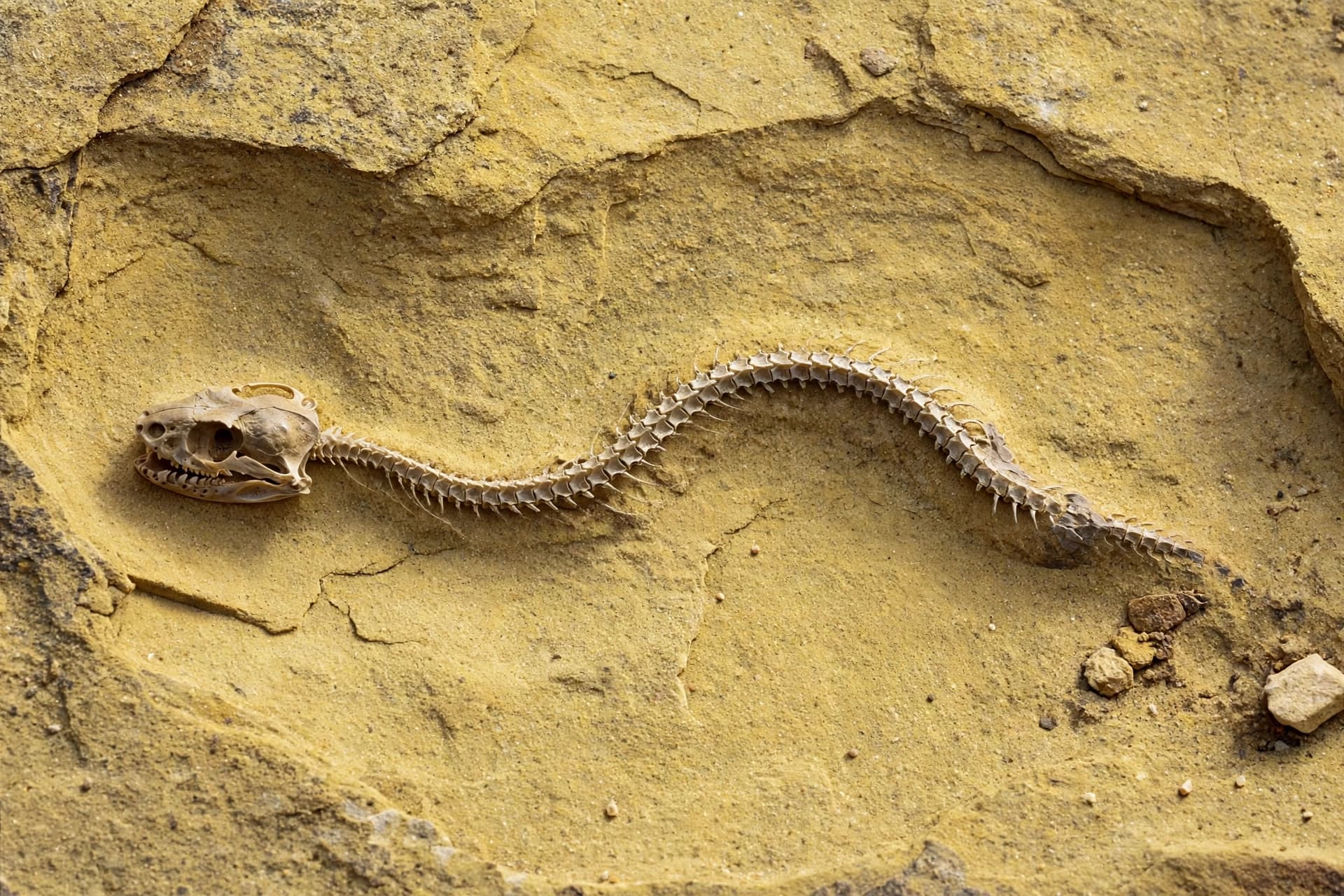
Some creatures carry the past on their backs; others let it ripple quietly beneath the surface of slow-moving water. The anaconda, one of Earth’s most imposing serpents, belongs firmly in the second category. As scientists trace the lineage of these massive reptiles, a striking truth emerges: unlike most prehistoric giants that shrank or vanished under evolutionary pressure, anacondas stood their ground. Their size endured. Their world adapted around them.
In reports highlighted by outlets such as *National Geographic* and *Nature*, researchers note that modern green anacondas remain astonishingly close in scale to their ancient relatives. While dinosaurs yielded to birds and mammoths faded into myth, these riverborne giants kept to their evolutionary blueprint with almost defiant steadiness. Their habitats—dense wetlands, deep floodplains, and oxygen-rich waterways—provided the rare environmental cushion that allowed gigantism to persist rather than collapse.
The puzzle is as much ecological as it is evolutionary. Giant creatures typically fall victim to the harsh arithmetic of energy, predation, and environmental change. Yet the anaconda’s world offered an unusual sanctuary: plentiful prey, warm climates, and minimal competition from mammals large enough to challenge their reign. According to current scientific commentary, their semi-aquatic nature likely played a decisive role, letting water buoy their heavy bodies and reduce the energetic cost of remaining large.
But scale alone doesn’t explain the fascination. There is something undeniably ancient about the way an anaconda moves—slow, deliberate, almost ceremonial. Watching one slip through dark water evokes the feeling that the past is not behind us at all, but coiled quietly alongside the present. This is perhaps why researchers see the species as a living reminder of ecosystems long vanished, offering a rare glimpse into the environmental rhythms that shaped prehistoric Earth.
Today, the real challenge is not explaining how these giants survived the past, but whether they can withstand the future. Habitat loss, climate shifts, and human encroachment now pose risks that evolution never accounted for. The anaconda’s endurance across eras is remarkable, but endurance alone is no guarantee in a century defined by accelerating change.
Still, for now, the rivers carry their ancient silhouette, unchanged and unapologetic. Evolution blinked. The anaconda did not.
Published by Banx Network. This article is part of the Banx decentralized media programme, powered by the BXE token on the XRP Ledger.