There is a particular hopefulness in planting something in June—a willingness to trust that the season is not yet over, that the warmth will hold, that the garden still has room to become something it has not yet been. By the time June arrives, many gardeners have already laid their plans, set their beds, and watched the first flush of spring fade. But June is not a closing door. It is an open window, and the flowers that thrive in its warmth are among the most generous of the year.
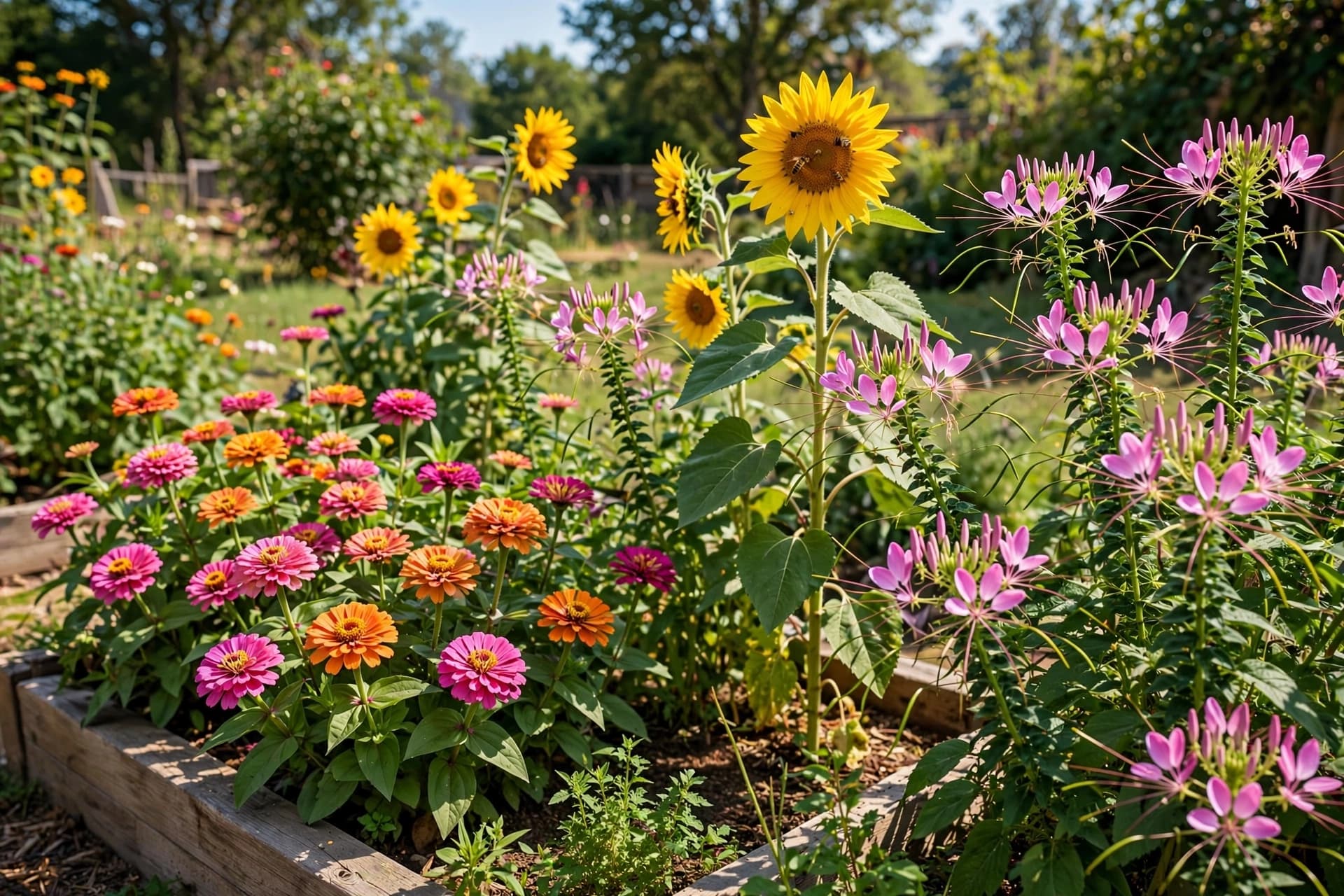
For those who want height, the spider flower (Cleome) offers a dramatic vertical presence. Its blossoms have long, thin "legs" extending from a central body, giving it the appearance of a spider—though a harmless and elegant one . The Queen series, particularly in violet tones, can reach four to six feet, adding an airy, architectural quality to borders. Sow it in June, and flowers will arrive by August . The Mexican sunflower (Tithonia) provides a different kind of drama: warm orange blooms that attract pollinators and make excellent cut flowers, reaching heights of three to six feet when planted in full sun .
For those who want color quickly, the zinnia is almost unmatched. Its rounded, ruffled blooms come in every shade from candy pink to deep red, and the more you cut them, the more they produce . African marigolds, particularly the 'Kilimanjaro White' variety, germinate in as little as five days and produce large, creamy blooms that can be planted in succession for continuous color until frost . Sunflowers, too, can still be planted in June; some varieties mature in as little as fifty days, offering a fast track to height and cheer .
Beyond these, the list of June-friendly flowers is long and varied. Salvia adds spikes of purple and blue that bloom until early autumn. Yarrow brings a meadow-like texture with clusters of tiny blooms in warm sunset shades. Asters provide a late-summer showstopper. Bee balm, with its unusually shaped flowers, is a magnet for pollinators. Coreopsis, drought-resistant and easygoing, thrives in the heat. Sedum offers succulent toughness and blooms into mid-autumn. And cosmos, a cottage garden favorite, flowers all summer with very little care .
What all these flowers share is a tolerance for warmth and a willingness to grow quickly. They are not delicate spring ephemerals; they are plants built for the heat, for long days and bright sun. For the gardener who has arrived at June with empty spaces or fading beds, they offer a second chance—not to undo the spring, but to extend it. The garden does not have to be finished in May. It can begin again, or continue, or simply become something new.
AI Image Disclaimer: The visual elements in this article were created using AI generation tools and are intended for illustrative purposes only.
Sources: Country Living, Yahoo Shopping, Futura-Sciences, Modes et Travaux
Published by Banx Network. This article is part of the Banx decentralized media programme, powered by the BXE token on the XRP Ledger.