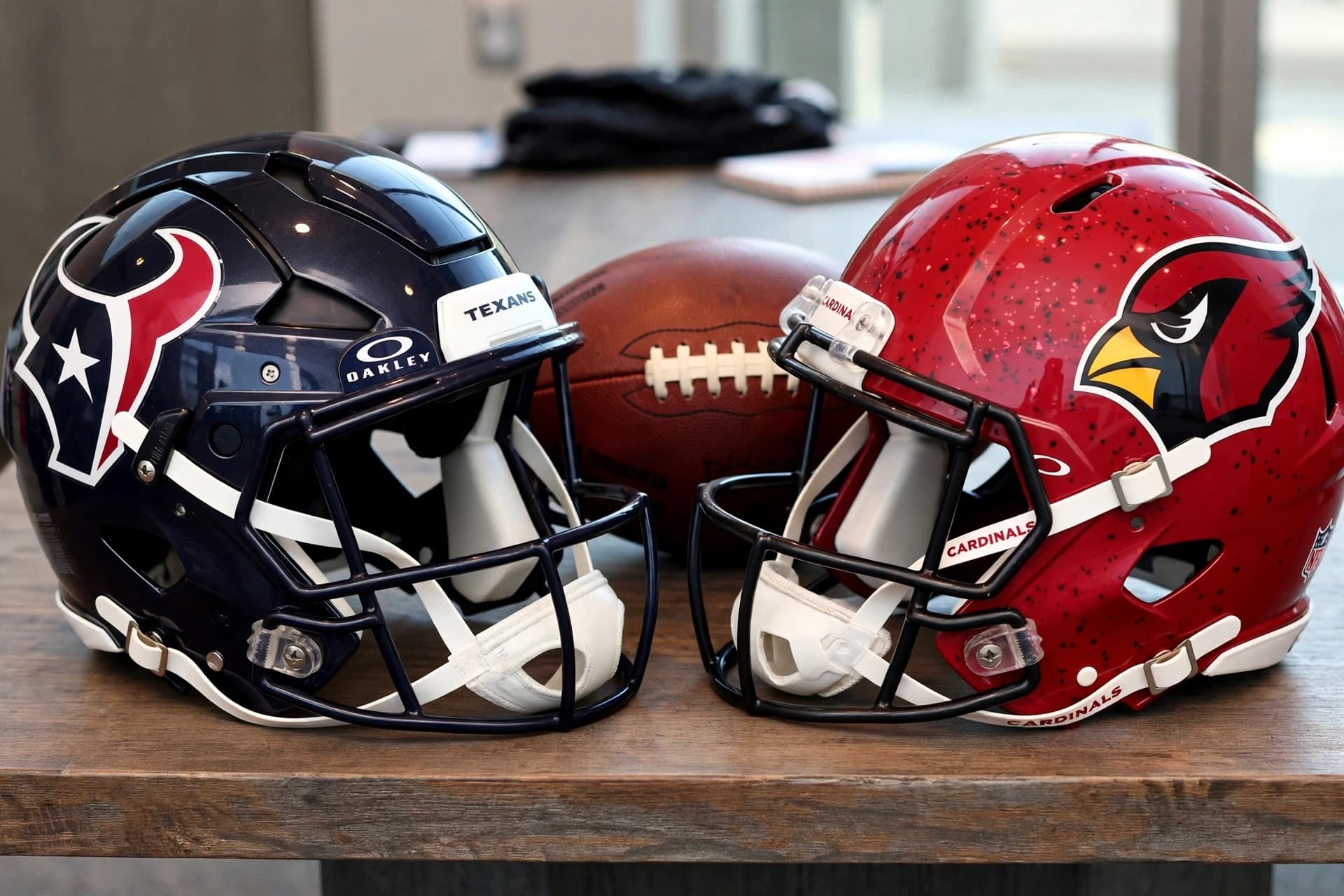
There is a particular kind of gamble in professional sports, the kind made not out of certainty but out of necessity, when a team looks at its record and decides that the present moment cannot wait for the future to arrive. On Sunday, the Houston Texans made such a gamble, acquiring wide receiver Marvin Harrison Jr. from the Arizona Cardinals in a trade that signals both desperation and hope.
The deal, confirmed by Texans coach DeMeco Ryans after his team’s 26-3 victory over the Tennessee Titans, sends Harrison and a 2027 seventh-round pick to Houston in exchange for a 2027 second-round and sixth-round pick . Harrison, the No. 4 overall pick in the 2024 NFL Draft, arrives in Houston after two and a half seasons in Arizona that fell far short of the expectations that accompanied his arrival .
Harrison entered the league with Hall of Fame bloodlines—his father, Marvin Harrison Sr., starred for the Indianapolis Colts—and a college career at Ohio State that made him one of the most decorated prospects in recent memory . But in 33 games with the Cardinals, he totaled just 108 catches for 1,578 yards and 13 touchdowns. This season, through four games, he had five receptions for 85 yards and a touchdown before being made inactive for Week 5 as trade talks progressed .
The Texans, at 1-4, are not a team with the luxury of patience. They lost receiver Jayden Higgins to a torn ACL before the season, and Nico Collins, their Pro Bowl wideout, has already missed games with a hamstring injury . Quarterback C.J. Stroud, in the final year of his rookie deal, has played well—averaging 280 passing yards per game with a 6-0 touchdown-to-interception ratio—but has lacked reliable targets beyond Collins .
What Houston offers Harrison is familiarity. Stroud and Harrison were teammates at Ohio State, where Harrison caught 77 passes for 1,263 yards and 14 touchdowns in 2022 with Stroud as his quarterback . “I loved him in college,” Stroud said. “He’s probably the hardest worker I’ve ever been around in my life” .
For Arizona, the trade represents an admission that a top-five pick did not work out. General manager Monti Ossenfort, whose Cardinals were 16-39 in his tenure at the time of the trade, recouped a second-round pick in a draft considered deep in talent . The Cardinals’ new coaching staff under Mike LaFleur had relegated Harrison to a minor role, with Michael Wilson and tight end Trey McBride becoming the focal points of the passing offense .
Whether the change of scenery revives Harrison’s career remains uncertain. The Texans are betting that reuniting him with Stroud, in a scheme that needs a secondary receiver, will unlock the talent that made him a can’t-miss prospect. The Cardinals are betting that a fresh start and a high draft pick are worth more than waiting for a player who had become an afterthought.
The trade is a gamble for both sides—a reminder that in professional sports, the line between promise and production is often measured not in talent but in fit, timing, and the quiet arithmetic of what a team can afford to wait for.
AI Image Disclaimer: All images associated with this report are AI-generated and are intended for illustrative purposes only, not as a documentary record of the trade.
Sources: The New York Times, NFL.com, USA Today, CBS Sports, Houston Chronicle, Miami Herald, Sporting News, Daily Mail
Published by Banx Network. This article is part of the Banx decentralized media programme, powered by the BXE token on the XRP Ledger.