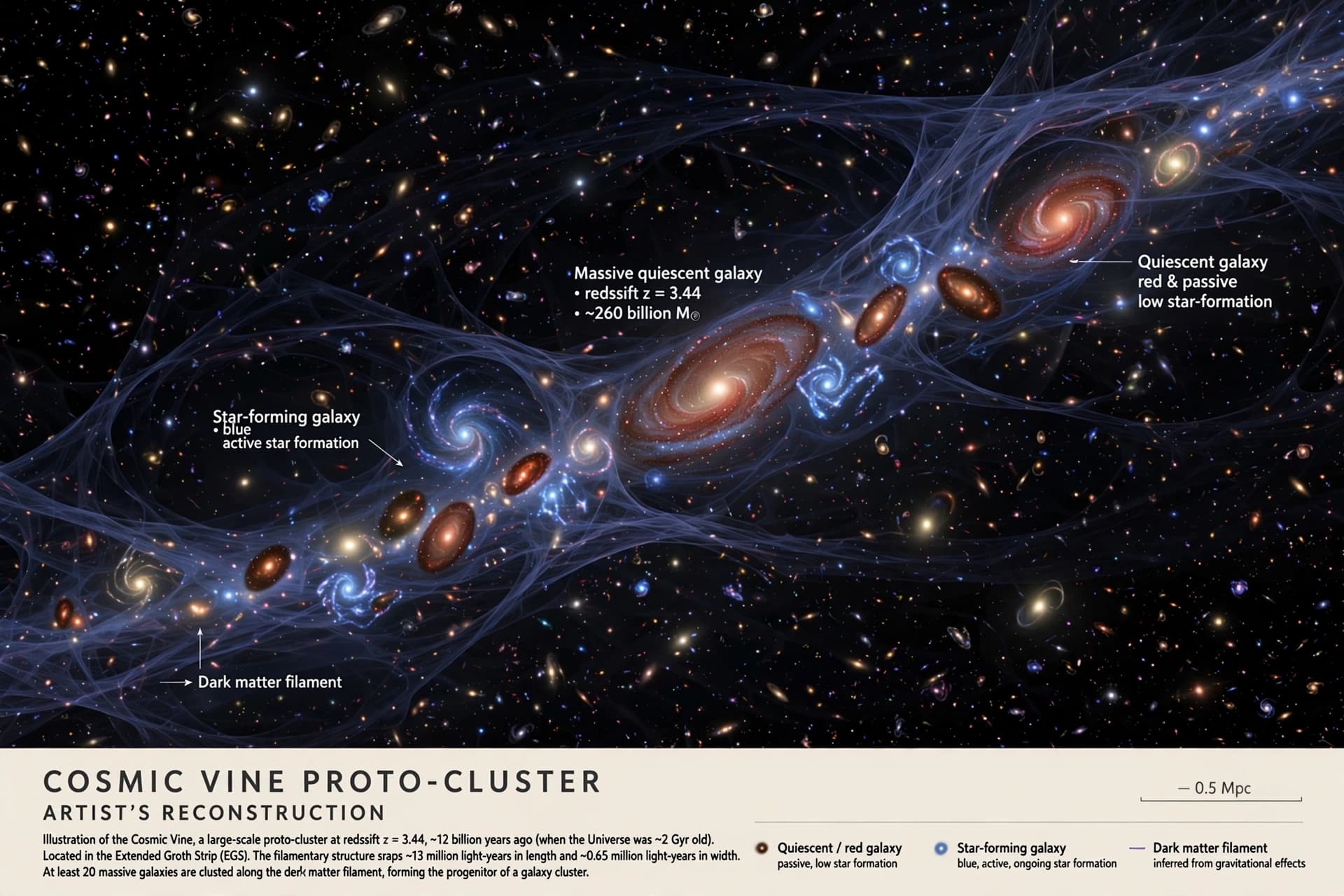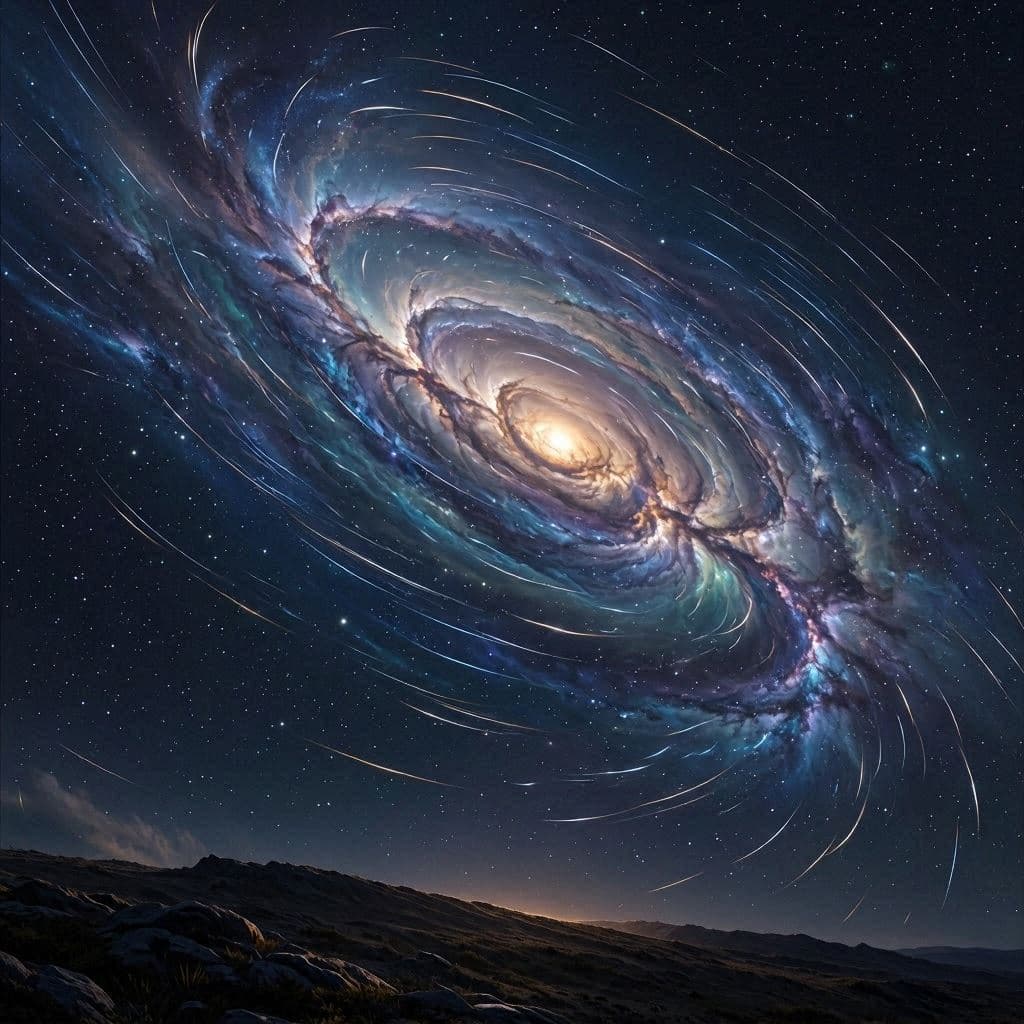
The universe is often perceived as a static canvas, where stars burn in fixed positions and galaxies drift in predictable paths. Yet, recent discoveries reveal a cosmos far more dynamic and acrobatic than previously imagined. Astronomers have uncovered evidence that the Milky Way underwent a dramatic flip billions of years ago, a cosmic somersault that reshaped our galaxy’s structure. This revelation invites us to look at the night sky with new eyes, recognizing that even the most stable-seeming entities are subject to the violent ballets of gravity and time.
Body: The study, published in leading astrophysical journals, analyzes the chemical composition and movement of ancient stars within the Milky Way. By mapping the ages and orbits of these stellar relics, researchers found a distinct pattern indicating that the galaxy’s disk tilted significantly relative to its halo. This "flip" likely occurred early in the galaxy’s formation, possibly triggered by a collision with a smaller satellite galaxy or a massive cloud of gas.
Such events are not uncommon in the life of a galaxy. Collisions and mergers are fundamental processes that drive evolution in the cosmos. However, the scale and clarity of the Milky Way’s flip provide a unique opportunity to understand our own galactic history. It suggests that the serene spiral we see today is the result of a turbulent past, where chaos eventually gave way to order.
The implications for our understanding of dark matter are also significant. The gravitational forces required to tilt the galaxy’s disk suggest a complex distribution of invisible mass. By studying the aftermath of the flip, scientists can refine models of dark matter halos, gaining insights into the unseen scaffolding that holds galaxies together. It is a reminder that what we cannot see often dictates what we can.
For astronomers, this discovery underscores the importance of large-scale surveys like Gaia, which have mapped billions of stars with unprecedented precision. These data sets allow researchers to reconstruct the galaxy’s history in three dimensions, turning static snapshots into a moving picture of cosmic evolution. The technology behind these maps is as revolutionary as the findings themselves.
The narrative of the Milky Way’s flip also connects us to the broader story of the universe. Just as Earth has undergone dramatic changes in climate and geography, our galaxy has experienced its own upheavals. This perspective fosters a sense of humility, reminding us that we are inhabitants of a dynamic system that is still evolving.
Public interest in such findings highlights a deep curiosity about our origins. Knowing that our home galaxy once performed a cosmic gymnastic routine adds a layer of wonder to the night sky. It transforms abstract scientific data into a compelling story of survival and transformation.
Closing: As we continue to decode the secrets of the Milky Way, each discovery adds depth to our understanding of the cosmos. The galaxy’s dramatic flip is a testament to the power of gravity and the resilience of structure. In the grand dance of the universe, even the largest players must sometimes change their step.
AI Image Disclaimer: Visuals in this article are AI-generated conceptual illustrations of galactic structures and stellar movements, intended to visualize the scientific concepts of galactic evolution.
Sources: Nature Astronomy Space.com Scientific American ESA Gaia Mission
Published by Banx Network. This article is part of the Banx decentralized media programme, powered by the BXE token on the XRP Ledger.