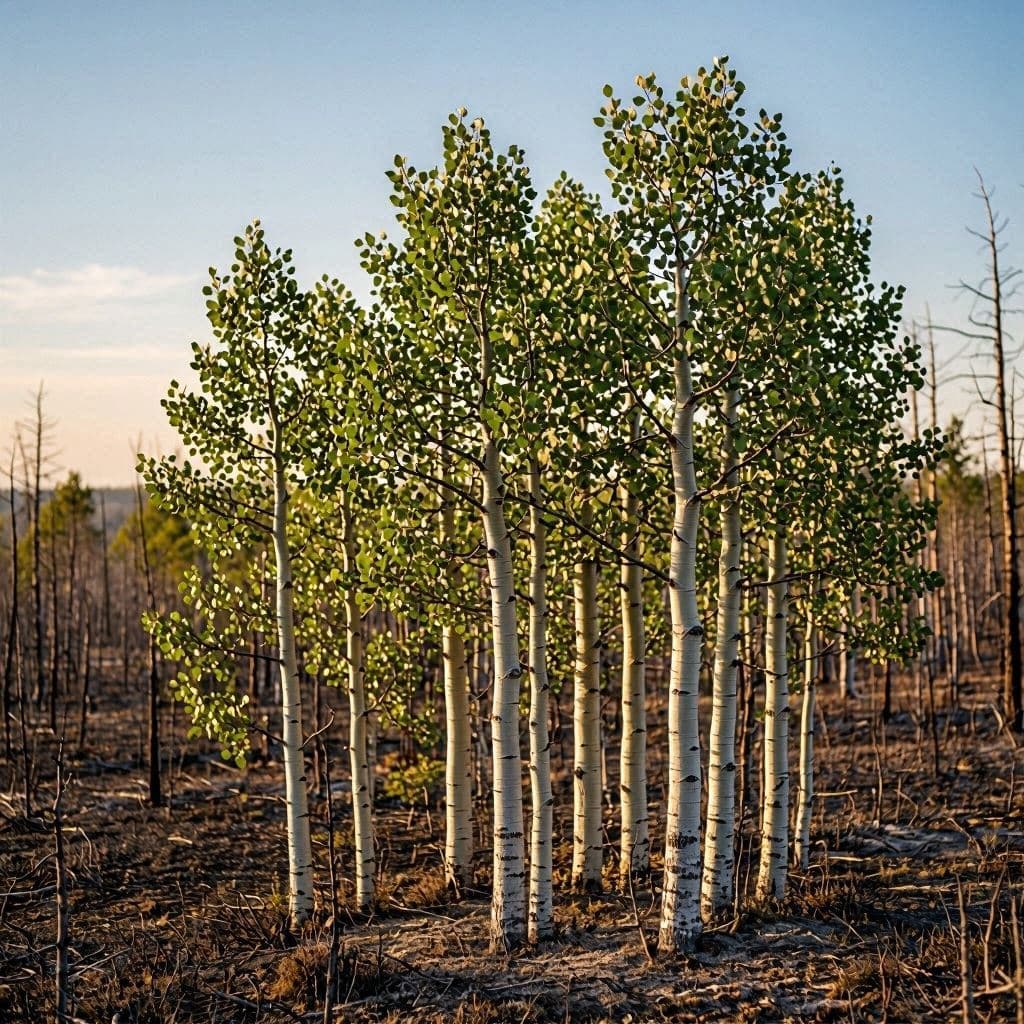
In the shifting landscape of climate change, where wildfires grow more frequent and fierce, nature often holds its own solutions. Recent research highlights the remarkable role of aspen trees in mitigating fire risk. Unlike many coniferous forests that fuel intense blazes, aspen groves act as natural firebreaks, slowing the spread of flames and protecting surrounding ecosystems. This discovery offers a glimmer of hope and a practical strategy for land management in an era of escalating environmental challenges. It is a testament to the resilience of native species and their ability to adapt to changing conditions.
Aspen trees, known for their distinctive white bark and trembling leaves, possess several traits that make them less flammable than their evergreen counterparts. Their high moisture content, deciduous nature, and tendency to grow in dense, clonal stands create a barrier that is difficult for fire to penetrate. During a wildfire, these groves can remain green and intact while surrounding areas burn, effectively stopping the advance of the flames. This phenomenon has been observed in various regions across North America, from the Rockies to the Pacific Northwest.
A recent study published in ecological journals confirms that aspen-dominated landscapes experience lower fire severity and frequency compared to conifer-dominated ones. Researchers analyzed satellite data and field observations, finding that fires often stall or diminish in intensity when they encounter aspen stands. This natural buffering effect is crucial for protecting biodiversity, water resources, and human communities located near wildland interfaces.
The benefits of aspen trees extend beyond fire resistance. They support a wide range of wildlife, provide habitat for numerous species, and contribute to soil health. Their root systems help prevent erosion, and their leaves enrich the forest floor with nutrients. By promoting aspen growth, land managers can enhance ecosystem resilience and reduce the need for costly mechanical thinning or prescribed burns.
However, aspen forests face their own threats, including drought, disease, and competition from conifers. Climate change exacerbates these pressures, making it essential to protect and restore aspen populations. Conservation efforts focus on removing encroaching evergreens, managing grazing pressure, and ensuring adequate water availability. These actions help maintain the health and vitality of aspen groves, ensuring they can continue to serve their protective role.
Community involvement is key to successful aspen management. Local residents, landowners, and indigenous groups play a vital role in monitoring and caring for these forests. Education programs raise awareness about the importance of aspen trees and encourage sustainable practices. By working together, communities can build a more resilient landscape that is better prepared for future fire seasons.
The economic implications are also significant. Reducing fire damage saves millions of dollars in suppression costs and property loss. Additionally, healthy aspen forests support tourism and recreation, contributing to local economies. Investing in aspen restoration is not just an environmental imperative but an economic one as well.
As fire seasons intensify, the humble aspen tree emerges as a powerful ally in the fight against wildfires. Its natural resistance offers a sustainable solution to a growing problem. By valuing and protecting these unique forests, we can harness nature’s wisdom to create safer, more resilient communities.
AI Image Disclaimer: Please note that the images in this piece are AI-generated illustrations created to depict the themes of forest ecology and wildfire prevention.
Sources: Science Daily, US Forest Service, High Country News, Ecological Applications Journal
Published by Banx Network. This article is part of the Banx decentralized media programme, powered by the BXE token on the XRP Ledger.