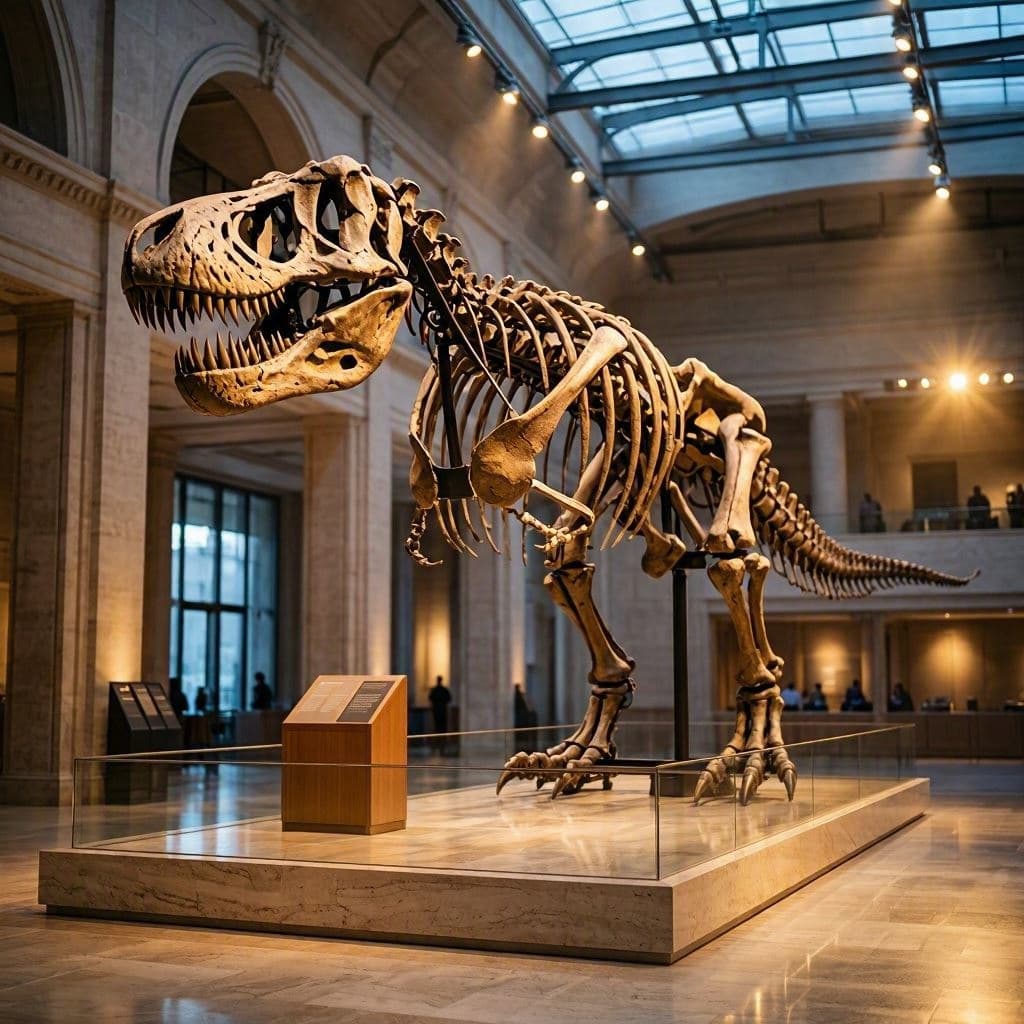
In the annals of paleontology, few names command as much reverence as Sue, the Tyrannosaurus rex whose skeleton has stood as a titan in museum halls for decades. As the largest and most complete T. rex ever discovered, Sue has long been a subject of intense scientific scrutiny. A recent study has shed new light on the final chapter of this ancient predator’s life, offering a poignant glimpse into the circumstances that led to its demise more than 67 million years ago.
For years, researchers have debated the cause of death for this massive specimen. Was it starvation, disease, or perhaps a violent encounter with another dinosaur? The new analysis focuses on microscopic evidence found within the bones, revealing signs of severe infection and trauma. These findings suggest that Sue may have suffered from a chronic condition, possibly osteomyelitis, which would have caused significant pain and limited mobility in its final years.
The study utilizes advanced imaging techniques to examine the bone structure in unprecedented detail. By looking beyond the visible fractures, scientists can trace the history of healing and inflammation. This approach transforms the fossil from a static object into a biological record, telling a story of survival and struggle. It humanizes, in a metaphorical sense, the experience of a creature that lived in a world vastly different from our own.
One of the most striking discoveries is the extent of the damage to Sue’s jaw and limbs. The infections appear to have been systemic, affecting multiple areas of the body. This suggests that the T. rex was not killed by a single catastrophic event but rather succumbed to a gradual decline in health. The resilience required to live with such ailments highlights the toughness of these apex predators.
Researchers also considered the possibility of parasitic infections, which are common in modern birds and reptiles. While direct evidence of parasites is difficult to preserve in fossils, the pattern of bone lesions aligns with conditions seen in animals suffering from trichomoniasis. This hypothesis adds another layer of complexity to the narrative, suggesting that even the mightiest dinosaurs were vulnerable to microscopic threats.
The implications of this study extend beyond Sue itself. It provides a framework for understanding the health and longevity of other large theropods. By comparing Sue’s condition with other specimens, paleontologists can build a broader picture of disease prevalence in the Late Cretaceous period. It reminds us that death in the prehistoric world was often a slow and complicated process.
For the public, these details add emotional depth to the display of Sue’s skeleton. Knowing the struggles this animal endured fosters a deeper connection to the past. It transforms the fossil from a mere curiosity into a testament to life’s fragility and endurance. The story of Sue is not just about size and power, but about vulnerability and survival.
The new study on the death of Sue, the largest T. rex, reveals a complex history of infection and trauma. These findings enrich our understanding of dinosaur biology, reminding us that even the most formidable creatures faced the universal challenges of health and mortality.
AI Image Disclaimer: The visual representations accompanying this article are generated by artificial intelligence to illustrate the paleontological context.
Sources: Nature Ecology & Evolution Field Museum of Natural History Scientific American
Published by Banx Network. This article is part of the Banx decentralized media programme, powered by the BXE token on the XRP Ledger.