Deep beneath the surface of the Atlantic Ocean, a vast conveyor belt of currents moves heat from the tropics toward the poles, regulating the planet’s climate. Known as the Atlantic Meridional Overturning Circulation (AMOC), this system acts as a hidden "heat valve," distributing warmth and maintaining weather patterns familiar to billions of people. Recent research suggests that this vital mechanism is weakening, raising concerns about its potential collapse and the profound impacts it could have on global temperatures.
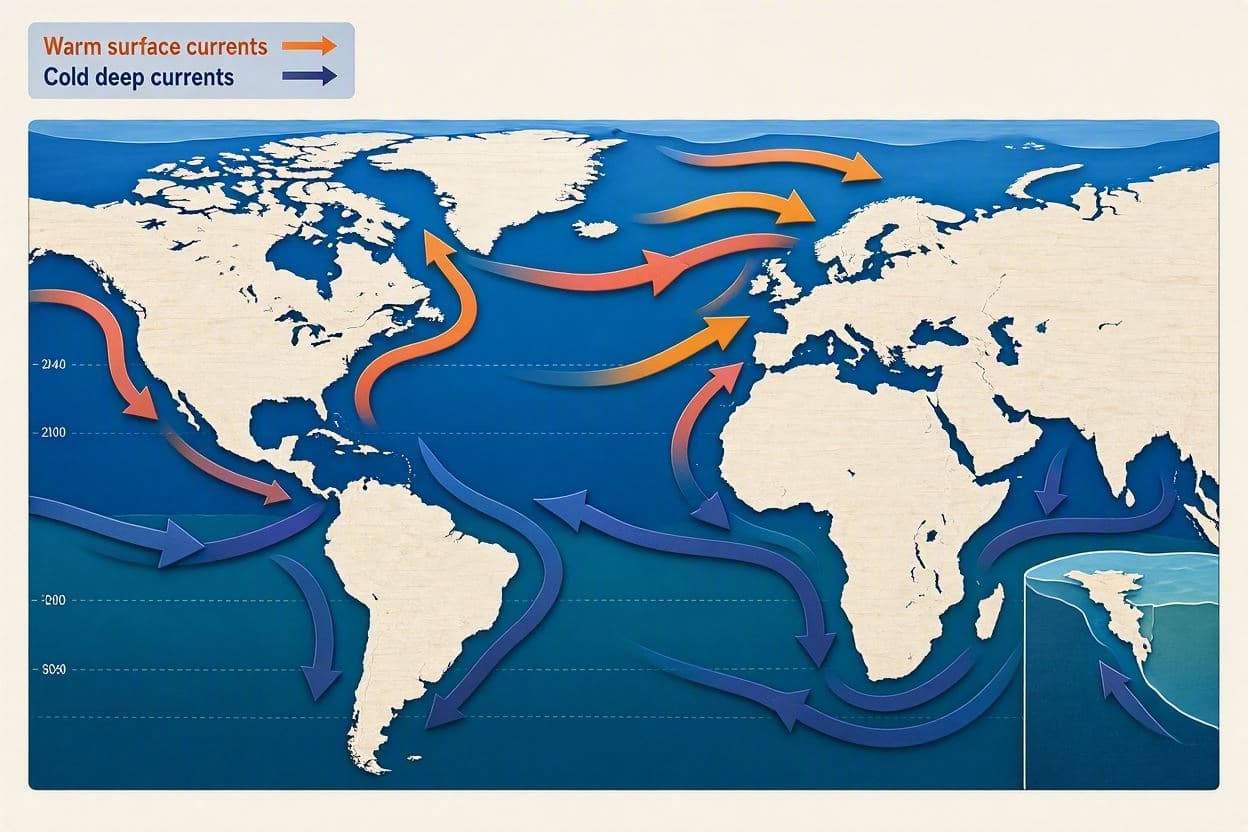
The AMOC works by transporting warm, salty water northward along the surface. As it reaches higher latitudes, the water cools, becomes denser, and sinks to the deep ocean, flowing back south. This cycle helps moderate temperatures in Europe and North America. However, the influx of fresh water from melting ice sheets and increased rainfall is diluting the seawater, making it less dense and harder to sink. This disruption slows down the entire circulation system.
Scientists describe the AMOC as a planetary heat valve because it controls how much heat is stored in the ocean versus released into the atmosphere. A weaker AMOC means less heat is transported north, which could lead to cooling in some regions while causing excess heat to accumulate in the Southern Hemisphere. This redistribution of energy can destabilize weather patterns, leading to more extreme events such as storms, droughts, and floods.
Recent studies indicate that the AMOC is at its weakest state in over a thousand years. Some models predict a potential collapse within the next few decades, although there is still uncertainty about the exact timeline. The consequences of such a shutdown would be severe, including significant sea-level rise along the U.S. East Coast, disrupted monsoon systems, and accelerated warming in other parts of the world.
Understanding the dynamics of the AMOC is crucial for improving climate models and preparing for future changes. Researchers are using advanced sensors and satellite data to monitor the current’s strength and variability. These observations help refine predictions and inform policy decisions aimed at mitigating climate change. The more we know about this hidden system, the better equipped we are to respond to its shifts.
The potential closing of this heat valve underscores the interconnectedness of Earth’s systems. Changes in one part of the ocean can have far-reaching effects on the entire planet. It serves as a reminder that the climate is not a static backdrop but a dynamic and sensitive entity that responds to human activities. Protecting the stability of the AMOC requires global cooperation to reduce greenhouse gas emissions.
As we continue to study the Atlantic’s hidden currents, the message is clear: the ocean plays a central role in regulating our climate. Its health is integral to our own. By addressing the root causes of climate change, we can help ensure that this vital heat valve continues to function, preserving the balance that supports life on Earth.
AI Image Disclaimer: The images used in this report are AI-generated visuals created to illustrate ocean currents and climate science concepts.
Sources: ScienceAlert, Johns Hopkins University, Phys.org
Published by Banx Network. This article is part of the Banx decentralized media programme, powered by the BXE token on the XRP Ledger.