On a quiet night when stargazers lift their eyes to the heavens, the universe feels distant, a tapestry of distant lights whispering secrets across time and space. But sometimes, with a single image, that tapestry seems to draw closer — as if to invite us in, urging us to witness the grandeur of cosmic cycles. Recently, the James Webb Space Telescope offered one such moment, turning its powerful gaze toward a familiar yet renewed wonder: a planetary nebula rendered in breathtaking detail.
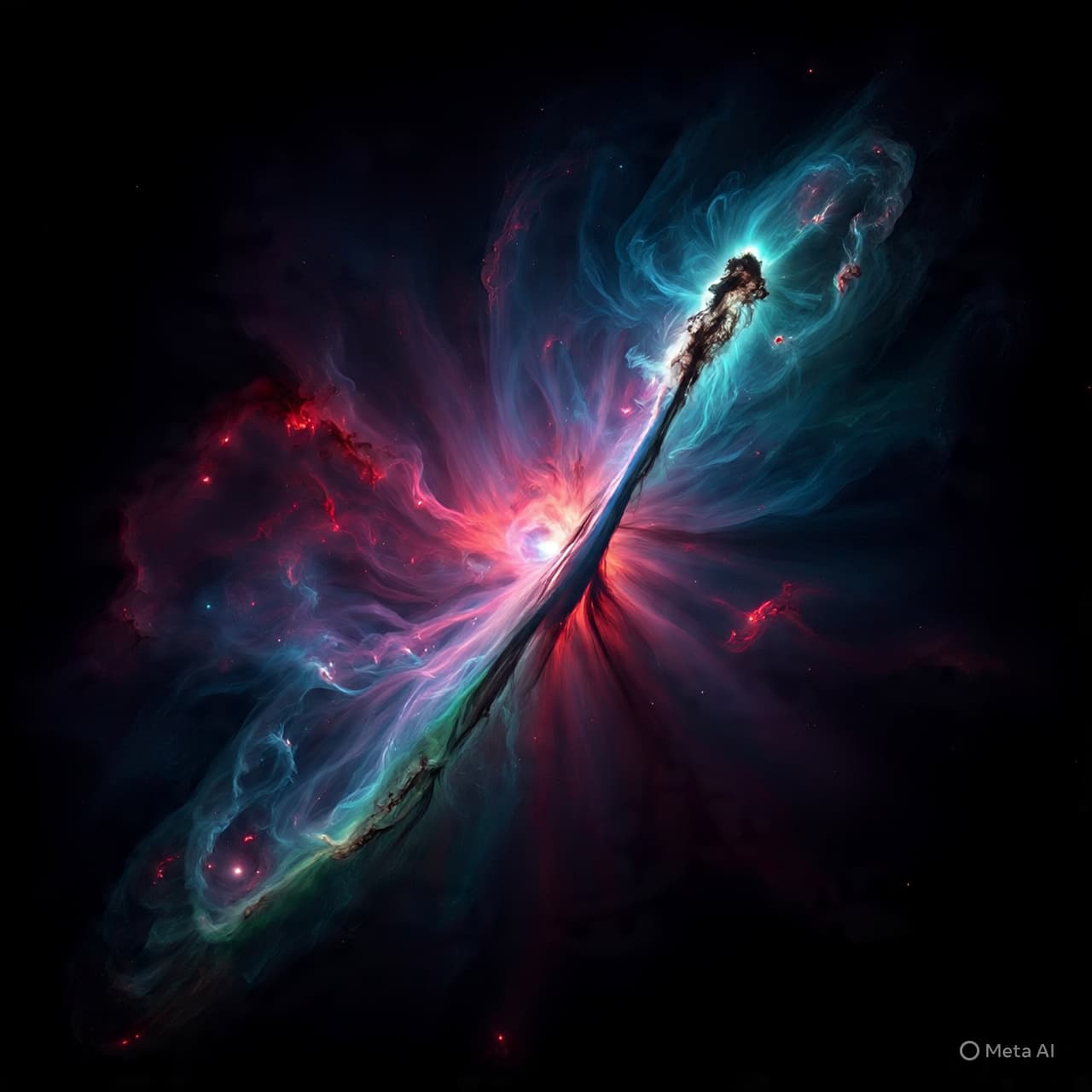
The object of this celestial portrait is the Helix Nebula, a cosmic spectacle lying roughly 650 light-years away in the constellation Aquarius. Though known to astronomers for centuries and beloved by astrophotographers for its evocative, ring-like form, the nebula has never been seen quite like this before. Webb’s near-infrared imagery brings into sharp focus the labyrinth of gas and dust that spirals and arcs in the dying star’s final breath.
What the telescope reveals is not simply a pretty picture but a layered narrative of stellar evolution. At the heart of the nebula — hidden just beyond the frame in many views — lies the white dwarf, the dense remnant of the star that once fuelled this cosmic drama. As its intense radiation pushes outward, it sculpts the surrounding gas, creating pillars, filaments, and swirling tendrils that speak of forces both delicate and immense.
In Webb’s images, color is more than aesthetic; it is a map of astrophysical conditions. Hot, ionized gas skims closest to the unseen stellar core, glowing in blue-tinged hues; farther out, as temperatures cool, molecular hydrogen and cooling gases form yellow and red regions that hint at the transformation of stellar matter into interstellar material. These regions may one day seed new stars and planets, whispering of rebirth in the wake of stellar demise.
The clarity of this view — far surpassing previous observations by the venerable Hubble Space Telescope — allows astronomers and enthusiasts alike to appreciate the intricate interplay of physics at work. Hot stellar winds clash with older, cooler shells of gas, carving fractures and filaments that embody the nebula’s three-dimensional structure. It is a vivid look at the raw materials of cosmic recycling, offering lessons not only about the fate of other stars but also, in an abstract way, about the potential future of our own Sun.
For those who gaze upward with wonder, Webb’s contributions serve as a reminder of the ongoing dialogue between observation and imagination: images that both answer questions and stir new ones, that depict endings and also hint at beginnings. In this case, the spectacle of the Helix Nebula — alive with color, motion, and light — invites us to reflect on the lifecycles that shape the universe and, in turn, shape our own understanding of existence.
AI Image Disclaimer (rotated wording) Visuals are created with AI tools and are not real photographs; they serve as conceptual illustrations.
Published by Banx Network. This article is part of the Banx decentralized media programme, powered by the BXE token on the XRP Ledger.