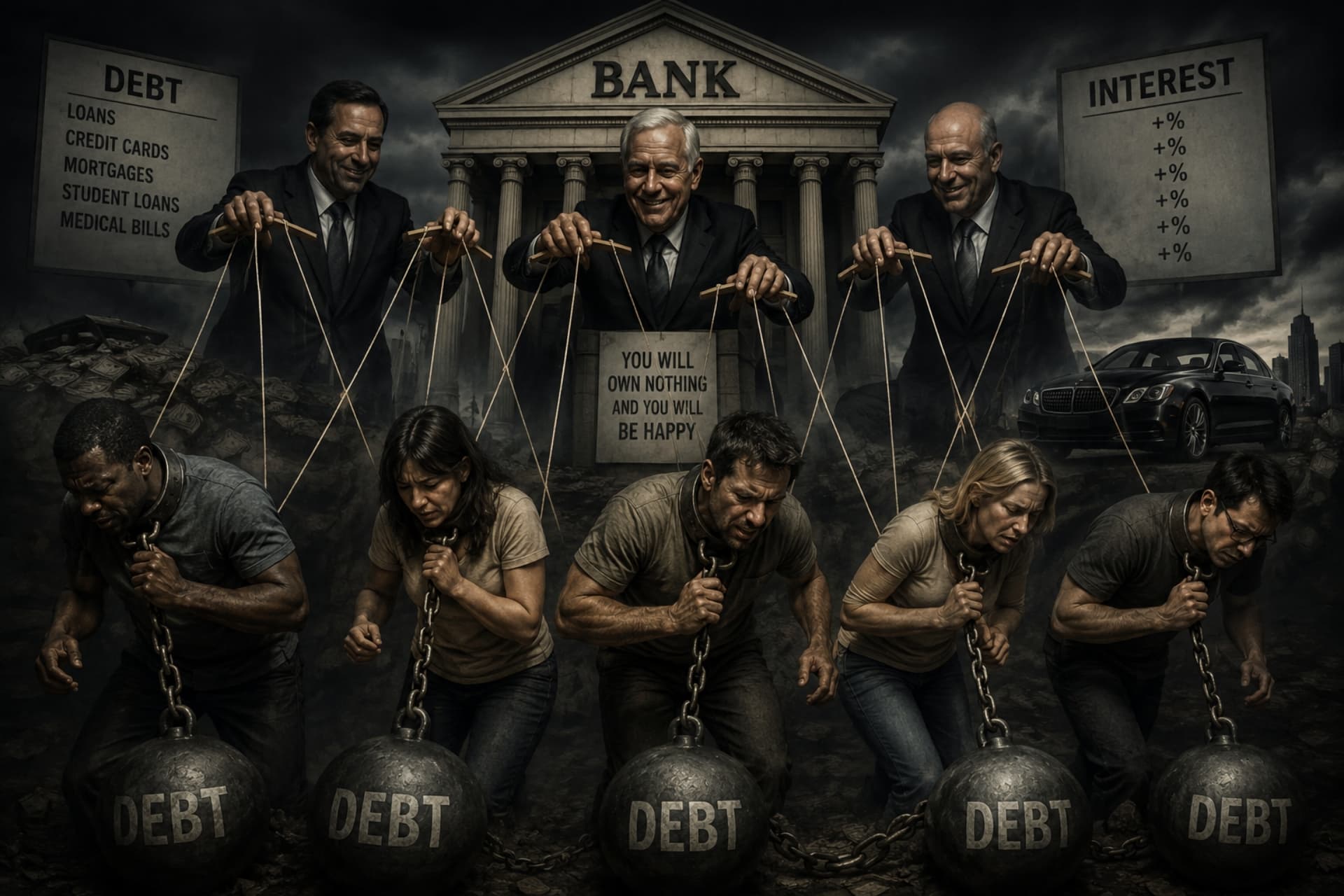
The Enslavement of People by Banks: A Historical Perspective Throughout history, banking institutions have played a fundamental role in shaping economies and societies. However, while they are often viewed as facilitators of progress, they have also contributed to the enslavement of individuals and communities through exploitative practices and systemic inequalities. This article delves into the historical relationship between banks and people, examining how banking practices have led to financial enslavement, perpetuating cycles of debt and economic dependency. The Origins of Banking and Financial Control Ancient Banking Practices The roots of banking can be traced back to ancient civilizations, where the first forms of banking emerged in Mesopotamia around 3000 BCE. Temples and palaces began to store surplus grain, which eventually evolved into managing loans and deposits. While these early systems provided some benefits, they also set the stage for future exploitation. In ancient Rome, large landowners began borrowing from banks to expand their estates, creating a divide between the wealthy elite and the lower classes. Wealth accumulation among the elite and the lending of money at interest (usury) began to entrap poorer citizens in a cycle of debt that would carry on for centuries. The Rise of Modern Banking The establishment of modern banking systems in the 17th and 18th centuries marked a significant shift in financial practices. Institutions such as the Bank of England and the Bank of France were founded to stabilize economies. However, these institutions also became tools of oppression, managing debts accrued from wars and colonization while offering little in the way of equitable solutions for those burdened by financial servitude. Exploitative Practices of Banks High-Interest Rates and Usury One of the most pervasive methods of enslavement has been the implementation of high-interest rates. While banks offer loans to individuals and businesses, these loans often come with exorbitant interest rates that make repayment nearly impossible. This traps borrowers in a vicious cycle of debt. For example, payday loans and high-interest credit cards target vulnerable populations who have limited access to traditional banking options. Borrowers quickly find themselves unable to escape the grip of these loans, perpetuating their financial dependency and limiting their ability to invest in their futures. Fees and Penalties Banks impose various fees that can further ensnare customers in financial bondage. Monthly maintenance fees, overdraft fees, and ATM charges can erode savings and create a sense of helplessness among borrowers. These fees disproportionately impact low-income individuals who may already be struggling to make ends meet. Moreover, late payment penalties add to the financial strain, leading to additional charges and further entrenching individuals in a cycle of debt. Instead of supporting economic growth, these practices often serve to enrich banks at the expense of their customers. The Role of Credit Scores Credit scores serve as a gatekeeper to financial opportunities. Banks use these scores to determine an individual's creditworthiness, which can influence the terms of loans, interest rates, and even employment opportunities. This creates a system where individuals are judged and, in many cases, discriminated against based on their financial history. For those who have made mistakes or experienced financial hardships, the repercussions can be severe. A low credit score may deny access to housing, reliable transportation, and essential services, effectively keeping individual in an economic under class. The Impact of Banking on Communities. Redlining and Housing Discrimination In the early to mid-20th century, discriminatory practices like redlining shaped the banking landscape in the United States. By designating certain neighborhoods as high-risk, banks denied loans and mortgages to predominantly Black and minority communities. This practice led to disinvestment in these areas, creating financial deserts where residents were unable to build wealth through homeownership. Redlining left a lasting impact on these communities, contributing to ongoing cycles of poverty and disenfranchisement. Individuals who were denied access to banking services found themselves reliant on predatory lenders, worsening their financial situations. The Global South and Neocolonial Banking The effects of banking exploitation extend beyond individual nations. In the Global South, the legacy of colonialism is intertwined with modern banking practices. International financial institutions, such as the International Monetary Fund (IMF) and the World Bank, have perpetuated a cycle of debt that ensnares developing nations. These institutions often provide loans to governments with strict conditions that require austerity measures and structural adjustments. Such measures have historically led to cuts in public services, education, and health care, further impoverishing the citizens of these nations. As a result, these governments become beholden to international financial entities, perpetuating the cycle of financial enslavement. The Banking Crisis and Its Repercussions The 2008 Financial Crisis The 2008 financial crisis exemplified the destructive potential of banking practices. Fueled by subprime mortgages and predatory lending, the collapse highlighted the extent of financial manipulation and exploitation within the banking system. Banks engaged in risky lending while packaging these mortgages into complicated financial products. When borrowers began to default, the entire global financial system teetered on the brink of collapse. The fallout disproportionately affected lower-income individuals and communities, resulting in foreclosures, job losses, and economic instability. Consequences for the Average Citizen In the aftermath of the crisis, banks received massive bailouts from government entities, effectively socializing losses while privatizing profits. Ordinary citizens, who had incurred the brunt of the fallout, found little relief. Many lost their homes, and financial burdens continued to mount as they struggled to recover from the economic downturn. The crisis served to reinforce the notion that banks often operate above the law, prioritizing profit over people while leaving vulnerable populations abandoned. Resistance and Reclaiming Financial Power Grassroots Movements Against Banking Practices In response to oppressive banking practices, grassroots movements have emerged to reclaim financial power. Advocacy groups and community organizations are working to educate individuals about their financial rights and provide resources for breaking free from the grips of predatory lending. These movements aim to foster financial literacy, promoting awareness of the resources available in communities, including credit unions and alternative lending organizations that prioritize equitable practices. The Rise of Alternative Financial Solutions The emergence of fintech and alternative financial solutions has challenged traditional banking paradigms. Digital banks, peer-to-peer lending platforms, and cryptocurrencies offer new avenues to individuals seeking autonomy over their financial lives. For example, credit unions often provide members with lower interest rates and reduced fees compared to traditional banks, focusing on community support rather than profit maximization. Cryptocurrency allows individuals to transact outside conventional banking systems, providing an alternative for those who feel disenfranchised. The Path Toward Financial Liberation Financial Education In order to escape the cycle of banking enslavement, individuals must prioritize financial education. Understanding the intricacies of interest rates, debt management, and investment strategies empowers individuals to make informed financial choices. Community programs that provide financial education can pave the way for a new generation of economically literate citizens who understand their rights and alternatives. Building Wealth Outside Traditional Banking. Cultivating alternative forms of wealth-building outside traditional banking can contribute to financial independence. Investing in community-focused initiatives, real estate, and sustainable businesses fosters local economic growth while providing individuals with ownership and stake in their communities. By supporting local efforts and businesses, individuals can participate in a more equitable financial ecosystem that does not exploit but empowers. Advocacy for Policy Reform Ultimately, the path to liberation involves advocating for systemic change within the financial industry. Policymakers must address the inequalities perpetuated by banks, implementing regulations that promote equity and transparency. Efforts to dismantle features of the banking system that promote discrimination and exploitation, such as redlining and high-cost lending, are necessary for creating a more equitable financial landscape. In conclusion, the enslavement of individuals by banks is a deeply rooted issue that has persisted throughout history. From exploitative lending practices to systemic discrimination, banks have often prioritized profit over the welfare of individuals and communities. As we navigate the complexities of modern banking, it is crucial to recognize the potential for change. By cultivating financial literacy, supporting alternative financial solutions, and advocating for policy reforms, we can work collectively toward dismantling the structures that perpetuate financial enslavement. The journey toward liberation requires awareness, education, and collective action. However, by reclaiming our financial power, we can pave the way for a future where individuals are no longer enslaved by the banking system but are empowered to thrive. Author: Jean Marie Nduwayezu
Published by Banx Network. This article is part of the Banx decentralized media programme, powered by the BXE token on the XRP Ledger.