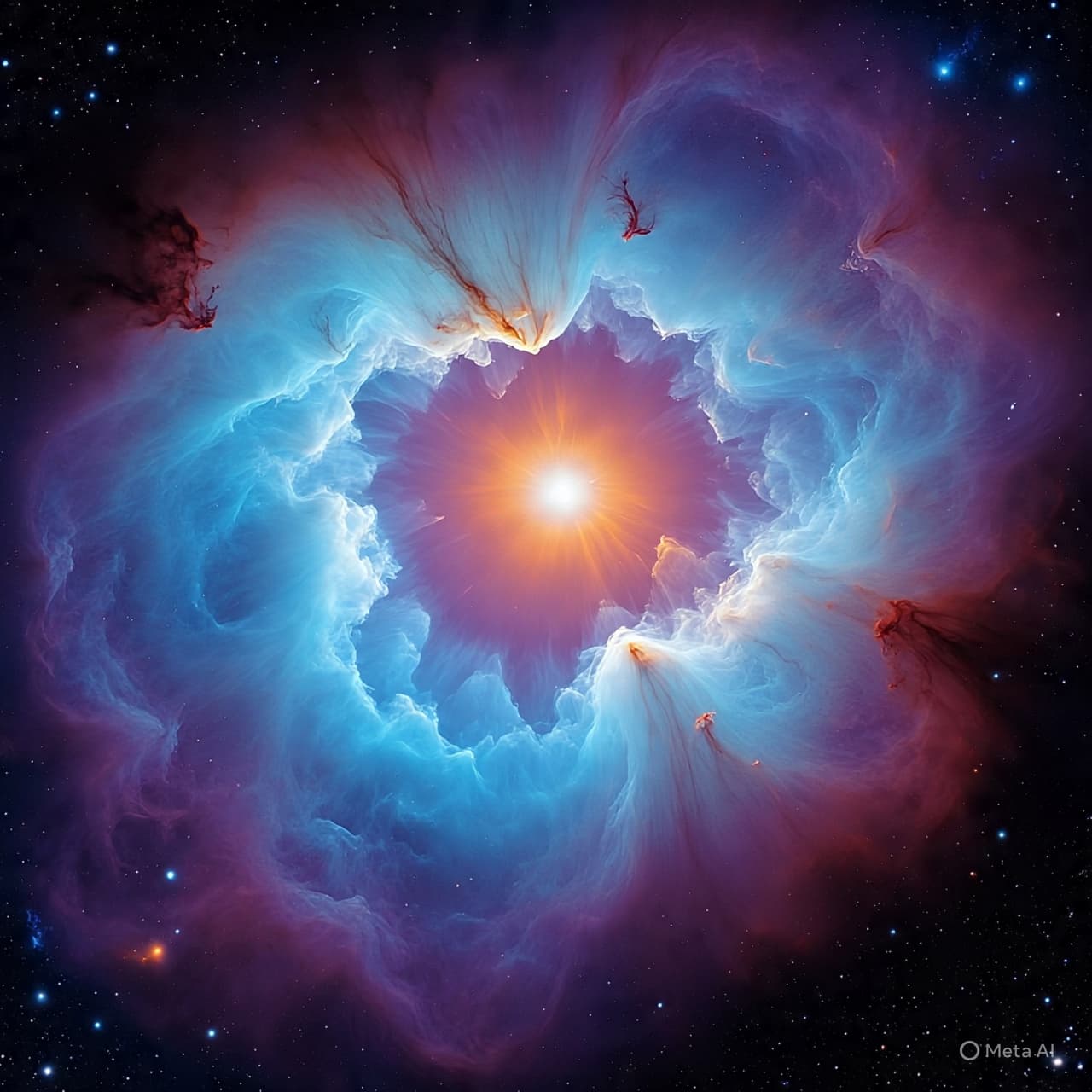
In the theatre of the cosmos, stars play long symphonies — slow movements of fusion and light that can last billions of years. Yet all symphonies, even the grandest, come to their final cadence. In one such quiet finale, the Hubble Space Telescope has captured a light show around a star at the threshold of its transformation, as if the dying embers of a once blazing sun-like life are choreographing a last dance of gas and dust. The resulting image, bathed in luminous filaments and ghostly shadow play, evokes both a cosmic farewell and an invitation to reflect on stellar life cycles.
The object at the heart of this radiant spectacle is known as the Egg Nebula, a structure shaped by a star shedding its outer layers as it nears the end of its life. Nestled about 1,000 light-years away in the constellation Cygnus, this nebula was formed by ejections of gas and stardust over thousands of years, creating a cocoon that obscures the central star in visible light. Only through the sharp gaze of Hubble’s Wide Field Camera 3 can scientists peer through the veil and witness the delicate interplay of light and shadow that gives the nebula its ethereal contours.
This cosmic light show is not merely an aesthetic marvel but a narrative of transformation. Over the last 5,000 years, the dying star repeatedly cast off thin shells of material, and in more recent centuries, dramatic bipolar lobes of gas have burst outward like twin beacons. These lobes capture the star’s fading energy and reflect it in patterns that look almost like searchlights piercing deep space. What we see is the story of matter returning to the cosmos — a gentle shedding of stellar skin that will seed future generations of stars and planets.
Light that escapes toward the poles of the nebula illuminates the surrounding dust, creating a visual tapestry that seems at once fragile and eloquent. Each filament and glowing knot is a testament to the complexity of stellar death, reminding us that stars do not simply flicker out but transform their very essence into the raw materials of the universe. Even as the central star grows ever fainter behind its dusty shroud, the nebula’s radiance persists as a sign of cosmic continuity.
Images like this also connect us to our own solar system’s distant future. In a few billion years, our Sun, too, will leave behind a planetary nebula — not unlike this one — rewriting its story in specks of gas and dust like cosmic brushstrokes across the sky. The light show offered by the Egg Nebula, therefore, is both a window into the life of an individual star and a universal chapter in the grand cycle of stellar life and death.
Gentle straight news: The NASA/ESA Hubble Space Telescope has captured a striking new image of the Egg Nebula, highlighting the dramatic interplay of light and shadow sculpted by material shed from a dying star. Located in the constellation Cygnus about 1,000 light-years from Earth, the nebula’s structure offers insights into the final stages of stellar evolution and the processes by which stars return matter to space.
AI Image Disclaimer (Rotated) Visuals are created with AI tools and are not real photographs.
Sources:
NASA/ESA Hubble image release via ESA/Hubble (European Space Agency press) NASA’s Hubble detailed visualization info via Newswise NASA Hubble image structure details via Science NASA asset page Additional mainstream space reporting on Hubble and dying stars (e.g., ScienceDaily on Webb but relevant context) Times of India astronomy image context on Hubble captures of dying star remnants
Published by Banx Network. This article is part of the Banx decentralized media programme, powered by the BXE token on the XRP Ledger.