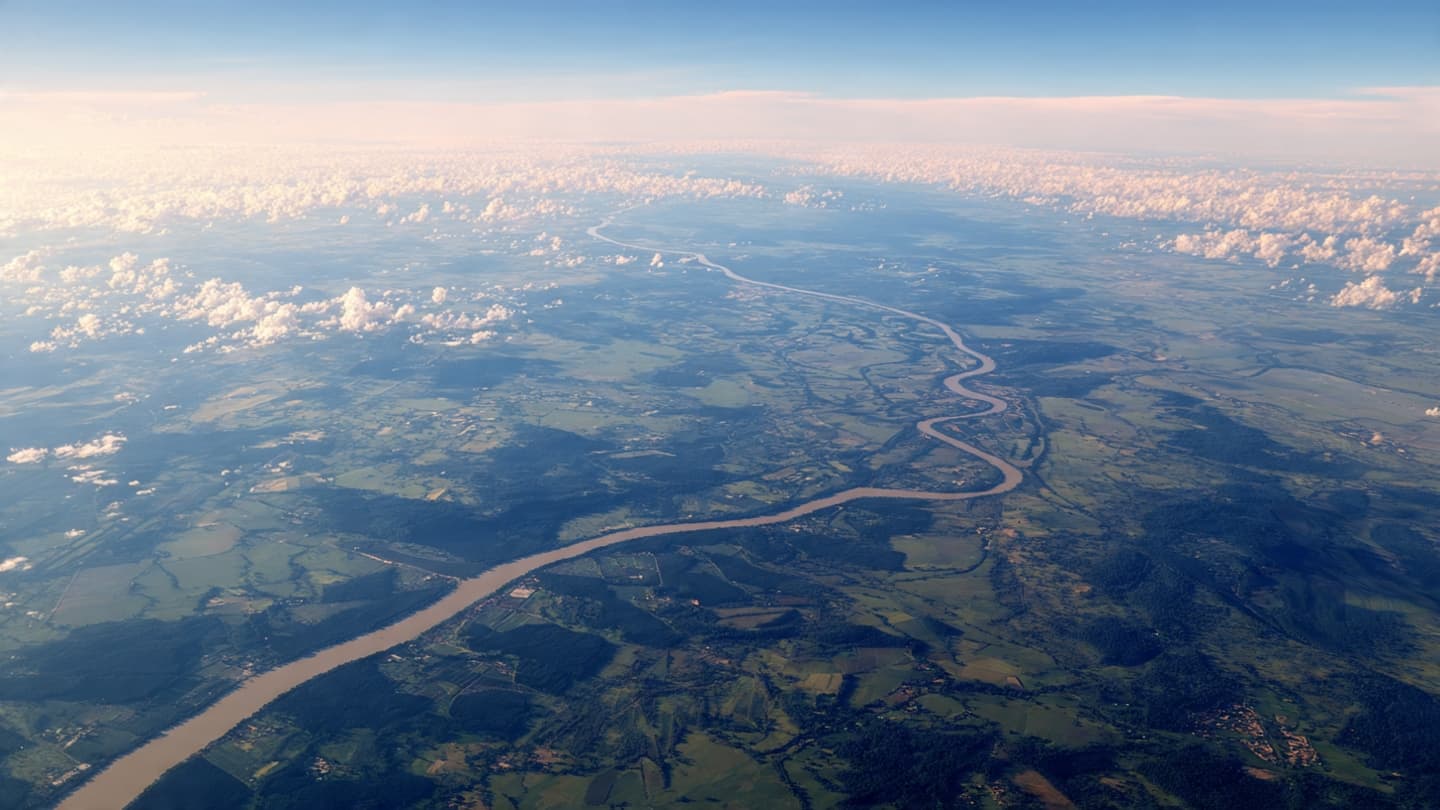
South America often reveals itself through landscapes that seem to invite connection. Rivers cross frontiers without hesitation, trade routes weave through mountains and plains, and neighboring capitals remain linked by histories far older than the governments that represent them. Yet relationships between nations are shaped not only by geography, but also by language. At times, a single speech can travel farther than any river, altering the atmosphere between neighbors almost overnight.
That atmosphere shifted after Argentine President Javier Milei delivered remarks during a political event in São Paulo supporting Brazilian presidential candidate Flávio Bolsonaro. During his speech, Milei referred to Brazilian President Luiz Inácio Lula da Silva as a "thief" and a "convict," though he did not mention Lula by name. He also criticized Brazil's judiciary while expressing support for Brazil's conservative opposition.
Brazil responded swiftly. The Foreign Ministry announced the recall of its ambassador to Buenos Aires for consultations, describing Milei's comments as an unprecedented offense directed not only at the Brazilian head of state but also at the country's democratic institutions and people. Brazilian officials also summoned Argentina's ambassador to explain the remarks, signaling a sharp deterioration in diplomatic relations between South America's two largest economies.
The dispute unfolded against the backdrop of Brazil's approaching presidential election. Milei's visit was intended to support Flávio Bolsonaro, son of former President Jair Bolsonaro, whose political movement remains one of Lula's principal challengers. By participating in a domestic political rally rather than an official bilateral meeting, the Argentine leader placed himself directly within Brazil's increasingly polarized political landscape.
Diplomatic disagreements are not uncommon between neighboring countries, yet public rhetoric delivered on another nation's soil carries particular symbolic weight. Such moments extend beyond personal exchanges between leaders, often affecting official cooperation, regional organizations, trade discussions, and the broader tone of international engagement. Even when practical relations continue, trust may require time to recover.
Argentina and Brazil share deep economic and institutional ties through Mercosur, where both countries play central roles in regional commerce and integration. Their cooperation reaches beyond trade into energy, manufacturing, agriculture, infrastructure, and environmental issues. For businesses, investors, and citizens living near shared borders, stability between the two governments has long supported everyday economic activity that depends upon predictable relations.
Despite the sharp exchange, neither government has suggested ending bilateral cooperation. Diplomatic recalls are generally regarded as formal expressions of protest rather than a suspension of relations, allowing governments to register serious disagreement while preserving channels for future dialogue. History shows that even periods of strained rhetoric are often followed by renewed negotiations once immediate tensions begin to ease.
For many South Americans, these developments are observed alongside the ordinary rhythms of daily life. Cargo continues to cross borders, families remain connected across neighboring countries, and regional cooperation continues in many practical areas despite political disagreements. Such continuity reflects a reality often overlooked in moments of diplomatic confrontation: institutions and communities frequently endure beyond the disagreements of individual leaders.
As Brazil's ambassador returns home for consultations and political debate continues on both sides of the border, the relationship between the continent's two largest economies enters a more uncertain chapter. Whether the recent exchange becomes a temporary interruption or a longer-lasting diplomatic challenge will depend not only on future statements, but also on the willingness of both governments to restore dialogue. Like the great rivers that continue flowing across South America regardless of political seasons, diplomacy often finds its course through patience as much as persuasion.
AI Image Disclaimer
The illustrations accompanying this article were generated using AI to provide conceptual visual context and do not depict actual photographs or events.
Sources
Reuters Deutsche Welle Associated Press Agence France-Presse (AFP) Brazil's Ministry of Foreign Affairs
Published by Banx Network. This article is part of the Banx decentralized media programme, powered by the BXE token on the XRP Ledger.