There is a particular kind of tragedy that unfolds in the space between two official accounts, where the facts are not disputed so much as they are arranged differently by each side. On Monday evening, Jordanian fighter jets struck targets in southern Syria. By Tuesday, images of a slain grandmother and her three grandchildren were spreading across Syrian social media, and the governments of Jordan and Syria were telling two different stories about what had happened and whether anyone had agreed to it.
Jordan's account is that its air force killed more than twenty Islamic State operatives and destroyed a weapons depot in retaliation for the October 23 attack on a Greek Orthodox church in Karak, Jordan, that killed nine people and wounded at least thirty-four. The operation, named "Jordanian Deterrence – Hmoud," targeted what Amman called "dens of terrorist organizations" linked to the church attackers. Jordan's military said the strikes were conducted "in coordination with the Syrian government" .
Damascus's account is that the strikes came without prior coordination or notification. Syria's Foreign Ministry said it had informed Jordan of its "complete reservation" and described the strikes as "treacherous." Syrian authorities reported civilian deaths: a family killed in a tent in the village of al-Taff, an eighty-year-old man in al-Shayah, a sixty-year-old man in Shuhayb. The death toll varied across preliminary reports, from five to eight, including women and children . Jordan has expressed regret over civilian casualties, saying its forces sought to avoid locations where intelligence indicated civilians were present .
The contradiction is not merely a diplomatic spat. It is a question of accountability. If the strikes were coordinated, then Damascus shares responsibility for the outcome. If they were not, then Jordan acted unilaterally on Syrian soil, and the civilians who died are a consequence of that decision. The investigation that both sides say they are pursuing will have to establish who communicated with whom, when, and about which target. Until then, as one analyst told Al Jazeera, "I would avoid either assuming Syria secretly approved everything or treating the coordination as a simple misunderstanding" .
The context for the strikes is the church attack itself, which was unprecedented in its brazenness. The gunmen opened fire during a funeral in the village of Hamoud, in Karak governorate. Jordanian authorities arrested three suspects—two brothers and their brother-in-law—after a shootout. The men were described as "takfiri," a term for Sunni militants who accuse others of apostasy, but officials said they appeared to have acted on their own . The attack shocked a country where such violence is rare, and it created immediate pressure on the government to respond. King Abdullah II promised an "iron fist" .
For Syrians in the south, the anger is directed not only at Jordan but at their own government. Analysts told Al Jazeera that the public outrage reflects an expectation that Damascus should be able to protect Syrians and demand answers when they are killed or harmed. "If people feel Damascus is more concerned with protecting the relationship with the Jordanians than accountability, some of the anger could turn inward," said Navvar Saban of the Arab Center for Contemporary Syrian Studies . The Syrian government is caught between its need for regional partners and its obligation to its citizens, and the contradiction between those demands is not easily resolved.
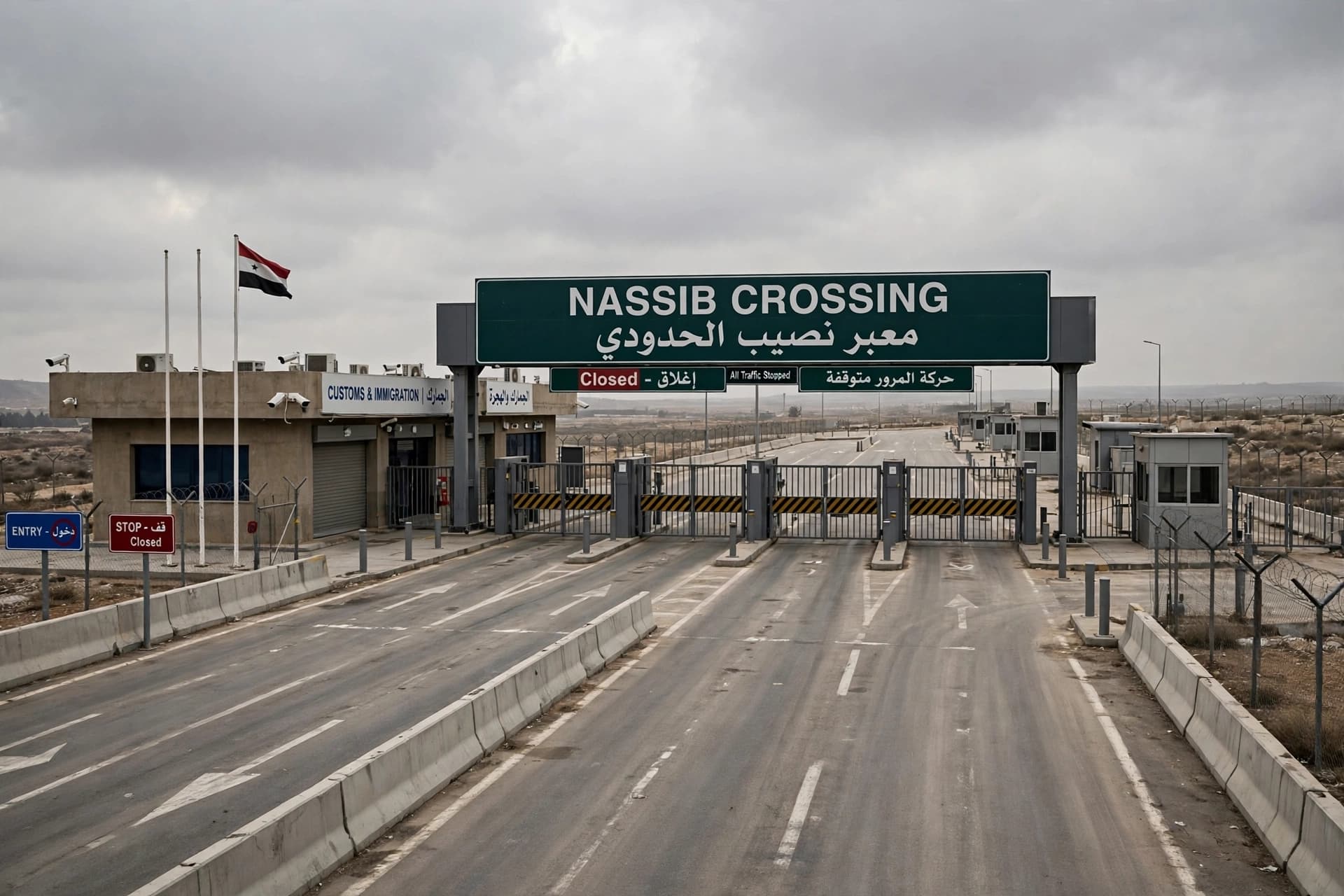
The Nassib border crossing, closed after the strikes, reopened to passenger and commercial traffic on Wednesday . The crossing is a lifeline for trade between the two countries, and its closure was a reminder that the relationship between Amman and Damascus is not merely political but economic, woven into the daily lives of people on both sides of the border. Jordan has launched strikes on Syria before, but this episode has captured public anger in a way that previous ones did not. The images of the dead family, the tent, the grandmother and the children, have a power that official statements cannot match.
The investigation continues. Jordan says it regrets the civilian deaths. Syria says it wants accountability and respect for its sovereignty. The two governments are communicating, as they must, because they share a border and a set of security concerns that neither can address alone. But the gap between their accounts of Monday night is a gap that no communiqué can fully close. The people who died in the strikes are beyond the reach of diplomacy. What remains is the question of who will answer for them.
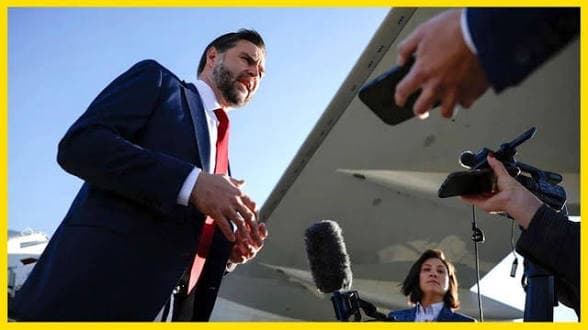
Image note: The visual content in this article was generated using artificial intelligence and does not depict the actual individuals or locations described.
Sources: Al Jazeera, Reuters, Outlook India, Rudaw, Samaa TV
Published by Banx Network. This article is part of the Banx decentralized media programme, powered by the BXE token on the XRP Ledger.