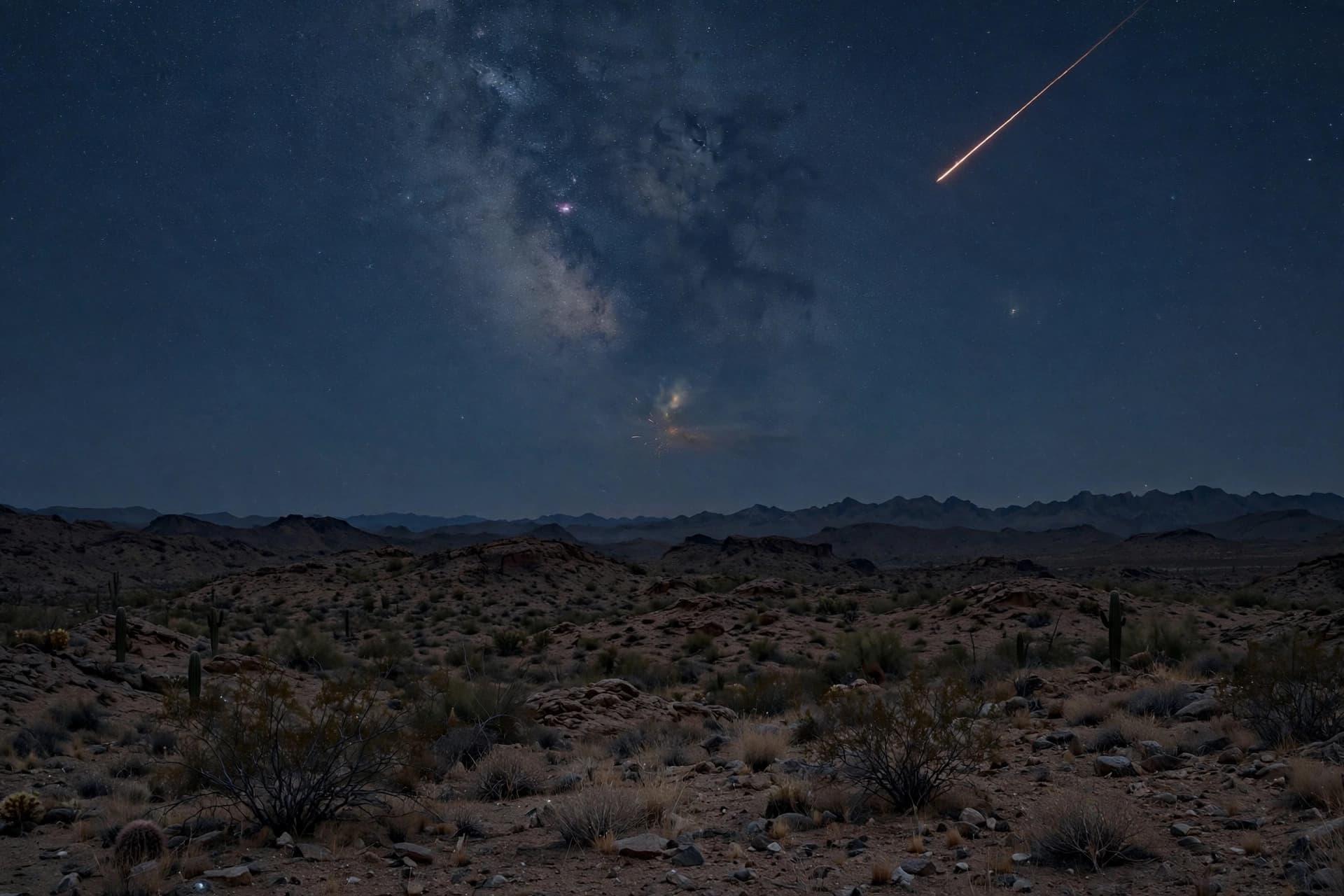
Sometimes, when we look up at the night sky, we see the steady gleam of stars and imagine the cosmos as a deep, silent ocean — but above our heads lies another sea, busy and ever‑shifting. Invisible from the ground, thousands of human‑made satellites race around Earth, weaving a delicate lattice of communication, weather monitoring, navigation, and scientific discovery. Yet, like a web of threads finely spun across the sky, one loose pull might send ripples we are only beginning to understand.
Recent scientific work has introduced a curious, almost poetic instrument: the CRASH Clock — not an alarm ticking toward dread, but a reminder of just how fragile our orbital environment has become. This measure estimates how long it would take before the first out‑of‑control collision would occur if satellites suddenly lost their ability to maneuver — barely 2.8 days, a figure that distills centuries of technological progress into a reminder of space’s dynamic balance.
Only a few years ago, in 2018, this window was measured in months — a time cushion that let operators diagnose problems, relay commands, and correct ailing systems. Today that cushion is thin, transformed by the rapid growth of satellite “mega‑constellations” and the increasing density of objects lofted into Low Earth Orbit. Words like crowding and density in astronomy carry weight: objects flying at thousands of miles per hour can become cascading hazards if even one loses control.
Scientists caution that certain solar events, such as powerful geomagnetic storms caused by bursts of energy from the Sun, could disrupt satellite systems, paralyzing the network of sensors and propulsion that keep them safely apart. Without coordinated avoidance maneuvers, the orchestration that keeps satellites from colliding might falter, letting the orbital environment teeter toward a cascade of impacts. The first collision might happen in under three days, and each impact could send fragments scattering, increasing the odds of further collisions in a chain reaction.
This is not a tale of imminent doom so much as it is a reflection on interconnectedness. The complex choreography above Earth — born of both human ingenuity and natural forces — operates within a narrow margin of harmony. The concept of the CRASH Clock invites policymakers, engineers, and society at large to think deeply about stewardship of this shared space; it reminds us that the orbit above is not an infinite expanse but a shared medium that reflects our collective presence.
In the quiet expanse where satellites spin and signals pulse, risk and reward swirl together. A few days’ difference in reaction time can mean the gap between control and chaos. As we press forward with plans for constellations and exploration, this scientific insight serves as a soft echo of caution — not a declaration of inevitable collapse, but a gentle call for mindful care of the immediate cosmos that has become indispensable to life on Earth.
AI Image Disclaimer (rotated wording)
“Visuals are created with AI tools and are not real photographs.”
Source Check (5 credible media names):
Space.com (Space Explainer) SciTechDaily Economic Times (science news) Times of India (science) Space / Orbital Today news summaries
Published by Banx Network. This article is part of the Banx decentralized media programme, powered by the BXE token on the XRP Ledger.