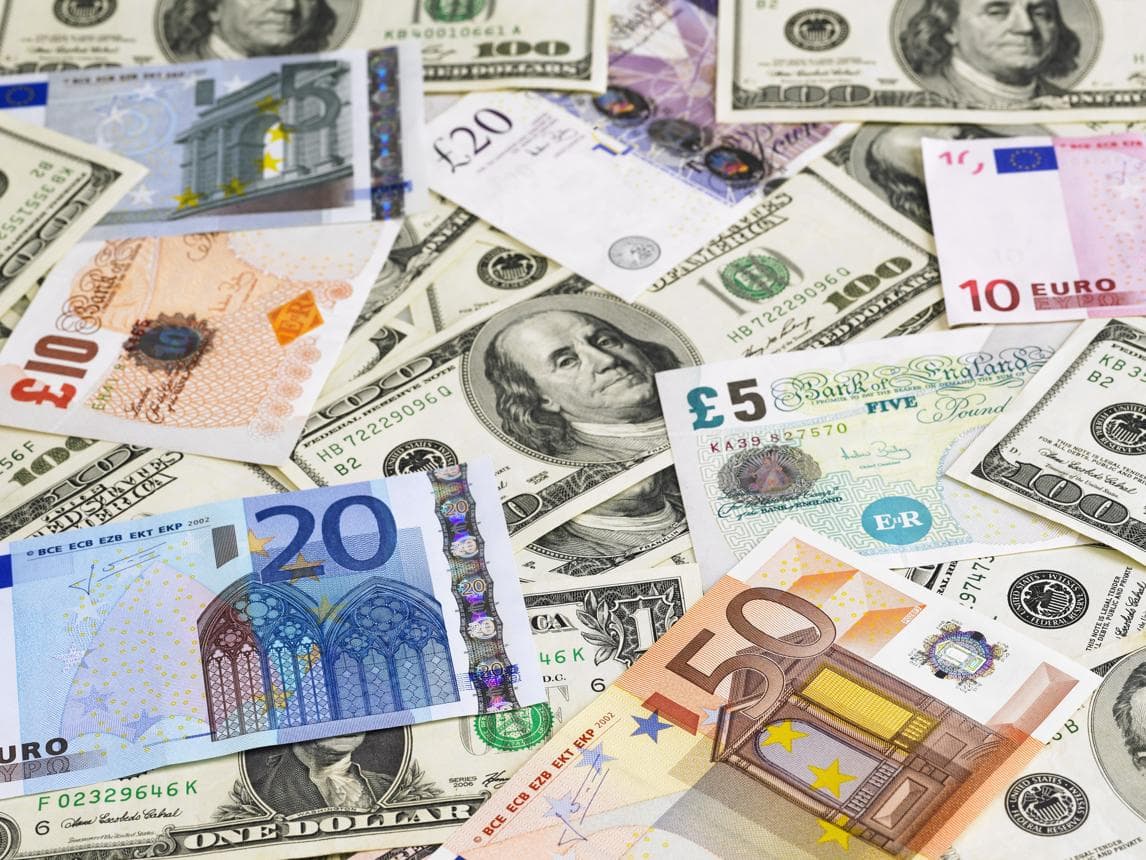
1. The Battle for the World's Most Powerful Currency
Money is more than a means of buying goods and services. At the international level, a currency can provide its issuing country with substantial economic influence, cheaper access to financing and the ability to shape global financial relationships.
For decades, the US dollar has occupied this position. Governments hold it in their foreign exchange reserves, businesses use it to settle international transactions, and investors rely on dollar-denominated assets when seeking liquidity and relative security.
However, the global financial landscape is becoming increasingly contested. Trade disputes, geopolitical rivalries, financial sanctions and concerns about government debt have encouraged some countries to reconsider their dependence on the American currency.
This growing interest in alternatives is often described as de-dollarisation — the process of reducing reliance on the dollar in international trade, financial transactions and official reserves.
The trend is real, but its implications require careful examination. A declining share of global reserves does not automatically mean the dollar is about to lose its leading position. According to the International Monetary Fund (IMF), the dollar still accounted for 56.70% of disclosed global foreign exchange reserves in the second quarter of 2026, despite a decline from 57.18% in the previous quarter. [1]
The central question is therefore not whether other currencies are gaining attention. It is whether any combination of alternatives can offer the scale, liquidity, stability and international trust necessary to challenge the dollar's position.
2. Why the US Dollar Became the World's Dominant Currency
The dollar's international position developed over decades, supported by the size of the American economy, the expansion of global trade and the development of deep financial markets.
Its influence extends well beyond the United States. Many commodities are priced in dollars, international banks conduct extensive dollar-denominated lending, and businesses across different countries use the currency even when the US is not directly involved in a transaction.
A major advantage is the US Treasury market. Foreign governments, central banks and private investors can buy and sell enormous quantities of US government securities. The market's size and liquidity make it particularly useful for institutions that need assets they can trade quickly.
The dollar also benefits from established financial infrastructure, international banking relationships and widespread acceptance. Businesses already operating in dollars have little incentive to switch to another currency unless the benefits outweigh the costs.
The Federal Reserve's 2025 assessment of the dollar's international role highlighted its continued dominance across reserves, trade invoicing, international payments and banking. It also identified the strength of US financial markets and the dollar's widespread use as important reasons for its enduring position. [2]
This creates a powerful feedback loop: businesses use dollars because other businesses accept them, while financial institutions support dollar transactions because demand already exists.
Replacing such a system is difficult. A rival currency must do more than attract political support; it must provide a practical alternative that millions of businesses, banks and investors are willing to use.
3. The Numbers: Is the Dollar Actually Losing Ground?
The dollar's dominance is not absolute, and its share of official foreign exchange reserves has declined over the longer term.
The Federal Reserve reported that the dollar represented approximately 58% of disclosed global reserves in 2024, down from a peak of around 72% in 2001. The euro accounted for approximately 20%, while the Chinese renminbi represented around 2%. [2]
More recent IMF figures show that the dollar's share stood at 56.70% in the second quarter of 2026. Total global foreign exchange reserves increased to approximately $13.22 trillion, from $13.10 trillion in the first quarter. [1]
These figures demonstrate a gradual change, but they do not establish that the international monetary system is about to collapse or that the dollar is on the verge of losing its leading role.
There are two important considerations.
First, reserve percentages can change because of exchange-rate movements, changes in the total size of reserves or decisions to purchase other assets. A decline in the dollar's share does not necessarily mean that central banks have sold large quantities of dollar assets.
Second, diversification does not automatically benefit a single rival. Countries can distribute reserves among the euro, Japanese yen, British pound, Canadian dollar, Australian dollar and other currencies, alongside holdings of gold.
Research published by the Federal Reserve Bank of New York in September 2026 also cautioned against interpreting the aggregate decline as evidence that countries worldwide are uniformly abandoning dollar assets. Its analysis found that changes in a relatively small number of large reserve holders explained much of the longer-term movement. [3]
The more accurate conclusion is that the dollar faces gradual diversification and potential challenges to its influence, rather than an established global exodus.
4. China and the Yuan: America's Biggest Currency Rival?
China has strong reasons to encourage greater international use of its currency, the renminbi, commonly referred to as the yuan.
As one of the world's largest trading economies, China conducts extensive commercial relationships with countries across Asia, Africa, Europe and Latin America. Settling more of these transactions in yuan could reduce some businesses' dependence on dollars and lower their exposure to dollar exchange-rate movements.
It could also strengthen China's financial influence and reduce the vulnerability of its international transactions to certain US financial restrictions.
China has supported cross-border payments infrastructure, including the Cross-Border Interbank Payment System (CIPS), while encouraging trading partners to use the yuan in eligible transactions. These initiatives provide alternatives for some international payments, although they do not yet replicate the full reach of the dollar-based financial system. [4]
However, the yuan faces significant obstacles to becoming the world's leading reserve currency.
China maintains capital controls and manages its exchange rate, limiting the freedom with which international investors can move money into and out of the country. Investors also consider the transparency of financial markets, the predictability of regulation and the ability to access assets during periods of political or economic stress.
These issues matter because reserve managers need more than a currency that can be used to pay Chinese suppliers. They need markets where vast sums can be held, transferred and liquidated with confidence.
The yuan could become more important in regional trade and selected international transactions without replacing the dollar globally.
That distinction is crucial: China does not need to dethrone the dollar completely to increase its financial power.
5. Could the Euro Become a Serious Alternative?
The euro is the dollar's most established rival in terms of international reserve holdings. It is backed by a large economic bloc, a major trading area and a well-developed financial system.
For countries seeking to diversify their reserves, euro-denominated assets provide an established alternative. The euro is also naturally attractive for transactions involving European businesses and markets.
However, the euro area faces a structural challenge. It consists of multiple national governments, while fiscal policy and public debt remain distributed across individual member states. This means the euro does not have a single, unified government bond market that matches the scale and liquidity of the US Treasury market.
There are European bonds that investors regard as highly secure, but the market is fragmented across different issuers and credit risks. This can complicate the euro's ability to serve as the central reserve asset for the entire global financial system. [5]
A stronger international role for the euro could be supported by deeper European capital markets, greater availability of common safe assets and improved integration between national financial systems.
Nevertheless, a more influential euro and a dollar collapse are two very different scenarios. The euro could gain market share while the dollar remains the dominant currency.
6. BRICS and the Search for a Multipolar Financial System
The BRICS group — which includes major emerging economies such as China, India and Brazil, alongside other members — has become an important part of discussions about reducing reliance on the dollar.
These countries have different economic priorities and political relationships, but some share an interest in increasing the use of national currencies for trade and developing payment systems that provide alternatives to established dollar-based channels.
The appeal is understandable. A country that conducts more trade in its own currency may face less direct exposure to dollar exchange-rate movements. It may also have more options if geopolitical tensions disrupt access to particular financial institutions or payment networks.
However, the idea of a unified BRICS currency faces substantial challenges.
Member countries have different inflation rates, exchange-rate policies, capital controls and economic structures. They also have competing interests. A shared currency would require agreement on governance, monetary policy, financial obligations and how economic shocks should be managed.
For example, a monetary system designed around China's economic priorities might not suit India's interests. Countries would also need to decide which institutions controlled the currency and how much national monetary independence they were willing to surrender.
Developing alternative payment arrangements is considerably easier than establishing a credible common currency.
The more plausible near-term outcome is a gradual expansion of bilateral trade settlement in local currencies and greater diversity in payment infrastructure, rather than the sudden emergence of a single BRICS currency capable of replacing the dollar. [4][6]
7. Sanctions, Trade Wars and the Weaponisation of Finance
Currency competition is not driven by economics alone. It is also shaped by geopolitics.
The US benefits from the dollar's central role because many international transactions, financial institutions and assets are connected to dollar-based systems. This gives American authorities significant influence when imposing financial sanctions.
For countries concerned about sanctions, that influence creates an incentive to develop alternative payment routes, hold different reserve assets or settle selected transactions in currencies other than the dollar.
The same concern can extend to trade policy. Tariffs, disputes over market access and uncertainty about international economic relationships may encourage governments and companies to reconsider the risks associated with depending too heavily on one country or financial system.
However, the effect of these pressures should not be exaggerated. The Federal Reserve's 2025 analysis found that the dollar's reserve share had remained broadly stable between 2022 and 2024, despite concerns about the use of sanctions following Russia's invasion of Ukraine. [2]
The more recent research from the Federal Reserve Bank of New York also suggests that reserve decisions are influenced by a mixture of liquidity needs, portfolio management and country-specific circumstances, rather than a universal political reaction. [3]
Over time, however, the perception that access to financial infrastructure can become a geopolitical vulnerability may encourage some governments to diversify.
That creates a strategic trade-off for the United States. The dollar's international reach provides considerable influence, but the more frequently governments perceive that reach as a source of political risk, the stronger their incentive may become to develop alternatives.
8. What a Weaker Dollar Would Mean for the US Economy
A sustained decline in demand for dollar assets could have significant consequences for the United States, although the outcome would depend on the scale and speed of the change.
One potential effect would be higher borrowing costs. International demand for US government bonds helps support the market for Treasury securities. If foreign investors became substantially less willing to hold those assets, the US government might need to offer higher yields to attract buyers, all else being equal.
Higher Treasury yields could feed into borrowing costs across the economy, affecting mortgages, corporate financing and government debt servicing.
A weaker dollar could also make imported goods more expensive for American consumers and businesses. Companies that depend on foreign components, energy or manufactured products could face higher costs, potentially adding to inflationary pressure.
However, a weaker dollar is not entirely negative.
American exporters could become more competitive because their products would cost less in foreign-currency terms, assuming other prices remained unchanged. US businesses earning revenue overseas could also see the dollar value of those earnings rise when converted back into dollars.
The dollar's global role therefore creates both advantages and disadvantages for the US economy. Its international demand can support financing conditions, but a strong exchange rate can make American exports more expensive.
The greatest risk would not necessarily be a gradual reduction in the dollar's reserve share. It would be a sudden loss of investor confidence that caused disorderly market movements, a sharp increase in borrowing costs or a breakdown in the normal functioning of financial markets.
Such an outcome is possible in principle, but it is not an inevitable consequence of diversification.
9. What Would a Currency War Mean for the UK and Europe?
The United Kingdom would not be insulated from a major shift in global currency relationships.
Sterling has an established role in international finance, but the UK economy remains exposed to changes in global capital flows, energy prices, trade conditions and investor confidence.
If the dollar weakened significantly against sterling, some goods priced in dollars could become cheaper for UK importers, provided that suppliers passed on the exchange-rate benefit. UK travellers and businesses paying dollar-denominated expenses might also benefit.
The opposite could occur if sterling weakened against the dollar. Imported energy, raw materials and other dollar-priced goods could become more expensive, potentially adding to inflation.
The effects would not be uniform. Businesses that export to the United States could benefit from certain exchange-rate movements or suffer from others, depending on their pricing arrangements, costs and the currencies in which they earn revenue.
Europe could gain from a more diversified international monetary system if the euro became more widely used and European capital markets deepened. But greater currency competition could also create volatility, complicate cross-border financing and make exchange-rate management more difficult for businesses.
For UK households, the practical consequences would most likely appear through changing prices, interest rates, investment returns and the cost of overseas travel rather than through an immediate change in the currency used for everyday domestic transactions.
10. Could Gold and Digital Assets Benefit?
Gold has attracted attention from investors and central banks seeking to diversify their holdings beyond traditional financial assets.
Unlike a government-issued currency, gold is not another country's liability. It can therefore play a different role in reserve management, particularly for institutions concerned about geopolitical risk or the concentration of financial exposure.
However, gold does not function as a complete replacement for the dollar. It does not provide the same convenient payment infrastructure, interest-bearing government securities or depth of short-term funding markets. Its price can also fluctuate substantially.
Digital assets introduce another dimension to the currency debate.
Dollar-backed stablecoins allow users to transfer digital tokens designed to maintain a value linked to the US dollar. They can make dollar-denominated value easier to move across digital networks, potentially extending the currency's reach even as alternative payment technologies develop. The Federal Reserve has identified stablecoins as one of the areas relevant to the dollar's evolving international role. [7]
This creates an important distinction: the technology used to move money can change without changing the currency in which that money is denominated.
A payment made through a blockchain-based network can still represent a claim linked to the dollar. In that case, the technology may modernise dollar payments rather than displace the dollar itself.
Bitcoin and other cryptocurrencies are different. Their prices are not fixed to a national currency, and their volatility, regulatory treatment and market structure can make them less suitable for some traditional reserve-management purposes.
Digital assets may influence how international payments develop, but their existence alone does not establish that they will replace established reserve currencies.
11. Three Possible Futures for the Global Currency System
The future of the currency war will depend on economic performance, government policy, financial-market confidence and the willingness of international businesses to adopt alternatives.
Scenario one: The dollar remains dominant.
The United States retains the advantages of its deep financial markets, extensive international banking relationships and established Treasury market. Other currencies gain some ground, but the dollar remains the principal reserve and transaction currency. This is consistent with the dollar's continuing dominance in the latest available data.
Scenario two: A more multipolar system emerges.
The dollar remains the largest international currency, but the euro, yuan and several smaller currencies gain greater roles in particular regions or types of transactions. Central banks diversify their reserves, and businesses increasingly choose currencies based on their trading partners and financial needs.
This scenario would represent a meaningful change without requiring the dollar to collapse.
Scenario three: Confidence in the dollar deteriorates sharply.
A serious combination of fiscal concerns, unpredictable policy, financial-market disruption or institutional uncertainty causes investors to reassess the risks of holding dollar assets. A rapid sell-off could push up US borrowing costs and create volatility across global markets.
This is the most disruptive scenario, but it would require more than the gradual changes currently visible in reserve statistics. A credible alternative would also need to be available at sufficient scale to absorb international demand.
The distinction between these scenarios matters for investors and policymakers. Gradual diversification can be managed over time; a sudden loss of confidence would be much harder to absorb.
12. The Verdict: A New Currency Order, Not an Overnight Dollar Collapse
The global currency war is fundamentally a contest over trust, liquidity, economic influence and financial independence.
The United States continues to benefit from the dollar's established position, while China and other countries have incentives to expand the use of alternatives. The euro, gold and new payment technologies may all contribute to a more diverse international financial system.
Yet the dollar's dominance rests on more than political influence. It is supported by a vast network of financial markets, institutions, contracts and established business practices that cannot be replaced simply by announcing a new currency or payment system.
The latest IMF data show a modest decline in the dollar's share of global reserves, not evidence that it has already lost its leading position. [1] Research from central-bank economists likewise cautions against treating every change in aggregate reserve shares as proof of a universal shift away from the dollar. [3]
For investors, the lesson is to monitor the underlying forces rather than react to dramatic headlines. Exchange rates, government bond yields, central-bank reserve allocations, capital flows and the development of alternative financial infrastructure will provide more useful signals than political declarations alone.
The dollar may eventually share more of its influence with competing currencies, but losing its crown is not the same as losing its importance. The more likely transformation is a gradual move towards a more diversified monetary system — one in which the dollar remains powerful, but no longer commands quite the same unquestioned position.
Sources
[1] International Monetary Fund — Currency Composition of Official Foreign Exchange Reserves: Second Quarter of 2026 https://data.imf.org/en/news/imf%20data%20brief%20september%2030?trk=article-ssr-frontend-pulse_little-text-block
[2] Federal Reserve — The International Role of the U.S. Dollar: 2025 Edition https://www.federalreserve.gov/econres/notes/feds-notes/the-international-role-of-the-u-s-dollar-2025-edition-20250718.html
[3] Federal Reserve Bank of New York — Are Central Banks Moving Out of Dollar Assets? https://libertystreeteconomics.newyorkfed.org/2026/09/are-central-banks-moving-out-of-dollar-assets/
[4] Atlantic Council — Dollar Dominance Monitor https://www.atlanticcouncil.org/programs/geoeconomics-center/dollar-dominance-monitor/
[5] Federal Reserve Bank of St. Louis — Why Is the U.S. Dollar the World's Dominant Reserve Currency? https://www.stlouisfed.org/publications/page-one-economics/2026/sep/why-is-us-dollar-world-dominant-reserve-currency
[6] JPMorgan Global Research — De-dollarization: Is the US Dollar Losing Its Dominance? https://www.jpmorgan.com/insights/global-research/currencies/de-dollarization
[7] Federal Reserve — The Fifth Conference on the International Roles of the U.S. Dollar: Stablecoins, Digital Payments, and the International Role of the U.S. Dollar https://www.federalreserve.gov/econres/notes/feds-notes/fifth-conference-on-the-international-roles-of-the-u-s-dollar-stablecoins-digital-payments-and-the-ir-of-the-usd-20260716.html
Published by Banx Network. This article is part of the Banx decentralized media programme, powered by the BXE token on the XRP Ledger.