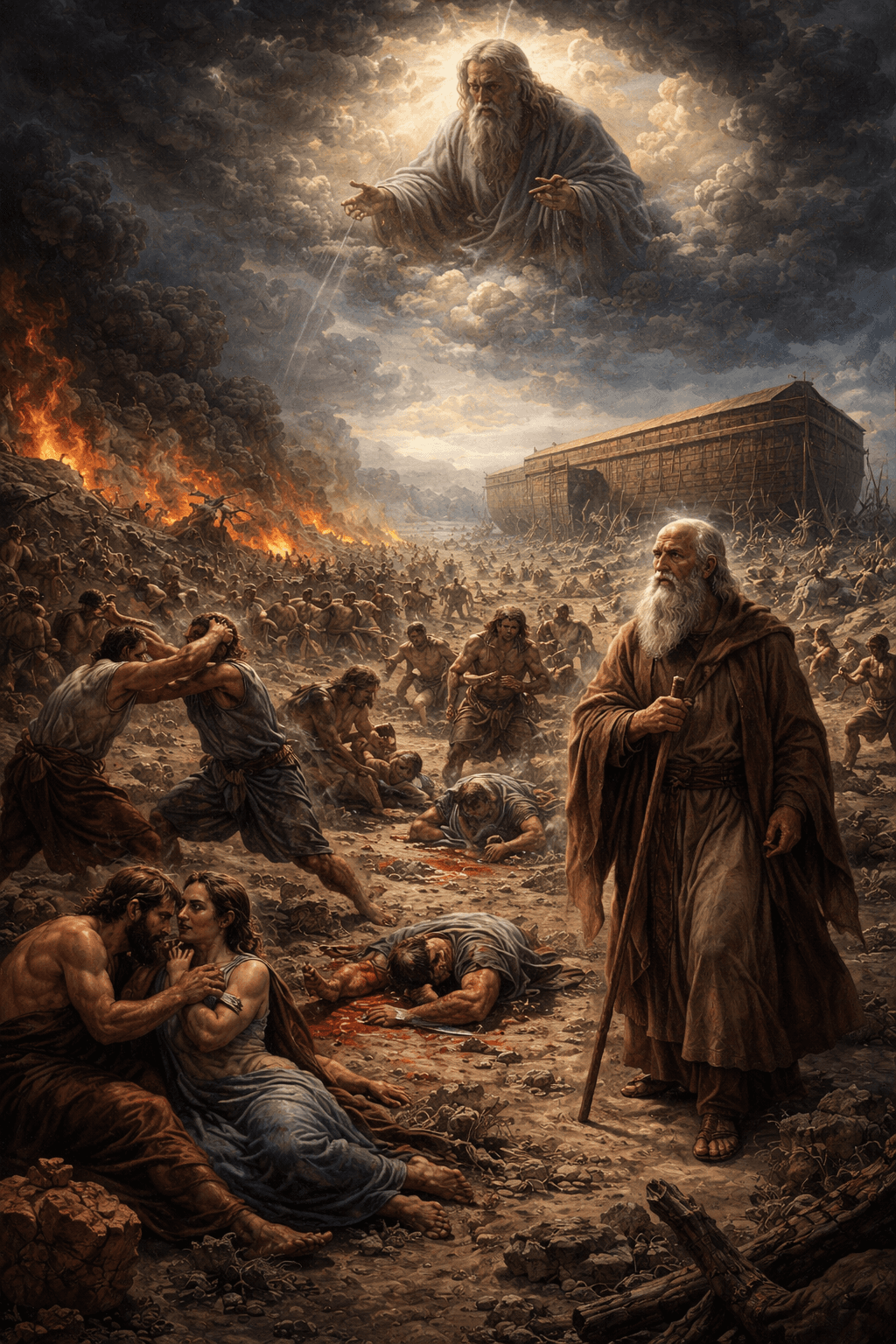
The story of the corruption of the earth, found in the Book of Genesis, paints a sobering picture of humanity’s moral decline after the fall of Adam and Eve. It highlights how sin spread across the human race, prompting God to judge the world and set the stage for redemption.
The Spread of Sin
After Adam and Eve’s disobedience in the Garden of Eden (Genesis 3), sin began to affect not only humanity’s relationship with God but also the natural order. Their sons, Cain and Abel, illustrate how jealousy and wrongdoing escalated quickly. Cain’s murder of Abel (Genesis 4:8) marked the first violent act in human history, showing the destructive consequences of sin taking root in the human heart.
As generations passed, the Bible records that human wickedness became widespread. People turned away from God, engaging in every kind of evil:
“The LORD saw how great the wickedness of the human race had become on the earth, and that every inclination of the thoughts of the human heart was only evil all the time.” (Genesis 6:5)
This passage underscores the depth of humanity’s moral corruption and the pervasive nature of sin in the world.
The Earth’s Violence and Corruption
The corruption was not limited to human behavior; it affected the entire earth. Violence, deceit, and lawlessness became commonplace. The world, which God had originally created as good and harmonious, was now filled with conflict and immorality:
“The LORD regretted that he had made human beings on the earth, and his heart was deeply troubled.” (Genesis 6:6)
The narrative emphasizes that sin distorts relationships—between humans, and between humans and God—creating a world that no longer reflects God’s original design.
God’s Response
In response to this overwhelming corruption, God determined to cleanse the earth and preserve righteousness. He chose Noah, a man described as righteous and blameless among his contemporaries, to continue humanity and preserve life:
“Noah found favor in the eyes of the LORD.” (Genesis 6:8)
God instructed Noah to build an ark to survive the coming flood, which would act as both judgment on corruption and a means of renewal for creation. This demonstrates that while God allows human free will, He remains just and responds to persistent wickedness.
Lessons from the Corruption
The story of humanity’s descent into sin teaches several key lessons:
• Sin has real, widespread consequences that affect not only individuals but entire communities and creation.
• God values righteousness and responds to persistent corruption with both justice and mercy.
• Redemption is possible, as seen in God’s covenant with Noah after the flood (Genesis 9).
Conclusion
The corruption of the earth reveals the destructive power of sin and the moral responsibility of humanity. Yet, even amid widespread wickedness, God’s plans for renewal and restoration prevail. The narrative serves as a timeless reminder of the consequences of turning away from God and the hope that comes through His righteous intervention.
AI Image Disclaimer: Visuals created with AI tools for illustrative purposes only; they do not represent real-life photographs.
SOURCES: BIBLE; Book of GENESIS; Genesis 3; Genesis 4:8; Genesis 6:5; Genesis 6:6; Genesis 6:8; Genesis 9
Published by Banx Network. This article is part of the Banx decentralized media programme, powered by the BXE token on the XRP Ledger.