
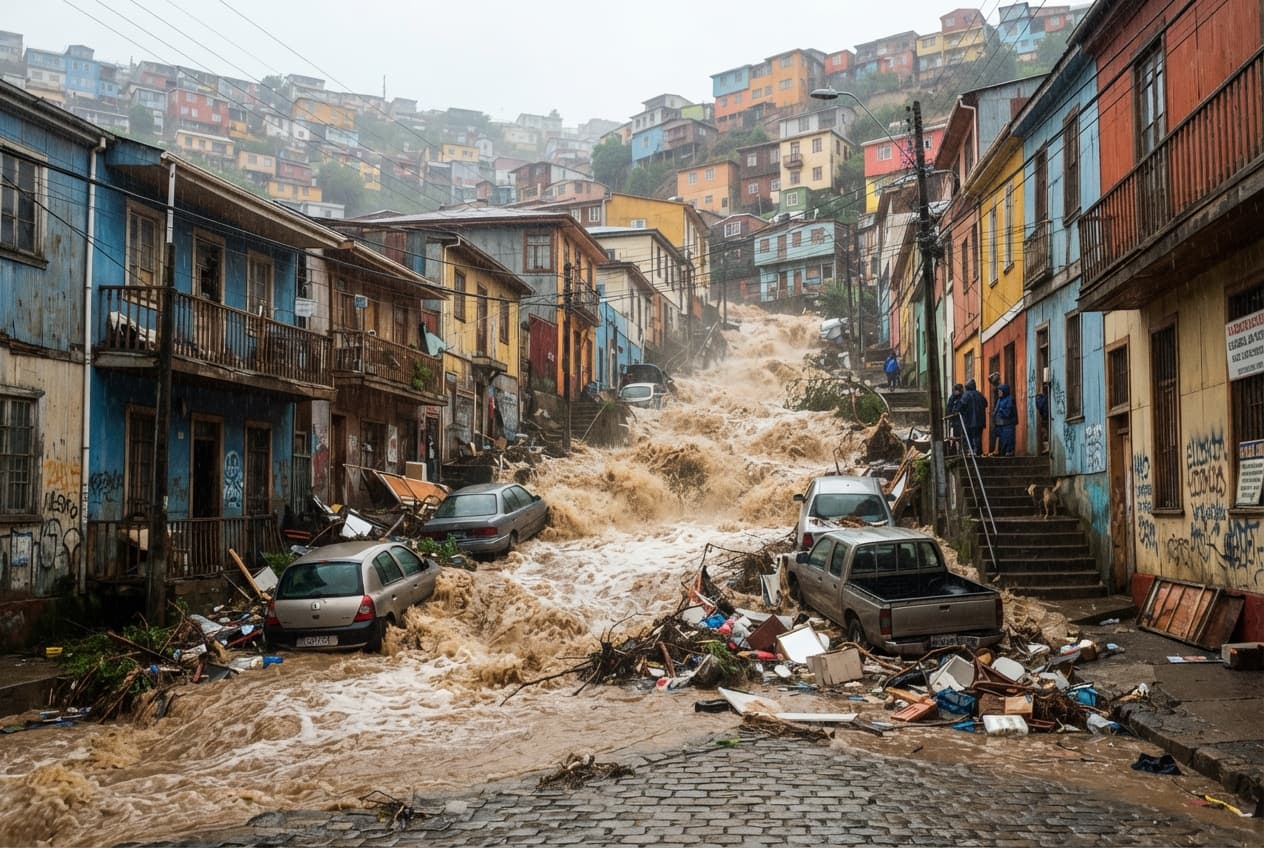
Valparaiso, Chile—Torrential downpours triggered catastrophic flash floods that swept down steep hillside neighborhoods, overwhelming aging drainage channels and catching residents completely off guard. Municipal emergency services reported that sudden wall-of-water events tore through narrow alleyways, dragging parked vehicles and debris directly into the coastal port below. The violent storm system intensified rapidly overnight, dumping months of average rainfall into a matter of hours.
Regional authorities confirmed that two people lost their lives when a residential mudslide collapsed their hillside dwelling during the height of the early morning tempest. Rescue divers and specialized canine units deployed to the disaster zone to search through heavy layers of red clay and splintered timber. Family members identified the victims as local residents who had ignored early evacuation warnings issued by civil protection agencies.
Widespread infrastructure failures crippled public transportation networks as major commuter roads turned into raging muddy rivers impassable to standard vehicles. Municipal bus services suspended all routes indefinitely while railway operators checked tracks for structural washout and landslide damage. Electrical transformers blew out across multiple districts, plunging tens of thousands of households into darkness amid howling gale-force winds.
Local government officials declared a state of catastrophe for the greater metropolitan district to mobilize emergency federal disaster relief funds immediately. Regional governor representatives stated publicly that local drainage infrastructure was never designed to withstand such concentrated precipitation volumes in modern history. Emergency shelters opened inside community gymnasiums, though many displaced families remained stranded due to blocked access roads.
Engineers warned that saturated hillsides remain extremely unstable, threatening further structural collapses across the historic port city's fragile amphitheater topography. Municipal work crews labored through driving rain to clear blocked culverts and pull downed utility lines away from flooded pedestrian walkways. Makeshift barriers constructed by residents failed to hold back the relentless tide of mud cascading down from upper residential sectors.
Maritime authorities closed the main port harbor to all commercial shipping traffic as violent sea swells battered coastal breakwaters and flooded waterfront warehouses. Harbor masters reported wave heights exceeding standard safety thresholds, forcing cargo vessels to drop anchor far out in the open bay. Small fishing boats moored along the docks suffered extensive hull damage as they smashed repeatedly against concrete pilings.
The national meteorological office predicted that unstable atmospheric conditions will persist over the coastal zone for at least another forty-eight hours. Relief supplies including potable water, heavy blankets, and emergency generators began arriving from neighboring provinces via military transport trucks. Civil defense teams advised vulnerable populations living along riverbeds and steep slopes to relocate immediately to higher ground.
Municipal authorities continue assessing the total economic damage as floodwaters slowly recede from commercial districts and lower-town thoroughfares. Insurance adjusters established temporary claims processing stations to handle the influx of property damage reports from homeowners and business operators. Recovery operations remain heavily constrained by continuous rainfall and the sheer volume of debris blocking vital transit arteries.
Published by Banx Network. This article is part of the Banx decentralized media programme, powered by the BXE token on the XRP Ledger.


.jpg&w=3840&q=75 "Poland Receives New Ballistic Missiles With a Range of Nearly 300 Kilometers")