There is a quiet principle at the foundation of American elections—that the power to determine who may vote rests not with the federal government, but with the states. On Friday, a federal judge reaffirmed that principle, ruling that the Justice Department’s campaign to collect state voter rolls and cross-check them against an immigration database was unlawful.
U.S. District Judge Sparkle Sooknanan issued a 78-page ruling finding that the department’s list maintenance policy violated federal privacy laws and risked disenfranchising eligible citizens . The policy, adopted to comply with President Trump’s election integrity executive order, had demanded unredacted voter rolls from 49 states and Washington, D.C.—records including home addresses, partial Social Security numbers, and voting history .
“Behind all the window dressing, the challenged policy represents the federal government’s attempt to decide who gets to vote,” Sooknanan wrote. “But Congress has left that authority where our Constitution has always placed it: with the states” .
At the center of the dispute was the Department of Homeland Security’s Systematic Alien Verification for Entitlements system, known as SAVE. The Justice Department intended to compare state voter data against SAVE to identify suspected noncitizens and demand their removal from voter rolls. But SAVE has repeatedly and mistakenly flagged lawful U.S. citizens as ineligible to vote .
The judge cited specific cases of citizens wrongly removed. Plaintiff Anthony Nel, a naturalized citizen from Texas, was flagged by SAVE as a noncitizen despite his naturalization . Another plaintiff, Ruth Nasrullah, said she never imagined having to worry about her personal data being safe simply for exercising her right to vote .
The ruling comes after federal judges in 26 states plus the Sixth Circuit dismissed similar DOJ demands, ruling the agency’s attempts to consolidate voter data unlawful . More than 20 cases have reached judicial rulings, and the department has lost every one .
Virginia Kase Solomón, president of Common Cause, which brought the lawsuit, called the decision “a victory for voters and yet another loss for the Department of Justice” . The Justice Department said it was reviewing the ruling .
Sooknanan’s decision does not prevent the federal government from taking lawful steps to support states’ efforts to maintain accurate voter rolls. But it makes clear that the Constitution places the authority to decide who votes where it has always been: with the states, not with Washington.
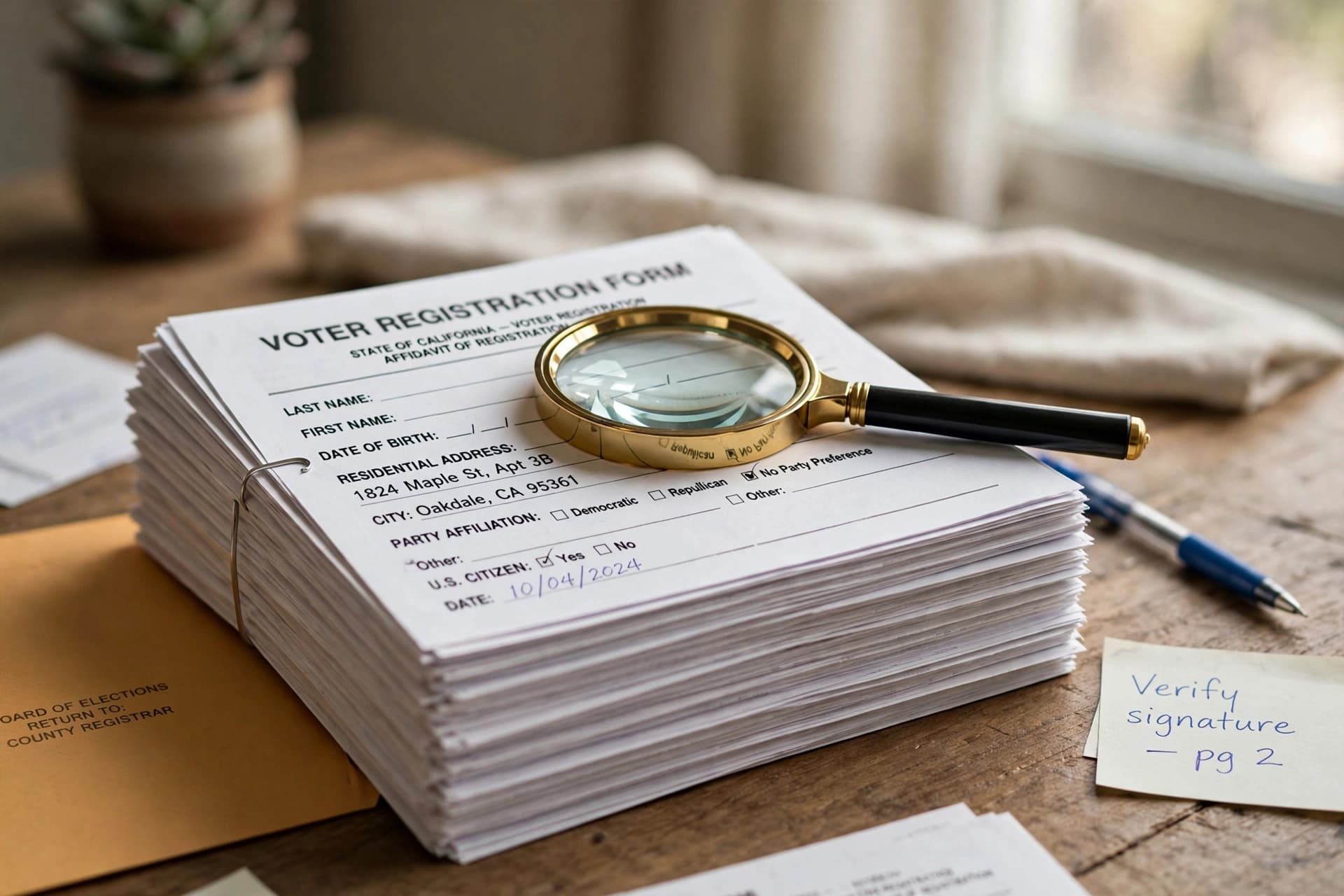
AI Image Disclaimer: The visual elements in this report were created using AI generation tools and are illustrative in nature.
Sources: The Guardian, ACLU, Common Cause, Washington Times, Yahoo News
Published by Banx Network. This article is part of the Banx decentralized media programme, powered by the BXE token on the XRP Ledger.