Long before forests, flowers or even trees stretched their branches toward the sky, Earth looked very different. Around 400 million years ago, in a time known as the early Devonian, the land was colonized by small green patches, moss-like plants, and scattered microbial mats clinging to damp soil. In that sparse landscape, one organism stood apart — a towering mystery that has long puzzled scientists and now challenges how we think about life’s early experiments on land.
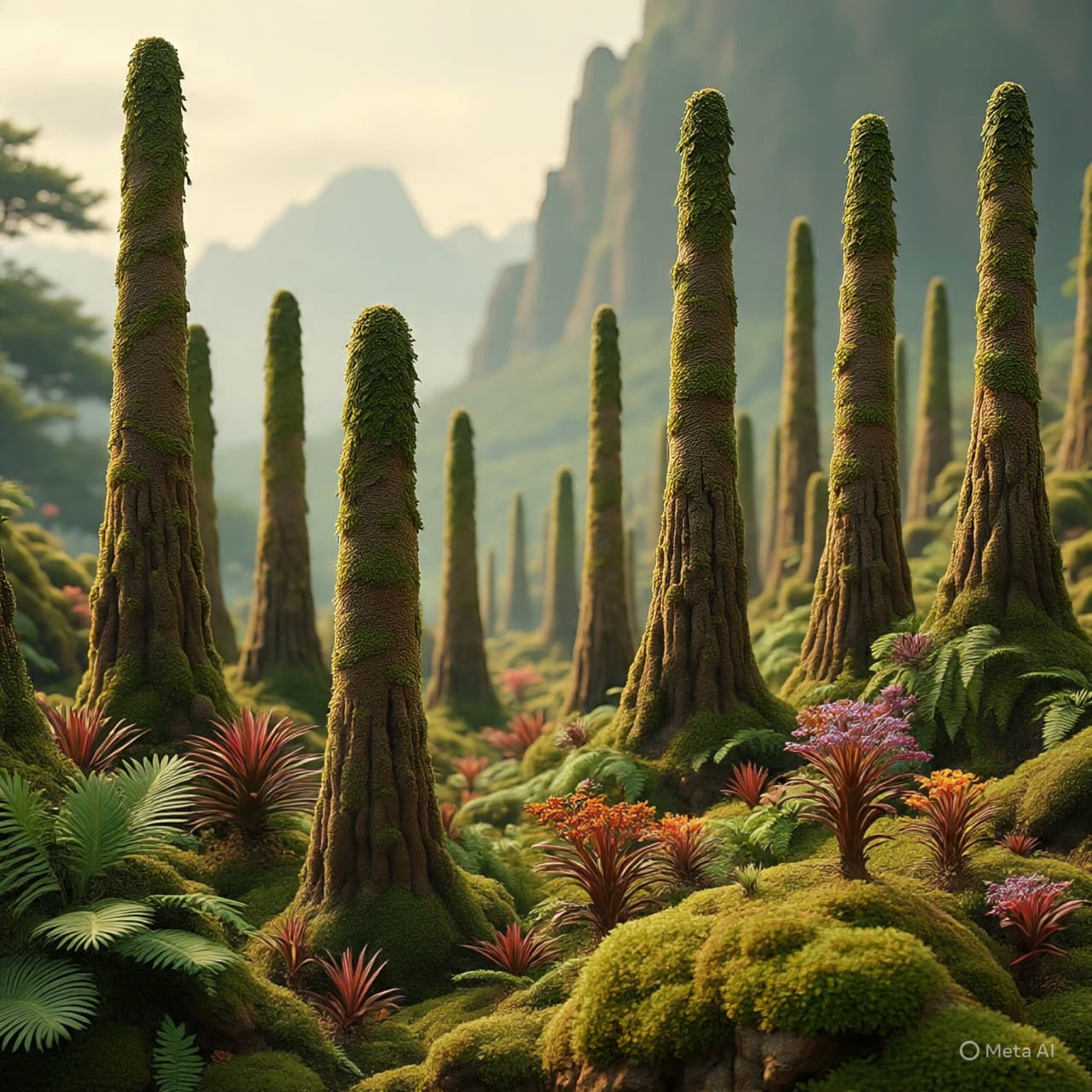
This enigmatic giant, known as Prototaxites, was not a plant, animal, or fungus as we understand those categories today. Fossils of the organism, preserved in an exceptionally detailed ancient rock layer near what is now Scotland, suggest it grew as tall as 25 to 30 feet (about 8–9 meters) above the ground — taller than any other known life form of its age. At a time when the tallest land plants barely exceeded a few inches, this colossal column-like life-form dominated the landscape like silent monoliths rising from an alien plain.
Scientists have studied Prototaxites for more than a century, and at times it was thought to be a collapsed tree trunk, giant algae, or even a massive fungus. But more recent research reveals that its internal structure and chemical signatures do not match any known life group that exists today, whether plant, animal, fungus or microbial. Tiny preserved tubes and microscopic features inside the fossils point to something fundamentally different — perhaps an entire branch of multicellular life that has since vanished from Earth’s evolutionary tree.
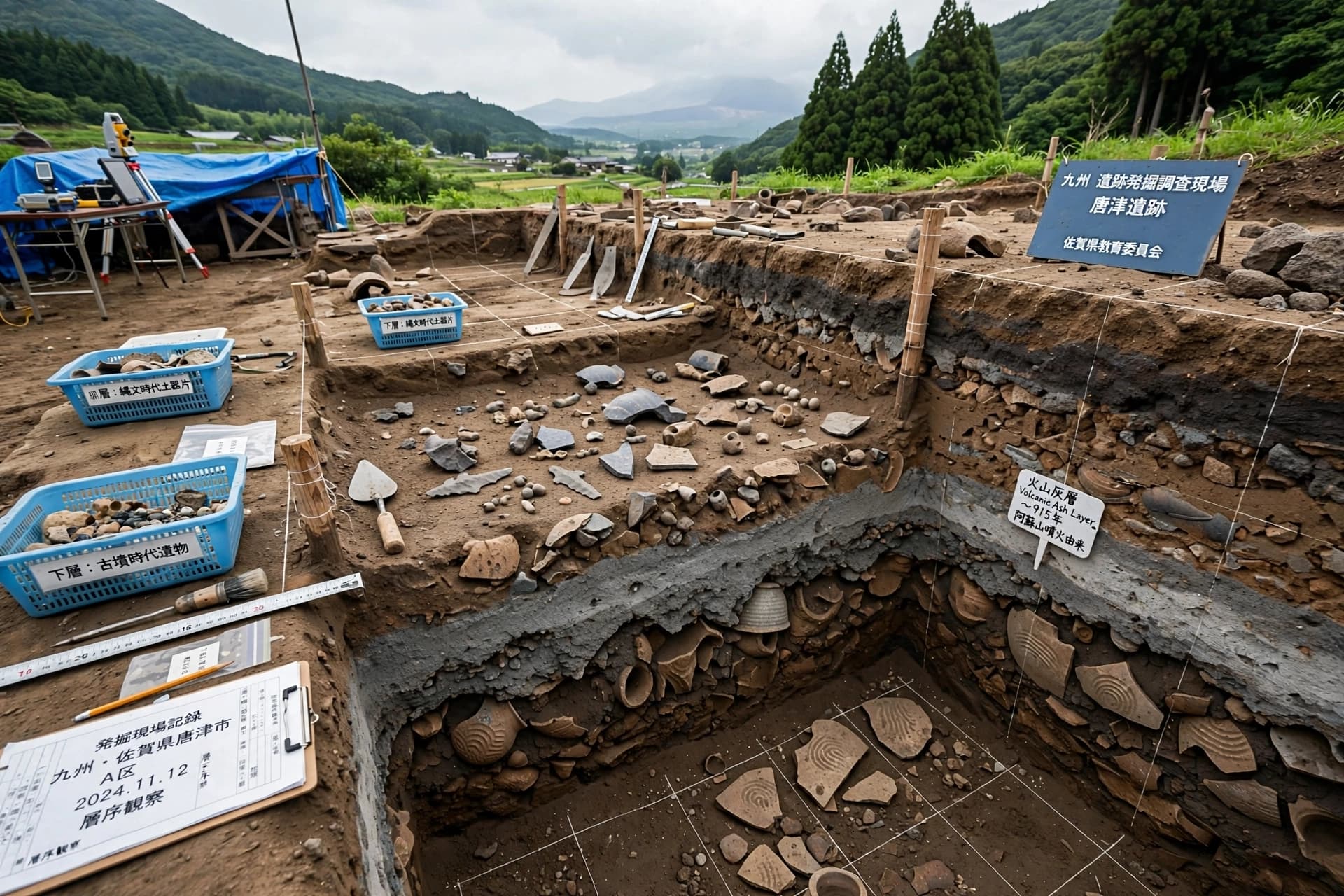
The place where these fossils are found — an ancient hot-spring ecosystem called the Rhynie chert — is one of the rare windows scientists have into early terrestrial ecosystems. There, plants, fungi, and the earliest land animals are preserved in stunning detail, offering a glimpse into a world long before forests or familiar ecosystems emerged. In that context, Prototaxites towers not only in size but in its challenge to scientific understanding: what was this giant, and how did it fit into the early land community?
Chemical analysis of some specimens shows that Prototaxites likely did not photosynthesize — it did not make its own energy from sunlight like green plants do. Instead, it may have derived nutrients from decaying organic matter in the environment, perhaps much like some modern fungi do. But even here the similarities fall short: the specific molecules found in its fossilized remains are different from those of known fungal or plant lineages, suggesting an unfamiliar biology.
Despite new research shining light on its structure, many questions remain unanswered. Scientists still debate how Prototaxites stood upright, what role it played in its ecosystem, and whether there were different species with varied forms and lifestyles. Some experts caution that while one line of evidence points toward a unique lineage, the full story of this organism’s biology and evolutionary relationships may still be hidden beneath layers of time.
In looking up at reconstructions of towering columns rising among primitive plants, researchers are reminded that life’s history on Earth is rich with unexpected turns. In the grand story of life’s spread across continents, Prototaxites stands as a reminder that even the largest players on ancient land were once strangers to science — and that the deeper we look into the deep past, the more extraordinary and mysterious life can be.
AI Image Disclaimer Visuals are created with AI tools and are not real photographs
Sources
• New analysis suggesting Prototaxites — tower-like fossils from about 400 million years ago — may be a life form unlike any known group, challenging prior classifications.
Published by Banx Network. This article is part of the Banx decentralized media programme, powered by the BXE token on the XRP Ledger.