There is a quiet tension at the heart of every election rule: the desire to protect the ballot and the desire to ensure that no eligible hand is turned away from it. When the two impulses collide, as they often do in the weeks before a vote, the resulting argument is rarely about procedure alone. It is about who gets to participate, and who bears the burden of proving they belong.
On Thursday, the Supreme Court allowed New Hampshire officials to fully enforce a ban on using student identification cards as a standalone form of identification at the polls, siding with the state's Republican secretary of state and the Republican National Committee in an emergency order issued less than two weeks before the midterm elections . The unsigned order invoked the so-called Purcell principle, the court's longstanding reluctance to allow federal courts to alter election rules on the eve of a vote .
The case grew from a law enacted this spring that removed student IDs from the list of expressly valid photo identification in New Hampshire . The law did include a safety valve allowing voters without approved government ID to prove their identity through other means, with student IDs potentially serving as one factor among several. But Secretary of State David Scanlan interpreted the law as barring student IDs even in that secondary role, and issued guidance to that effect .
A voting rights group, Coalition for Open Democracy, sued, arguing that the interpretation went beyond what the legislature intended and would disproportionately burden young voters who may lack driver's licenses or passports. A federal district court judge blocked enforcement of Scanlan's interpretation on October 2, finding that the guidance had caused confusion and that at least one student had already been prevented from voting .
The Supreme Court's majority did not address the merits of that argument. Instead, it pointed to the calendar. Federal courts, the order noted, should ordinarily not alter election rules so close to an election, a principle designed to prevent voter confusion . Justice Ketanji Brown Jackson dissented, writing that the lower court had not changed the law but merely corrected a public misstatement about what the law required, and that disturbing such an order risked leaving voters with inaccurate information .
What remains unresolved is the practical question the litigation has circled from the beginning: how many New Hampshire students will arrive at the polls without the identification the state now demands, and what will happen to them when they do. The law's defenders say the measure guards against fraud and bolsters confidence in elections. Its challengers say the burden falls unevenly on the young, the mobile, and those without the means or time to secure a government ID.
The ruling is not a final judgment on the law's constitutionality. The case will likely return to the Supreme Court after the midterms, when the Purcell concerns no longer apply and the justices may address the merits directly. For now, the ballots will be cast under a rule that is clear, contested, and consequential.
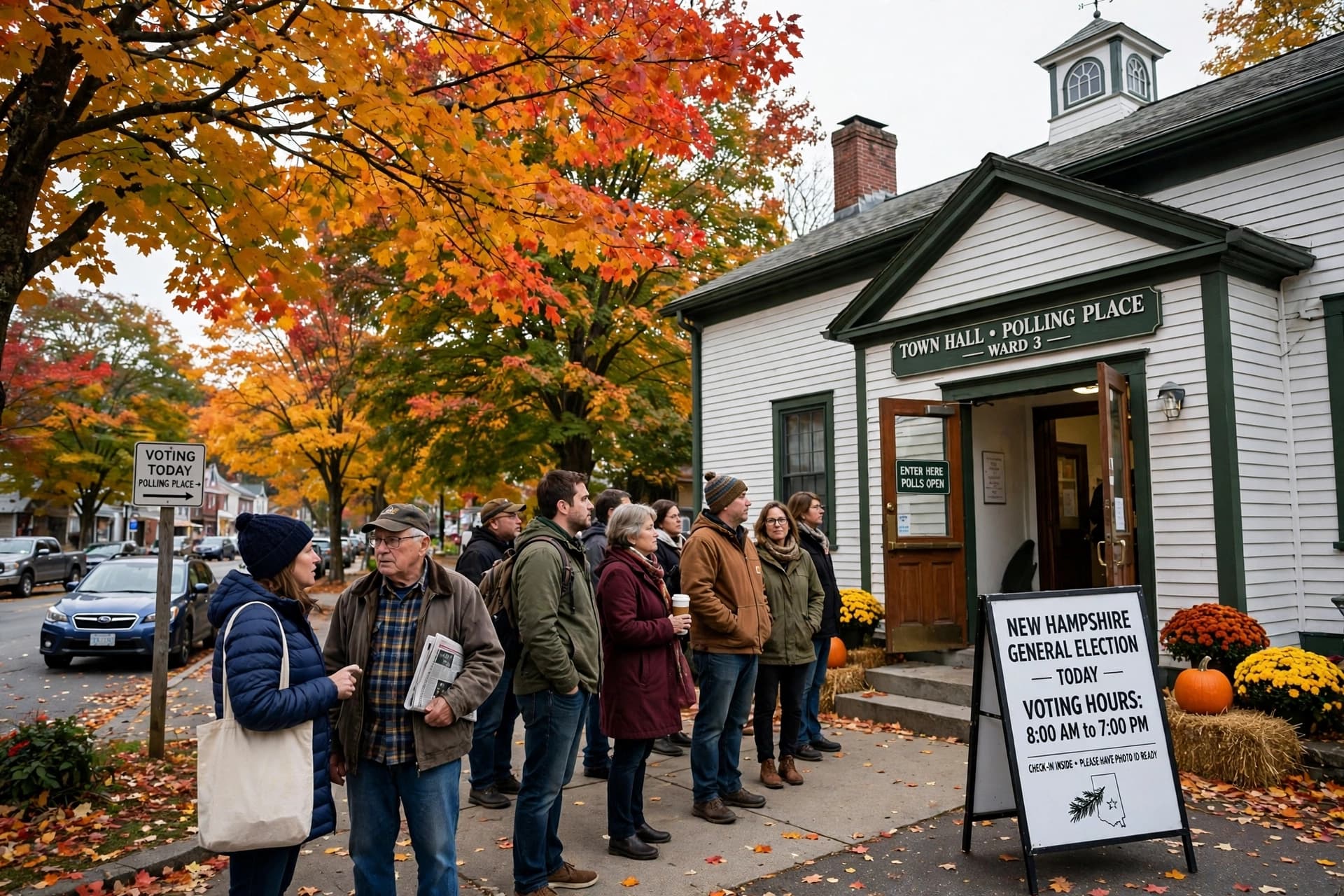
The images accompanying this article are AI-generated and intended for illustrative purposes only.
Sources: CNN, Courthouse News Service, USA Today, The Hill, News From The States
Published by Banx Network. This article is part of the Banx decentralized media programme, powered by the BXE token on the XRP Ledger.