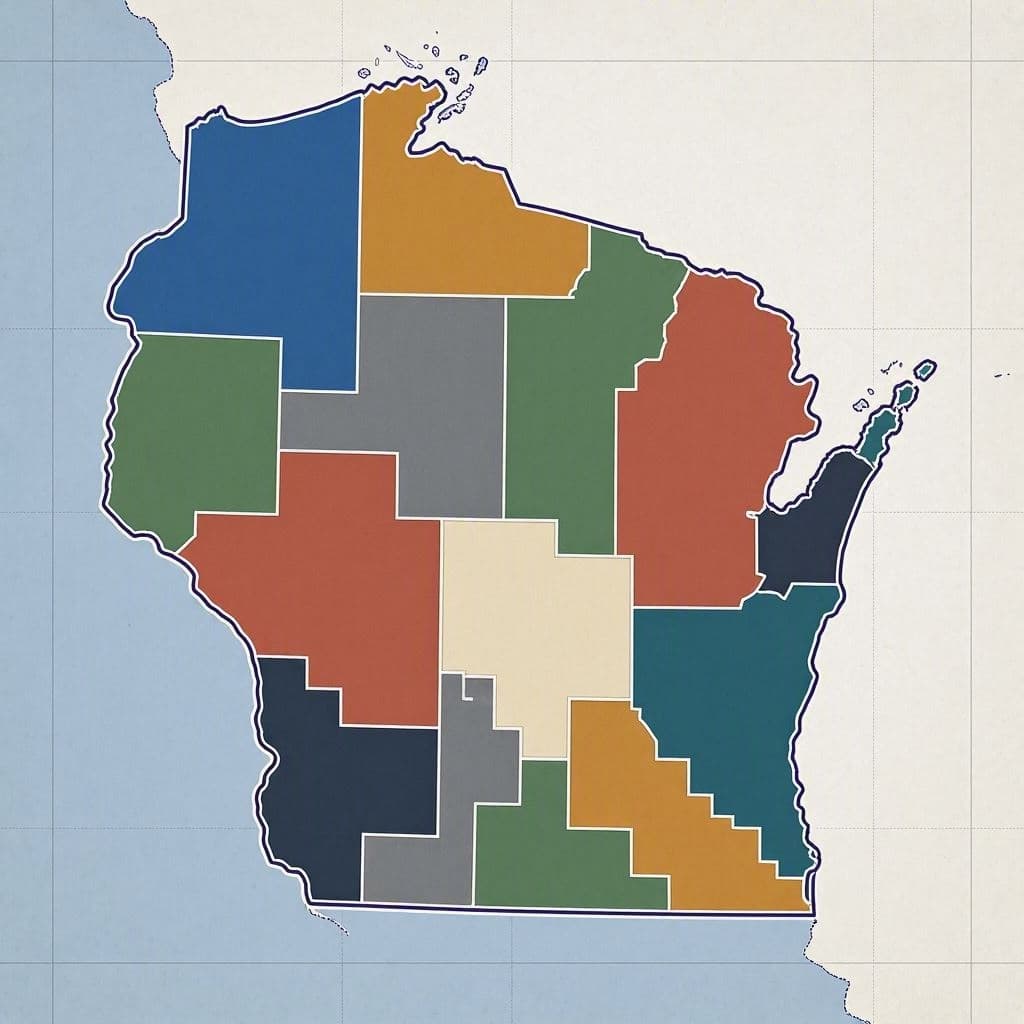
In the landscape of American democracy, the drawing of district lines is often a quiet but powerful act, shaping the political future for years to come. For Wisconsin, a state known for its fierce electoral battles, the recent resolution of long-standing gerrymandering disputes marks a significant turning point. With new, fairer maps in place, Democrats see an opportunity to regain control of the state legislature. This shift is not just about partisan advantage; it is about the principle of representative government and the belief that every vote should carry equal weight. It is a moment of renewal and hope for those who have long sought a more equitable political playing field.
The journey to this point was long and contentious. For years, Wisconsin’s legislative districts were drawn in ways that critics argued favored Republicans, diluting the voting power of Democratic-leaning areas. Legal challenges mounted, culminating in a state Supreme Court decision that declared the old maps unconstitutional. The court ordered the creation of new districts that adhere to traditional redistricting criteria, such as compactness and contiguity, rather than partisan gain. This victory for fairness was celebrated by voting rights advocates across the spectrum.
With the new maps adopted, the political dynamics in Wisconsin have shifted. Analysts predict that the revised districts will be more competitive, reflecting the state’s roughly even split between Democratic and Republican voters. For Democrats, this means that winning a majority in the Assembly and Senate is now a realistic goal, provided they can mobilize their base and appeal to swing voters. The playing field, while not perfectly level, is far more balanced than it has been in the past decade.
Republican leaders have expressed concern about the changes, arguing that the new maps could lead to instability and partisan gridlock. However, they also recognize the need to adapt to the new reality. The focus now shifts to campaigning, messaging, and voter outreach. Both parties are intensifying their efforts, knowing that every seat is up for grabs in a way that was not possible under the previous gerrymandered system. This competition, while intense, is a healthy sign of a functioning democracy.
The implications extend beyond state politics. Wisconsin is a key battleground in national elections, and control of the state legislature can influence federal policy through issues like election administration and voting rights. A Democratic majority could lead to changes in how elections are conducted, potentially making them more accessible. Conversely, a Republican hold would maintain the status quo. The stakes are high, and the outcome will resonate far beyond Madison.
Community engagement has surged in response to these changes. Voters are more aware of the importance of state legislative races, which often receive less attention than presidential contests. Grassroots organizations are working to educate citizens about the new districts and the candidates running in them. This increased civic participation is a positive development, strengthening the democratic fabric of the state. It shows that when people feel their votes matter, they are more likely to engage.
Challenges remain, however. Polarization is still high, and misinformation can cloud the discourse. Ensuring that the election is free, fair, and secure is a priority for officials from both parties. Trust in the electoral process is essential for the legitimacy of the outcome. By working together to uphold these standards, leaders can help heal the divisions that have plagued the state in recent years.
As the election approaches, the focus is on the issues that matter to Wisconsinites: healthcare, education, infrastructure, and the economy. The end of gerrymandering allows these topics to take center stage, rather than being overshadowed by procedural disputes. Candidates are forced to appeal to a broader range of voters, encouraging moderation and compromise. This shift could lead to more effective governance and better outcomes for the state.
The vanquishing of the gerrymander is a testament to the power of persistent advocacy and legal recourse. It shows that democratic norms can be defended and restored. For Wisconsin, it is a new chapter, one filled with possibility and promise. The coming election will be a test of this new era, determining whether the state can move forward with unity and purpose.
With fairer maps in place, Wisconsin Democrats aim for legislative control, marking a new era of competitive politics. It highlights the importance of equitable representation and civic engagement. Let this transition inspire confidence in the democratic process.
AI Image Disclaimer: Please be aware that images used in this context are AI-generated visualizations for illustrative purposes.
Sources: Milwaukee Journal Sentinel Wisconsin State Journal Associated Press
Published by Banx Network. This article is part of the Banx decentralized media programme, powered by the BXE token on the XRP Ledger.