For most of modern history, there has been an implicit bargain at the centre of the economy:
Work → Income → Consumption → Economic Growth.
People sell their labour.
Companies use that labour to produce goods and services.
Workers receive wages.
Those wages are spent throughout the economy.
Governments tax the resulting economic activity and use those revenues to provide public services and social protection.
But artificial intelligence and automation are beginning to challenge one of the assumptions underneath that system:
What happens if the economy can produce substantially more while requiring substantially less human labour?
The question is no longer purely theoretical.
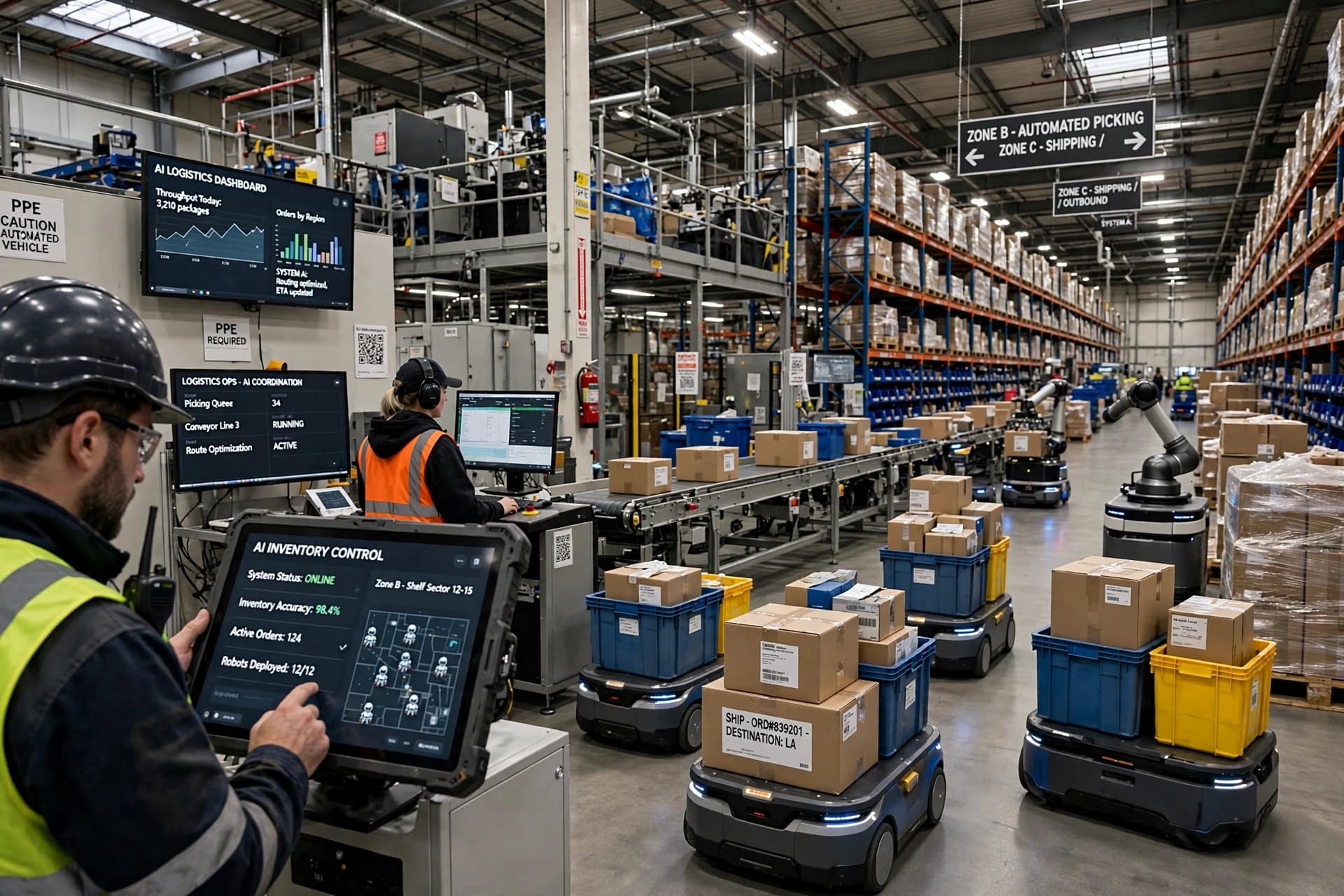
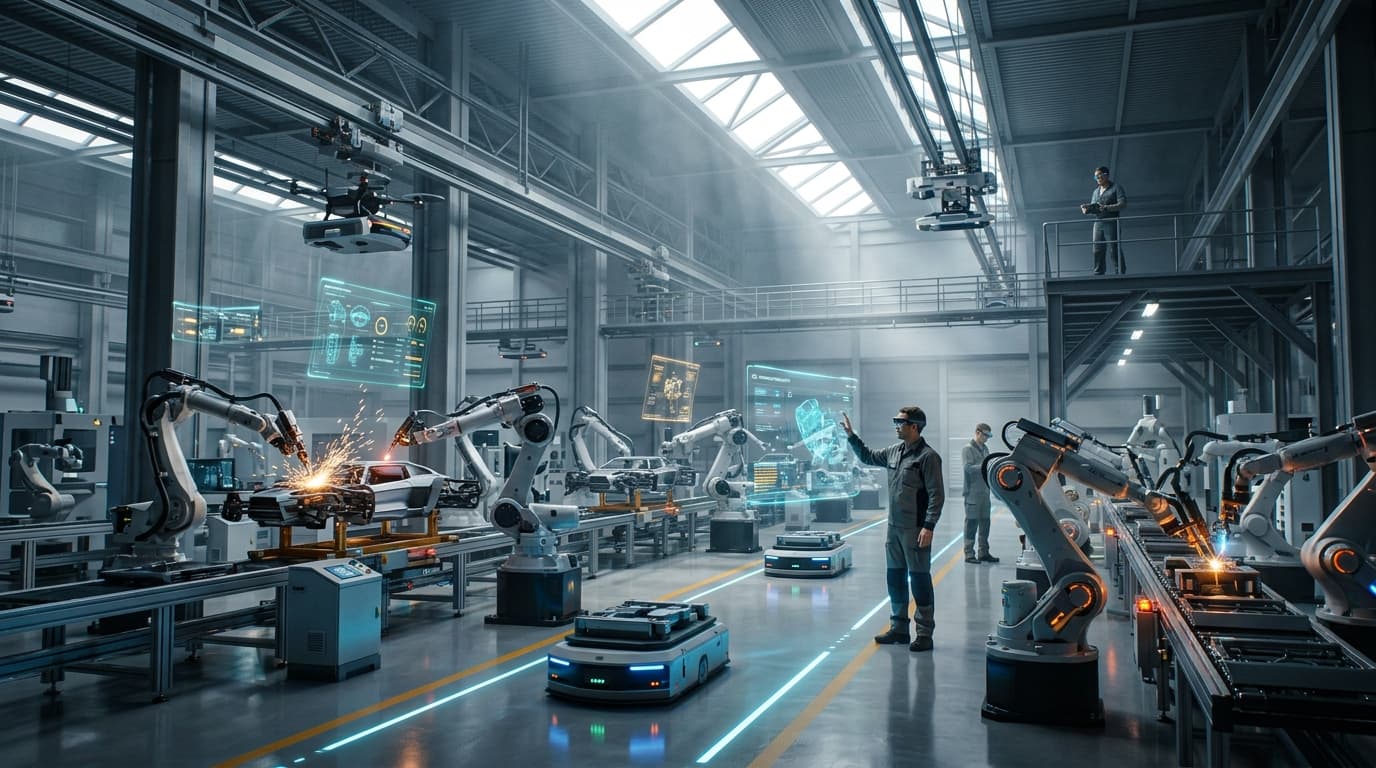
Artificial intelligence is moving into offices, factories, warehouses, software development, customer service, finance, logistics and professional services. Robotics is becoming increasingly capable of operating in physical environments. Autonomous systems are beginning to perform tasks that once required human intervention.
The International Labour Organization's 2025 analysis estimates that one in four workers globally are in occupations with some exposure to generative AI, although it concludes that transformation of jobs is currently more likely than outright replacement.
The IMF has estimated that almost 40% of global employment is exposed to AI, with exposure reaching around 60% of jobs in advanced economies.
These numbers do not mean 40% of jobs will disappear.
They mean something more complicated.
AI could change the tasks people perform, the number of workers companies need, the wages different occupations command and the amount of economic output that can be produced by each worker.
If productivity rises dramatically, society could become considerably wealthier.
But a new problem emerges:
Who receives the wealth created by the machines?
One possible answer is Universal Basic Income.
1. What Is Universal Basic Income?
Universal Basic Income, commonly called UBI, is a policy under which people receive a regular cash payment without having to satisfy traditional employment or means-tested eligibility requirements.
The basic concept is simple:
Everyone receives an income floor.
A genuine UBI is generally:
universal unconditional paid in cash regular individual rather than household-based
The exact design can vary enormously.
A government might provide £500 per month.
Another country might provide £1,000.
Payments could replace some existing welfare programmes or exist alongside them.
The World Bank has emphasised that UBI is not simply another name for conventional welfare. Its defining characteristics are universality, unconditionality and cash payments, while also noting major questions around financing, inflation, existing benefits and political feasibility.
The concept therefore sounds straightforward.
Pay everyone.
But financing everyone is anything but straightforward.
2. Why Automation Changes the UBI Debate
UBI existed as an economic idea long before modern AI.
But automation gives it a new context.
Imagine a company that once required 1,000 employees to perform a particular operation.
Now imagine that AI systems and robotics allow the same company to produce the same output with 500 workers.
The company may become more productive.
Its costs may fall.
Its profits could rise.
Consumers could potentially benefit through lower prices.
Investors could benefit through higher returns.
But 500 workers may no longer be required.
Now repeat the process across thousands of companies.
If the productivity gains are large enough, the economy could experience a strange combination:
more production + fewer workers required.
That is the scenario in which UBI becomes particularly interesting.
3. This Is Not Yet a "Job Apocalypse"
It is important not to exaggerate what current evidence tells us.
AI exposure is not the same thing as job elimination.
The ILO's latest research explicitly finds that most occupations exposed to generative AI are more likely to be transformed than fully automated because human involvement remains necessary for many tasks.
Its research also finds that clerical occupations remain among the most exposed, while exposure is expanding into professional and technical occupations as AI becomes capable of handling more specialised digital tasks.
The ILO's 2026 review of empirical evidence similarly finds that productivity gains from generative AI are real in some settings but uneven, while large-scale job displacement has so far remained limited. It highlights risks including inequality, weaker employment opportunities for younger workers and changes in job quality and workplace organisation.
So the immediate future is probably not:
AI arrives → humans stop working.
It is more likely to look like:
AI arrives → jobs change → some tasks disappear → new tasks emerge → productivity increases → labour demand shifts.
The question is what happens if that process accelerates.
4. From Automation to Abundance
Automation has historically created enormous economic benefits.
Industrial machinery allowed fewer workers to produce more goods.
Computers allowed employees to process information dramatically faster.
The internet reduced the cost of communication and distribution.
Automation can therefore create something extraordinary:
abundance.
If a machine can produce something at a lower cost than a human, society can potentially consume more of it.
If an AI system can perform administrative work at near-zero marginal cost, companies can potentially provide more services.
If robots can manufacture products continuously, physical production could become cheaper.
If AI accelerates scientific discovery, entirely new industries could emerge.
The potential upside is enormous.
But abundance creates a distribution question.
A machine does not need a salary.
A robot does not need a mortgage.
An AI system does not spend its wages at a supermarket.
Humans do.
This creates a fundamental economic tension.
5. The Ownership Problem
Suppose AI and robotics eventually generate a huge share of economic output.
Who owns them?
If ownership remains concentrated among corporations, investors and wealthy individuals, the benefits of automation may accrue disproportionately to capital owners.
Workers could potentially experience slower wage growth even as productivity rises.
The IMF has warned that AI could increase inequality because the technology can complement some workers while substituting for tasks performed by others, with advanced economies particularly exposed.
This creates an uncomfortable possibility.
The economy could become incredibly productive.
But ordinary people could struggle to participate in the prosperity generated by that productivity.
UBI attempts to address this by creating a mechanism through which part of the economic surplus is redistributed directly to individuals.
6. The Automation Dividend
This is where the idea of an automation dividend emerges.
Imagine that AI and robotics dramatically increase national productivity.
Companies produce more.
Profit margins increase.
New industries appear.
Taxable economic activity expands.
The government captures some portion of that additional wealth through taxation.
A portion is then distributed to citizens.
The logic becomes:
Machines increase productivity → productivity creates wealth → society captures part of the wealth → citizens receive an automation dividend.
The payment does not necessarily need to be framed as welfare.
It could be framed as a share of the productivity gains generated by an increasingly automated economy.
That is a fundamentally different philosophy.
7. Who Should Pay for UBI?
This is where the theory encounters reality.
A meaningful UBI would be expensive.
Potential funding mechanisms could include:
Income taxation
Higher-income households could contribute more through progressive taxation.
Capital taxation
Governments could tax capital gains, dividends or other investment income.
Corporate taxation
Companies benefiting from automation could contribute through corporate taxes.
Consumption taxes
VAT or similar taxes could provide additional revenue.
Wealth taxation
Governments could attempt to tax accumulated wealth.
Resource or sovereign funds
Governments could establish investment funds whose returns finance citizen dividends.
Automation-related taxes
A government could tax certain forms of automated production, although designing such a tax would be extremely difficult.
AI or data-related taxes
Governments could attempt to capture some value created through AI infrastructure or valuable datasets.
None is perfect.
Each creates economic trade-offs.
8. The Alaska Experiment
One of the world's most famous examples of a universal cash payment is not a conventional UBI programme.
It is Alaska's Permanent Fund Dividend.
Since 1982, eligible Alaskan residents have received annual payments funded from the state's oil-related investment fund.
Researchers studying the programme found that the dividend had no statistically significant effect on overall employment, while part-time employment increased by 1.8 percentage points.
That finding is important because it challenges the simplest version of the argument:
"Give people money and they will stop working."
The evidence does not support that conclusion in Alaska.
But Alaska is not a perfect model for a national UBI.
The payments are relatively modest.
The programme is financed through a sovereign fund rather than a massive nationwide tax-and-transfer system.
And the economic structure of Alaska is unusual.
Nevertheless, it provides valuable real-world evidence.
9. Finland's Basic Income Experiment
Finland provides another important case.
In its 2017–2018 experiment, 2,000 unemployed people received a basic income without the usual employment-related conditions.
Research published in the American Economic Journal: Economic Policy found that replacing unemployment benefits with a basic income of similar size had, at most, minor employment effects during the first year.
That does not prove UBI would have no effect on work in a completely different economic environment.
But it demonstrates something important:
People's relationship with work is more complicated than simply "work or don't work."
People work for income.
But they also work for social connection, purpose, status, identity, ambition and personal development.
Remove the financial pressure and some people may work less.
Others may retrain.
Some may start businesses.
Others may care for family members.
Some may pursue education.
The outcome depends heavily on the design and scale of the payment.
10. The Evidence Is Not One-Sided
There is no scientific consensus that UBI automatically produces positive economic outcomes.
Recent experimental research in the United States found that recipients of a $1,000 monthly unconditional payment for three years experienced a 4.2 percentage-point reduction in labour-force participation and reduced work hours by roughly one to two hours per week.
Other research reaches different conclusions depending on the programme and population studied.
A large 2026 revision of a meta-analysis covering 115 studies of unconditional cash transfers in low- and middle-income countries found positive average effects across several outcomes, including consumption, income, labour supply, school enrolment and psychological well-being, while also highlighting substantial contextual differences.
This is why UBI cannot be evaluated using a single experiment.
There is no universal UBI model.
There are different payment levels.
Different tax systems.
Different labour markets.
Different populations.
Different welfare states.
Different inflation environments.
The details matter.
11. Would UBI Cause Inflation?
This is one of the biggest objections.
If the government gives everyone more money, people have more purchasing power.
If the supply of goods and services does not increase at the same rate, prices could rise.
Imagine a town where everyone suddenly receives an additional £1,000 per month.
If there are no additional homes, restaurants, cars, childcare places or services available, demand could exceed supply.
Prices could rise.
The real benefit of the payment could therefore be reduced.
But automation changes the equation.
If AI and robotics simultaneously increase productive capacity, society could potentially produce more goods and services alongside increased purchasing power.
That raises a fascinating possibility:
Automation could help create the supply required to support an automation dividend.
But this would depend on how quickly productive capacity expands, where bottlenecks exist and how the economy is financed.
UBI is therefore not simply a monetary question.
It is a production question.
12. The Housing Problem
There is another complication.
Some things are difficult to automate.
Land is one.
Housing supply is another.
If people receive more money but the number of homes remains constrained, landlords and property owners could capture part of the benefit through higher rents.
The same could happen with scarce healthcare, education or other services.
This means UBI cannot necessarily solve affordability by itself.
A society receiving basic income might simultaneously need:
more housing better infrastructure increased energy supply stronger healthcare capacity improved transport greater food production
Otherwise, additional purchasing power could simply chase scarce resources.
13. UBI vs Universal Basic Services
This raises another possibility.
Instead of giving everyone a large cash payment, governments could provide universal access to essential services.
For example:
Universal Basic Income
Cash → individual choice.
versus
Universal Basic Services
Housing support → healthcare → education → transport → energy → childcare.
The two approaches could also coexist.
A future automated society might provide a modest UBI alongside extensive public services.
This would reduce the amount of income people need to survive while maintaining individual purchasing power.
14. Would People Stop Working?
This may be the most emotionally powerful question surrounding UBI.
If people received enough money to survive, would they still work?
Some probably would work less.
But that does not necessarily mean they would become economically inactive.
People could move into different forms of activity.
Entrepreneurship.
Education.
Research.
Art.
Care work.
Volunteering.
Community projects.
Small businesses.
Freelancing.
Part-time employment.
The concept of work could itself change.
Today, economic necessity determines a large amount of people's time.
A future with a guaranteed income could create greater freedom to choose how that time is used.
The question would become:
What happens when survival is no longer the primary reason to work?
15. The End of the 40-Hour Week?
UBI may not need to produce a completely jobless society.
There is another possibility:
less work.
Imagine AI makes an employee twice as productive.
A company could potentially choose between:
producing twice as much employing fewer workers reducing working hours increasing wages increasing profits or some combination of these
Society does not automatically have to choose mass unemployment.
It could choose shorter working weeks.
Instead of five eight-hour days:
four six-hour days.
Or perhaps:
three or four working days per week.
Automation could therefore transform the debate from:
"How do we create enough jobs?"
to:
"How much work do we actually need?"
16. The 20-Hour Workweek
Consider a future where AI handles much of the repetitive work.
Employees still make decisions.
They supervise AI systems.
They communicate with customers.
They handle exceptional cases.
They perform physical tasks that remain difficult to automate.
But their productivity is dramatically higher.
A company might eventually need fewer human hours.
Instead of eliminating workers, it could reduce working time.
This could create a completely different social structure.
People might work 15–25 hours per week while maintaining a relatively high standard of living.
The remaining time could be used for:
family education travel creativity entrepreneurship community health leisure
This would represent one of the biggest transformations in the history of work.
17. AI Could Create Jobs Too
Automation does not simply destroy jobs.
It creates new industries.
The personal computer destroyed some occupations while creating others.
The internet eliminated certain business models while creating millions of new jobs.
Smartphones created entire industries that barely existed twenty years earlier.
AI could do the same.
New professions may emerge around:
AI system management robotics AI safety synthetic data autonomous systems model auditing AI security human-AI collaboration digital infrastructure AI regulation machine psychology robotics maintenance
The problem is that new jobs may not appear in the same locations or require the same skills as the jobs they replace.
That creates a transition problem.
18. The Skills Gap
Imagine a warehouse worker whose job becomes heavily automated.
The economy may create AI technician positions.
But that worker cannot necessarily move into one immediately.
They may need months or years of retraining.
This is one of the most important issues in automation.
The economy can create jobs while individuals still lose their jobs.
The two statements are not contradictory.
A country can have millions of new jobs while millions of people struggle to transition into them.
That is why education and retraining become critical.
19. The Young Worker Problem
AI could also change how young people enter the labour market.
Traditionally, junior employees learn by doing relatively simple tasks.
An entry-level analyst might spend years preparing reports.
A junior programmer might begin with basic code.
A junior administrator might handle routine paperwork.
AI can increasingly perform some of these tasks.
That creates an unusual problem.
If companies automate entry-level work, where do future senior professionals gain experience?
The ILO's 2026 evidence review specifically identifies risks to younger workers' employment opportunities as AI changes workplace organisation.
The future of work may therefore require new apprenticeship models.
AI could perform routine tasks while humans learn through increasingly sophisticated simulations, supervised projects and real-world decision-making.
20. The Rise of the One-Person Company
Automation could also radically change entrepreneurship.
Today, starting a company often requires:
accounting marketing customer support software development design administration logistics
AI agents could increasingly perform parts of these functions.
A single entrepreneur could potentially operate a company with software handling much of the back office.
The result could be an explosion of micro-enterprises.
Instead of one company employing 10,000 people, the economy could contain thousands of tiny companies operated by individuals supported by AI.
This could partially counteract the concentration of corporate power.
But it could also create enormous competitive pressure.
21. The Corporate Automation Race
Once one company discovers that AI can reduce its labour costs, competitors have an incentive to follow.
That creates an automation race.
Company A automates.
Company B follows.
Company C invests even more heavily.
Eventually, automation becomes a competitive necessity.
The process could accelerate even if individual companies would prefer slower change.
This is one reason the impact of AI may not depend solely on whether the technology is capable of replacing workers.
It depends on whether companies have economic incentives to deploy it.
22. Productivity Could Become the New Currency
For much of history, economic growth depended heavily on increasing the number and productivity of workers.
Automation changes the equation.
A company with 100 employees and powerful AI could potentially outperform a company with 1,000 employees using older technology.
Capital and computation increasingly become productive inputs.
This could make productivity growth extraordinarily important.
If productivity rises rapidly enough, society could theoretically enjoy:
higher output + lower prices + greater leisure + higher living standards.
But only if the benefits are distributed sufficiently widely.
Otherwise:
higher productivity + concentrated ownership = potentially greater inequality.
That is the central economic tension of automation.
23. Who Owns the AI?
This may ultimately be more important than UBI itself.
Imagine two futures.
Future A: Concentrated Ownership
A handful of companies own the most powerful AI systems, robots, data centres and productive infrastructure.
Automation generates enormous profits.
Workers receive wages for increasingly limited human labour.
Wealth becomes increasingly concentrated.
UBI is introduced to redistribute part of the resulting wealth.
Future B: Distributed Ownership
Individuals, pension funds, governments and communities own significant shares of automated infrastructure.
People receive dividends directly from productive assets.
Workers participate in the ownership of the machines.
In this scenario, society might require less redistribution because ownership itself is more distributed.
The deeper issue may therefore be:
Who owns the machines?
24. Beyond UBI: Universal Capital Ownership
This leads to a more radical concept.
Instead of only giving people income, governments or institutions could help people accumulate productive assets.
For example:
Every citizen could receive a government-funded investment account at birth.
The account could invest in diversified assets.
Over decades, citizens would accumulate ownership of companies and infrastructure.
By adulthood, people would possess a portfolio generating capital income.
This would transform the question from:
"How do we redistribute the wealth created by automation?"
to:
"How do we give people a stake in the wealth-generating machines?"
UBI could therefore be only one component of a broader economic transition.
25. The Automation Tax
One proposal is an automation tax.
The basic concept is simple:
If a company replaces a significant amount of human labour with machines, it contributes additional tax revenue.
That revenue could fund worker retraining, social insurance or UBI.
The difficulty is defining automation.
What counts?
An industrial robot?
Software?
AI?
A new machine that makes ten workers twice as productive?
If a company invests £10 million in AI infrastructure but hires more people, should it be taxed?
Poorly designed automation taxes could discourage productivity and innovation.
A well-designed system would need to distinguish between productive investment and genuine displacement while avoiding incentives to keep inefficient processes simply to preserve employment.
26. The AI Dividend
A more sophisticated approach might focus on profits rather than machines.
Instead of taxing "robots," governments could tax some portion of the economic rents generated by highly concentrated AI systems.
The revenue could then fund public services or citizen dividends.
This would avoid trying to determine whether a particular machine replaced a particular worker.
Instead, the system would focus on the economic value generated by increasingly powerful technology.
That may become more practical as AI becomes embedded into ordinary business operations.
27. The Global Inequality Problem
Automation will not affect every country equally.
The IMF estimates that advanced economies have substantially higher AI exposure than emerging and low-income economies.
The OECD has also warned that lower-income countries may capture fewer AI productivity gains because of weaker digital infrastructure, skills gaps, financing constraints and regulatory limitations.
That creates a potential global divide.
Countries with:
advanced AI infrastructure abundant capital high-quality education semiconductor access cheap energy strong digital networks
could capture disproportionate gains.
Countries without these resources could fall further behind.
The automation debate is therefore not only about workers versus machines.
It could become:
automated economies versus less automated economies.
28. The Energy Problem
There is another hidden constraint.
AI and robotics require energy.
Data centres require enormous amounts of electricity.
Robotic manufacturing requires power.
Advanced semiconductor manufacturing requires sophisticated infrastructure.
If AI drives massive productivity growth, energy demand could become a critical bottleneck.
This connects the automation revolution to another technological race:
energy abundance.
Nuclear power.
Renewables.
Grid expansion.
Energy storage.
Potentially fusion.
The future of automated economies may depend partly on how cheaply they can generate electricity.
29. What Happens to Human Purpose?
Economics is only half the story.
Work provides more than income.
For millions of people, employment provides:
identity routine social interaction achievement status purpose belonging
If automation removes large amounts of work, society would need to rethink where people derive meaning.
A person who works 15 hours a week may have dramatically more freedom.
But freedom does not automatically create purpose.
A post-work society would need cultural institutions capable of replacing some of what employment currently provides.
Education could become lifelong.
Community involvement could expand.
Creative pursuits could become more important.
People might build businesses simply because they want to.
The definition of a successful life could change.
30. The End of "Retirement"?
Automation could also blur the distinction between employment and retirement.
Instead of:
education → work → retirement
people could move continuously between:
education → work → entrepreneurship → leisure → education → part-time work → research → work
A guaranteed income could make career breaks less financially dangerous.
Someone could leave employment for two years to study.
Another person could spend a decade raising children.
Someone else could start a business without risking complete financial collapse.
UBI could therefore function not only as protection against unemployment but as economic flexibility.
31. A More Dynamic Labour Market
This could create a labour market where people move in and out of employment more frequently.
Instead of working for the same company for twenty years, people might:
work six months study six months build a business return to employment work part-time retrain switch industries
AI could accelerate this flexibility by lowering the cost of learning new skills.
UBI could reduce the financial risk associated with transitions.
Together, the technologies could create a fundamentally different relationship with employment.
32. What If UBI Is Not Enough?
There is an important limitation.
A basic income does not automatically solve every social problem.
If housing is unaffordable, people can still struggle.
If healthcare is expensive, cash payments may not solve access.
If education is poor, income alone does not fix skills.
If automation creates monopolies, UBI does not necessarily create competition.
If political institutions are weak, redistribution may be poorly designed.
UBI is therefore not a complete economic system.
It is one policy instrument.
33. Three Possible Futures Future One: The Automated Welfare State
AI dramatically increases productivity.
Governments tax a portion of the resulting economic gains.
Citizens receive a basic income alongside existing public services.
People still work, but average working hours gradually decline.
Employment remains important but becomes less necessary for survival.
Future Two: The Automated Capitalist Economy
AI productivity rises rapidly.
But ownership remains concentrated.
Companies become extremely valuable.
Workers who own capital benefit significantly.
Workers without assets become increasingly dependent on wages and government transfers.
UBI exists, but it primarily prevents extreme poverty rather than creating widespread prosperity.
The central inequality becomes:
owners versus non-owners.
Future Three: The Post-Work Economy
AI and robotics become extraordinarily capable.
Human labour becomes a relatively small component of economic production.
Energy becomes abundant.
Automated systems produce most goods and services.
Citizens receive income from a combination of public services, capital ownership and automation dividends.
Employment becomes optional for many people.
People work primarily because they want to.
This would represent one of the largest transformations in human economic history.
34. 2030: The AI-Augmented Worker
The 2030s are unlikely to begin with mass unemployment.
A more realistic scenario is gradual transformation.
AI assistants become standard workplace tools.
Administrative tasks become increasingly automated.
Customer service becomes heavily AI-assisted.
Software development becomes more automated.
Robotics expands in warehouses and manufacturing.
Companies become more productive with smaller teams.
The first major change may therefore be subtle:
one worker does the work that previously required three.
That is enough to transform hiring.
35. 2040: The Automated Company
By the 2040s, companies could look radically different.
An organisation that once required hundreds of employees might operate with a much smaller human core.
AI agents could handle:
accounting marketing research customer service scheduling logistics software compliance
Robots could handle increasing amounts of physical work.
Humans would increasingly focus on:
strategy, relationships, creativity, leadership and exceptional situations.
The company itself could become partially autonomous.
36. 2050: The Post-Work Possibility
By 2050, the question could become much bigger.
What if AI and robotics are capable of performing the majority of economically useful tasks?
At that point, employment may no longer be the central mechanism through which society distributes purchasing power.
A new model could emerge:
automated production → collective prosperity → citizen income + public services + capital ownership
The concept of a full-time job could become one option among many rather than the foundation of adult economic life.
But reaching that world would require extraordinary technological, political and institutional change.
37. The Great Economic Transition
Humanity has already experienced major transitions.
Agriculture replaced hunter-gatherer economies.
Industrialisation transformed agriculture.
Computers transformed information work.
The internet transformed communication.
AI could transform the economic value of human labour itself.
That is potentially more profound than previous technological revolutions.
The industrial revolution replaced muscle.
The information revolution automated information processing.
The AI revolution could automate increasingly complex cognitive tasks.
And robotics could combine that cognitive capability with physical action.
The result could be a system where machines increasingly perform both the thinking and the doing.
38. The Real Automation Dividend
The ultimate promise of automation is not unemployment.
It is freedom from unnecessary work.
If machines can produce more with less human effort, humanity has a choice.
We can use the productivity gains to:
consume more.
accumulate more wealth.
increase corporate profits.
reduce working hours.
expand public services.
provide basic income.
or some combination of all of them.
Technology does not determine that outcome.
Institutions do.
39. The Question We Cannot Avoid
For centuries, society has operated around one basic assumption:
If you want income, you need to work.
Automation could eventually weaken that relationship.
Not because people stop being valuable.
But because machines become extremely productive.
If one person working alongside AI can produce what once required ten people, the economy has fundamentally changed.
If one company can produce what once required thousands of employees, the relationship between employment and output has changed.
And if millions of companies experience similar productivity gains, the relationship between work and income could eventually need to change as well.
Conclusion: Who Benefits From the Machines?
Universal Basic Income is often presented as a solution to automation.
But perhaps it is better understood as part of a much bigger question.
Who owns the future?
If AI and robotics create enormous productivity gains, humanity will have more productive capacity than ever before.
The technological potential could be extraordinary.
But productivity does not automatically create equality.
The benefits depend on ownership, taxation, competition, education, institutions and political choices.
UBI could provide one mechanism for distributing part of the automation dividend.
Shorter working weeks could provide another.
Universal services could provide another.
Broad-based capital ownership could provide another.
And new forms of employment could emerge that we cannot yet imagine.
The future may therefore not be a world without work.
It could be a world where work is no longer the only path to economic security.
That distinction matters.
The most important consequence of AI may not be that millions of people lose their jobs.
It may be that humanity finally reaches a point where technology can produce enough wealth that survival no longer requires everyone to spend most of their waking lives selling their labour.
If that happens, the central economic question of the twenty-first century will change.
It will no longer simply be:
"How many jobs can the economy create?"
It may become:
"How should the wealth created by machines be shared—and what do humans choose to do with their time when they no longer have to work simply to survive?"
That is the real automation dividend.
And humanity has not yet decided who gets to collect it.
References
[1] International Labour Organization, Generative AI and Jobs: A 2025 Update. The ILO estimates that one in four workers globally are in occupations with some degree of generative-AI exposure, while finding that transformation is generally more likely than full replacement.
[2] International Labour Organization, Generative AI and Jobs: A Refined Global Index of Occupational Exposure, 2025. The study estimates that 3.3% of global employment falls within its highest GenAI exposure category and identifies clerical work as particularly exposed.
[3] International Labour Organization, The Impact of GenAI on Jobs, Productivity and Work Organization: A Review of the Empirical Evidence, 2026. The review finds productivity gains are emerging but uneven, while large-scale displacement remains limited so far and risks include inequality and reduced employment opportunities for younger workers.
[4] International Monetary Fund, AI Will Transform the Global Economy. Let's Make Sure It Benefits Humanity, 2024. IMF analysis estimated that almost 40% of global employment is exposed to AI, rising to around 60% in advanced economies.
[5] International Monetary Fund, Gen-AI: Artificial Intelligence and the Future of Work, 2024. The IMF examines AI's potential to complement workers, replace certain tasks and affect inequality and labour demand.
[6] OECD, AI and the Global Productivity Divide, 2025. The OECD examines AI's potential contribution to productivity growth and the barriers preventing lower-income economies from fully capturing those gains.
[7] World Bank, Exploring Universal Basic Income: A Guide to Navigating Concepts, Evidence, and Practices. The World Bank distinguishes UBI from targeted transfers and examines questions involving financing, inflation, pensions, minimum wages and political economy.
[8] Jones, D. & Marinescu, I., The Labor Market Impacts of Universal and Permanent Cash Transfers: Evidence from the Alaska Permanent Fund. National Bureau of Economic Research / American Economic Journal: Economic Policy. The research finds no significant effect on aggregate employment and an increase in part-time work.
[9] Verho, J., Hämäläinen, K. & Kanninen, O., Removing Welfare Traps: Employment Responses in the Finnish Basic Income Experiment, American Economic Journal: Economic Policy, 2022. The study found only minor employment effects during the first year of Finland's basic-income experiment.
[10] Vivalt, E. et al., The Employment Effects of a Guaranteed Income: Experimental Evidence from Two U.S. States, NBER Working Paper 32719, revised 2026. The experiment found a 4.2 percentage-point reduction in labour-force participation among recipients receiving $1,000 per month for three years, alongside reduced working hours.
[11] Crosta, T. et al., Unconditional Cash Transfers: A Bayesian Meta-Analysis of Randomized Evaluations in Low and Middle Income Countries, NBER Working Paper 32779, revised 2026. The meta-analysis covers 115 studies of 72 programmes and finds positive average effects across several economic and social outcomes, while recognising contextual differences.
[12] Daruich, D. & Fernández, R., Universal Basic Income: A Dynamic Assessment, American Economic Review, 2024. The authors model longer-term general-equilibrium effects of UBI and identify significant trade-offs involving labour supply, capital markets, skill formation and intergenerational effects.
[13] OECD, Artificial Intelligence and Wage Inequality, 2024. The study examines relationships between AI exposure and wage inequality across OECD countries and finds that the effects on inequality are complex rather than uniformly negative.
Published by Banx Network. This article is part of the Banx decentralized media programme, powered by the BXE token on the XRP Ledger.