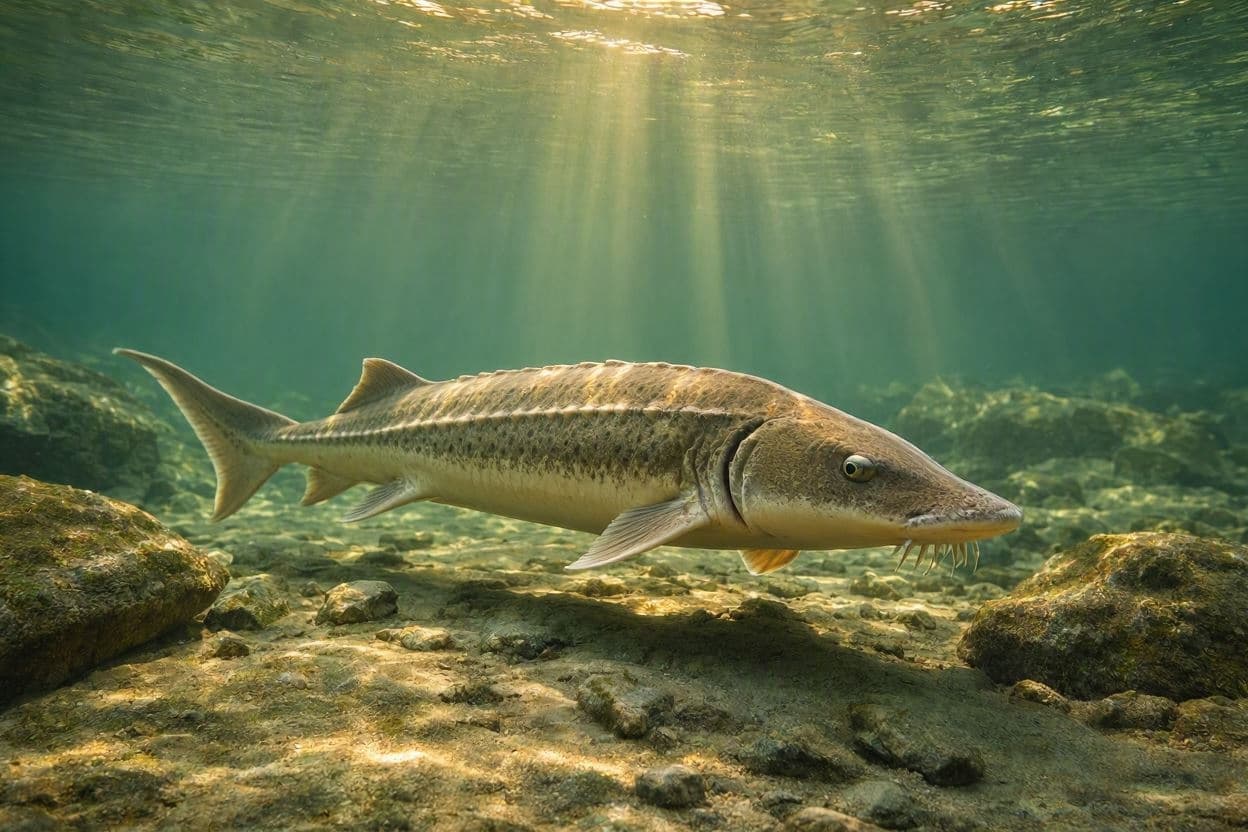
Beneath the surface of the Great Lakes, ancient giants glide through the dark waters, carrying secrets that predate modern history. Lake sturgeon, some of which may have lived for four centuries, are living links to a time before industrialization reshaped the continent. Their longevity is a marvel of nature, but it also presents a unique challenge for conservationists who are now rethinking how best to protect these slow-moving survivors.
For decades, conservation efforts focused on habitat restoration and fishing bans, assuming that removing threats would allow populations to recover naturally. However, the extreme lifespan of the sturgeon means that their reproductive cycles are incredibly slow. A female may not reach maturity until she is fifteen or twenty years old, and she may only spawn every few years thereafter. This biological reality demands a patience that modern environmental management rarely affords.
Recent studies using radiocarbon dating on ear bones have confirmed that some individuals are indeed hundreds of years old. This discovery shifts the perspective from viewing sturgeon as just another fish species to recognizing them as elder statesmen of the ecosystem. Their survival is not just about numbers but about preserving genetic diversity and ecological wisdom that has accumulated over centuries.
Scientists are now advocating for a more nuanced approach to conservation. Instead of broad-stroke policies, they suggest targeted protections for specific spawning grounds and age groups. Understanding the migration patterns of these ancient fish is crucial, as they often travel long distances to return to the same gravel beds where they were born. Protecting these corridors is as important as protecting the lakes themselves.
The threat of climate change adds another layer of complexity. Warmer water temperatures can affect spawning success and oxygen levels, posing risks to eggs and larvae. As the Great Lakes warm, the delicate balance required for sturgeon reproduction may be disrupted. Researchers are monitoring these changes closely, seeking ways to mitigate impacts without interfering with the natural processes that have sustained the species for millennia.
Community involvement plays a vital role in this renewed effort. Local anglers and Indigenous communities, who have long respected the sturgeon as a sacred resource, are partnering with scientists to share knowledge. This collaborative approach ensures that conservation strategies are grounded in both scientific data and traditional ecological knowledge, creating a more holistic framework for protection.
Saving the lake sturgeon is ultimately a test of our commitment to long-term stewardship. It requires us to look beyond immediate results and consider the health of the ecosystem over centuries. By protecting these ancient beings, we safeguard the integrity of the Great Lakes, ensuring that their waters remain vibrant and alive for future generations.
The realization that Great Lakes sturgeon can live for 400 years is reshaping conservation strategies. It calls for a patient, informed, and collaborative approach to protect these ancient survivors, honoring their role as keystone species in one of North America’s most vital freshwater systems.
AI Image Disclaimer: Images accompanying this article are AI-generated to visualize the subject matter.
Sources: National Geographic Great Lakes Fishery Trust Journal of Great Lakes Research
Published by Banx Network. This article is part of the Banx decentralized media programme, powered by the BXE token on the XRP Ledger.