When Tesla talks about “Full Self-Driving” (FSD), the name itself invites confidence. But some owners are now warning that the software may falter at one of the most basic — and most dangerous — points on the road: railroad crossings.
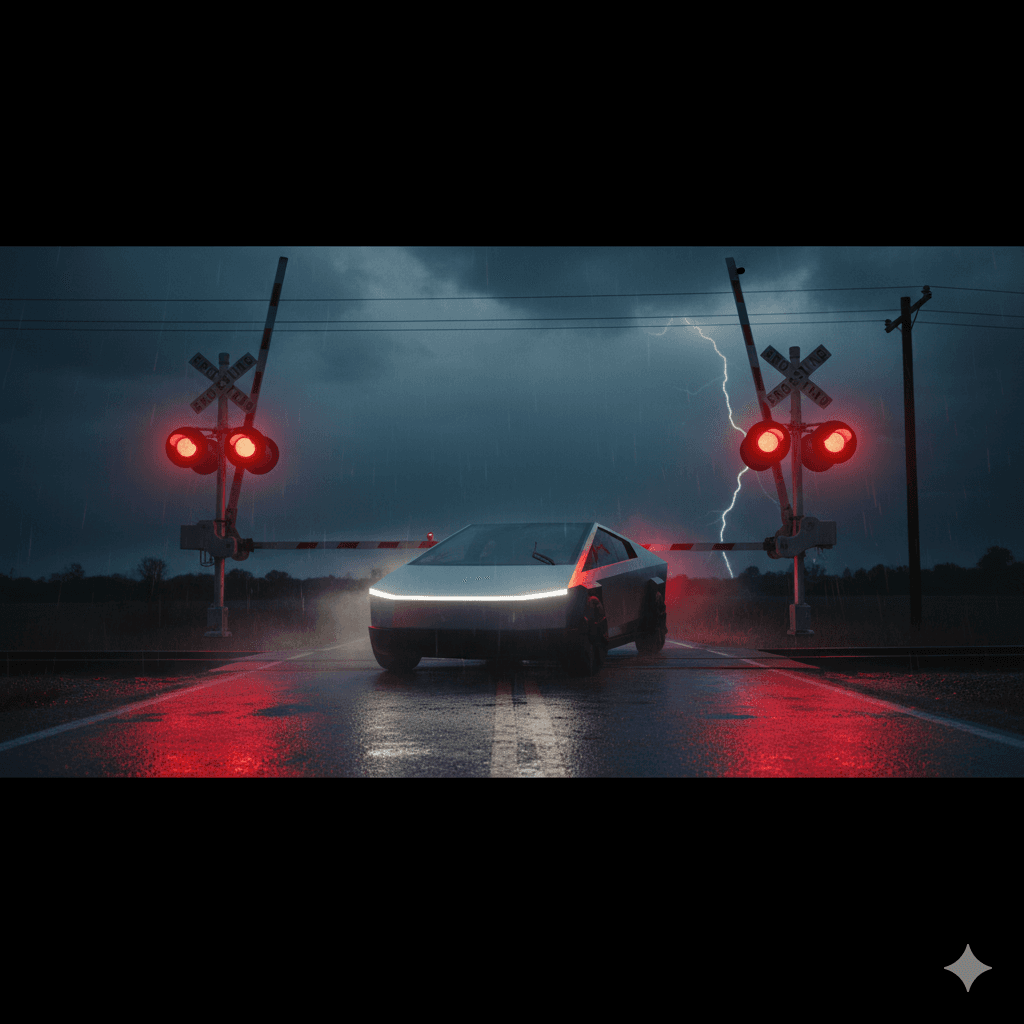
Reports have surfaced from drivers in Texas and Pennsylvania describing situations where FSD failed to stop as warning lights flashed and gates lowered. In these cases, quick human intervention prevented potential disaster. Videos and testimonies circulating online only amplify the sense of unease.
The issue strikes a nerve because rail crossings are not obscure scenarios. They’re standardized, highly regulated, and, above all, deadly if ignored. If a self-driving system struggles here, what does that say about its readiness for broader use on chaotic highways and busy city streets?
U.S. safety regulators at the National Highway Traffic Safety Administration (NHTSA) have acknowledged they’re aware of these complaints. While not yet announcing a formal investigation, the agency’s recognition signals that concerns are real enough to merit oversight.
The stakes extend far beyond Tesla’s branding. If FSD cannot reliably handle situations as binary as “train coming, stop immediately,” then the promise of a driverless future feels fragile. Drivers may still love Tesla’s innovations, but moments like these remind us: software that drives like a human must also fear like one.
Published by Banx Network. This article is part of the Banx decentralized media programme, powered by the BXE token on the XRP Ledger.