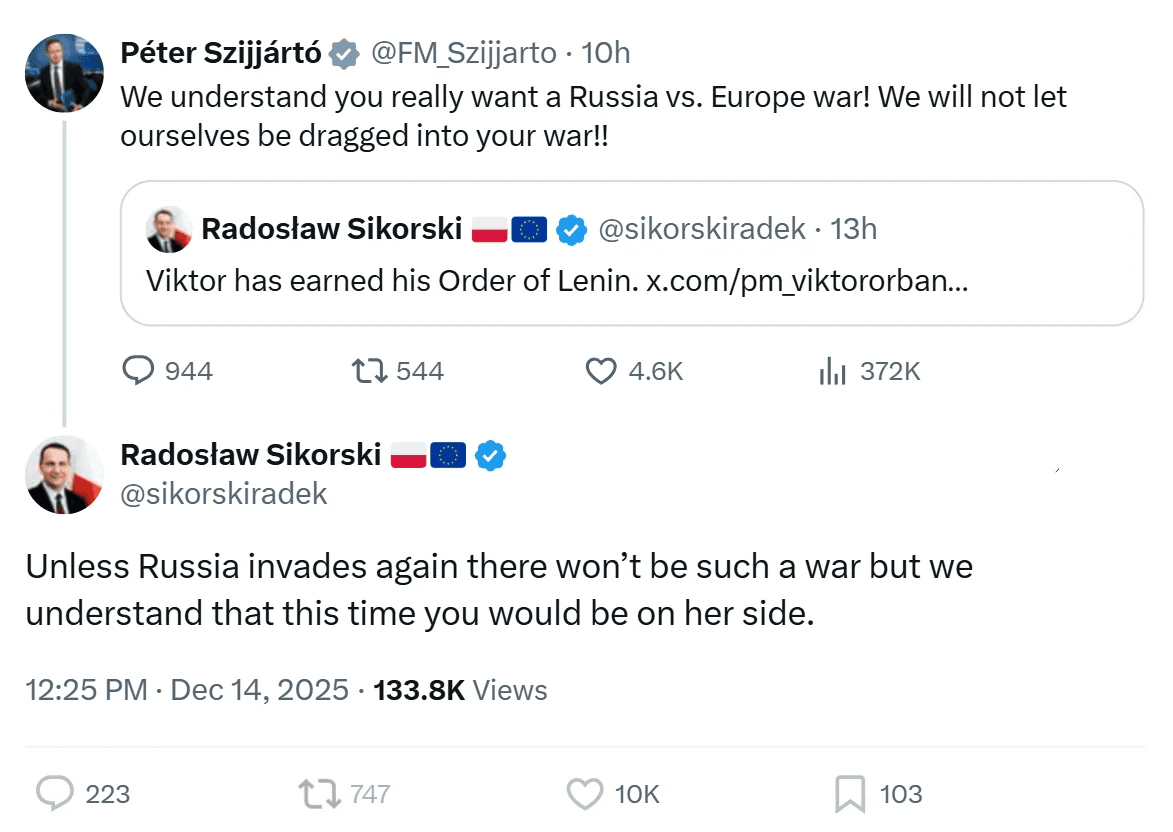
In a significant diplomatic row, the Polish Minister of Foreign Affairs, Zbigniew Rau, clashed with his Hungarian counterpart, Péter Szijjártó, during a recent press conference. The confrontation came in response to Hungary's controversial approach to European Union policies, particularly concerning migration and rule of law issues.
Rau did not hold back, expressing strong disapproval of Hungary's perceived deviation from EU standards, stating that "solidarity among member states is crucial for maintaining the integrity of our union." Szijjártó, on the other hand, defended Hungary's sovereignty and its right to pursue policies that reflect its national interests, arguing that "Hungary will not bow to external pressure."
This public disagreement is not an isolated incident; it reflects a broader trend in Central Europe where both countries often find themselves on opposing sides of critical issues. The tensions have been exacerbated by Hungary's close ties with Russia and its contentious relationship with Brussels, contrasting sharply with Poland's more EU-aligned stance.
Observers suggest that this clash could have implications for regional cooperation in Central Europe, particularly as both nations navigate upcoming challenges related to EU funding, democratic norms, and foreign relations. The fallout from this encounter could influence how the Visegrád Group—composed of Poland, Hungary, the Czech Republic, and Slovakia—approaches policy-making in the future.
As the situation evolves, it remains to be seen whether this latest clash will lead to a broader reevaluation of alliances within Central Europe or if it will be yet another chapter in the complex narrative of Polish-Hungarian relations.
Published by Banx Network. This article is part of the Banx decentralized media programme, powered by the BXE token on the XRP Ledger.